
White Label Iron Ore Crushing Plant Fabricators: A Comprehensive Industry Analysis
Introduction
The global iron ore mining sector is undergoing a paradigm shift, driven by fluctuating commodity prices, stringent environmental regulations, and the relentless demand for high-grade feedstock from steelmakers. At the heart of this transformation lies the crushing plant—the critical first step in transforming run-of-mine (ROM) ore into a marketable product. While many mining houses historically relied on in-house engineering teams or tier-one original equipment manufacturers (OEMs), a distinct and increasingly influential segment has emerged: white label iron ore crushing plant fabricators. These entities operate behind the scenes, designing, engineering, and manufacturing complete crushing systems that are rebranded and sold by third-party distributors, engineering procurement and construction (EPC) contractors, or even major equipment brands. This article provides a professional, objective, and detailed examination of white label fabricators in the iron ore crushing domain, covering their operational model, technical capabilities, quality assurance, economic rationale, and future trajectory.
Defining the White Label Model in Mineral Processing
In the context of iron ore, a white label fabricator is a company that possesses the full technical capability to design and build a crushing plant—from primary jaw or gyratory crushers to secondary cone crushers, tertiary high-pressure grinding rolls (HPGRs), screens, and conveyors—but does not market these systems under its own brand name. Instead, the fabricator’s output is sold to a partner (the “brand owner”) who applies its own logo, warranty, and after-sales service network. This is distinct from contract manufacturing, where a fabricator builds to a client’s exact drawings. White label fabricators typically own the intellectual property (IP) for the plant’s process flow, structural design, and control logic, but license that IP to the brand owner for a fee or margin.
The iron ore sector is particularly suited to this model due to the commodity’s relatively uniform processing requirements—primary crushing to reduce ROM to 150–200 mm, secondary crushing to 50–75 mm, and tertiary/fine crushing to <10 mm for pellet feed or sinter feed. Unlike complex base metal circuits requiring flotation or leaching, iron ore crushing is primarily a physical size-reduction and liberation process. This standardization allows fabricators to develop modular, repeatable designs that can be white labeled with minimal customization.
Core Technical Capabilities of White Label Fabricators
A credible white label iron ore crushing plant fabricator must demonstrate proficiency across several engineering disciplines:
Primary Crushing Systems: Fabricators design heavy-duty jaw crushers (typically 150–300 t/h capacity) or sizers capable of handling abrasive, high-density iron ore (Bulk Density 2.5–3.5 t/m³). They must engineer robust feed hoppers, vibrating grizzly feeders with adjustable bar gaps, and dust suppression systems. The structural steelwork must withstand significant impact loads, often requiring finite element analysis (FEA) for fatigue life.
Secondary and Tertiary Crushing: Most white label plants employ cone crushers (e.g., Symons-type or modern hydraulic models) for secondary reduction. Fabricators often source crusher heads and bowls from specialized foundries but design the surrounding chassis, lubrication systems, and hydraulic adjustment mechanisms in-house. For high-throughput operations, they integrate HPGR units, which are increasingly preferred for their energy efficiency in producing fine iron ore.
Screening and Classification: Multi-deck vibrating screens (banana or linear motion) are essential for closed-circuit operation. Fabricators design screen decks with appropriate aperture sizes (typically 6 mm, 10 mm, 25 mm) and ensure proper material flow to prevent pegging, a common issue with sticky, high-moisture iron ore.
Conveying and Transfer Points: White label fabricators engineer belt conveyors with heavy-duty idlers, skirt boards, and impact beds. They must account for the ore’s abrasiveness, specifying wear liners (ceramic or chromoly) at all transfer points to minimize maintenance downtime.
Automation and Control: Modern plants are not mechanical-only. Fabricators develop PLC-based control systems that monitor crusher power draw, bearing temperatures, and screen efficiency. They provide human-machine interfaces (HMIs) that allow remote operation. White label partners often rebrand these software interfaces, requiring the fabricator to maintain a flexible software architecture.
Quality Assurance and Certification Standards
The primary concern for any mining company purchasing a white label plant is whether the equipment meets the same safety and performance standards as a branded OEM product. Reputable fabricators adhere to international standards, including:
A professional white label fabricator will provide a comprehensive documentation package, including: general arrangement drawings, P&ID (piping and instrumentation diagrams), load calculations, motor schedules, and a full list of consumable parts with cross-reference to industry-standard equivalents. They also conduct factory acceptance tests (FAT) where the complete plant—or a scaled-down version—is assembled and run with dummy material to verify mechanical integrity and electrical continuity before shipment.
Economic Rationale for White Label Adoption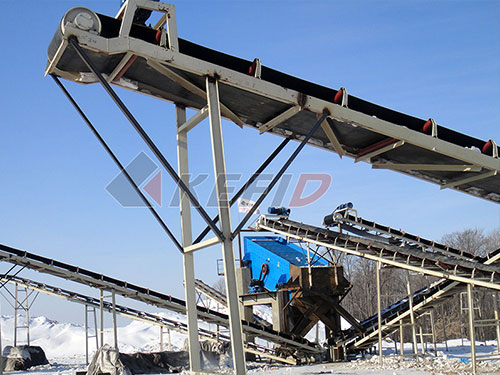
The growth of white label fabricators is not accidental; it is a direct response to market inefficiencies. For brand owners—which include regional equipment dealers, mining contractors, and even mid-tier mining companies—white labeling offers several distinct advantages:
Challenges and Risk Mitigation
Despite the benefits, white label iron ore crushing plants carry inherent risks that must be objectively assessed:
Brand Dilution and Accountability: If the plant fails, the brand owner bears the reputational damage, not the fabricator. Therefore, brand owners must conduct rigorous due diligence, including site visits to the fabricator’s facility, review of previous installations, and third-party audits of welding and machining processes.
Intellectual Property Leakage: Fabricators may produce similar designs for multiple brand owners, leading to market cannibalization. To mitigate this, brand owners often require exclusivity clauses for specific geographic regions or tonnage classes.
Spare Parts Availability: White label plants often use proprietary components (e.g., crusher liners) that are only available from the fabricator. If the fabricator goes out of business or changes its supply chain, the end user faces extended downtime. Professional brand owners mitigate this by negotiating a “lifetime supply” agreement and maintaining a safety stock of critical wear parts.
Performance Verification: Unlike OEMs with published performance curves, white label fabricators may not have extensive test data. Brand owners should demand a performance guarantee (e.g., throughput of 500 t/h at a specific closed-side setting) and include penalty clauses in the supply contract.
Case Study: Modular White Label Plants for Small-Scale Miners
A notable trend is the rise of modular, containerized white label crushing plants targeting junior miners and artisanal operations. These plants, often rated at 50–150 t/h, are fully pre-assembled inside standard 40-foot shipping containers. A white label fabricator designs the entire circuit—jaw crusher, cone crusher, double-deck screen, and conveyors—to fit within a single container footprint. The brand owner then markets these as “plug-and-play” solutions, requiring only a concrete pad and electrical hookup on site.
For iron ore, this model is particularly attractive in regions like West Africa and South America, where infrastructure is limited. The fabricator’s expertise lies in optimizing weight distribution, ensuring the container meets ISO shipping standards, and designing quick-disconnect couplings for water and power. The end user benefits from a lower capital expenditure (CAPEX) and faster commissioning, while the brand owner avoids the complexity of on-site erection.
The Role of Fabricators in Sustainability
Iron ore crushing is energy-intensive, and white label fabricators are increasingly called upon to deliver energy-efficient solutions. This includes:
Professional fabricators also conduct Life Cycle Assessments (LCA) to quantify the carbon footprint of their steel structures and offer design alternatives using high-strength, low-alloy (HSLA) steel to reduce material weight without compromising durability.
Selecting a White Label Fabricator: A Professional Checklist
For a brand owner or EPC contractor considering a white label partnership, the following objective criteria should be evaluated:
Future Outlook and Industry Trends
The white label model in iron ore crushing is poised for growth, driven by several macro trends:
Conclusion
White label iron ore crushing plant fabricators represent a pragmatic, commercially astute segment of the mineral processing supply chain. They offer a compelling value proposition: world-class engineering at competitive prices, rapid deployment, and the flexibility to adapt to regional requirements. However, their success depends on rigorous quality assurance, transparent IP management, and a robust after-sales ecosystem. For mining companies and EPC contractors, engaging with a white label fabricator is not a compromise on quality but rather a strategic decision to leverage specialized manufacturing expertise without the overhead of brand development. As the iron ore industry continues to demand efficiency, sustainability, and cost-effectiveness, the role of these behind-the-scenes engineers will only become more central. The key to a successful partnership lies in meticulous due diligence, clear contractual performance guarantees, and a shared commitment to operational excellence. In an industry where downtime costs thousands of dollars per hour, the white label fabricator’s reputation is built not on its name, but on the unyielding reliability of the machines it produces.
If you have any questions about our products, please feel free to contact us. We take all inquiries and suggestions very seriously.