
Title: White Label Iron Ore Crushing Plant: An Affordable and Scalable Solution for Mineral Processing
Introduction
The global demand for iron ore, driven by steel production and infrastructure development, continues to place significant pressure on mining and processing operations. For mid-tier miners, junior explorers, and even large-scale operators seeking to optimize capital expenditure, the concept of a “white label” iron ore crushing plant has emerged as a compelling alternative to traditional, bespoke plant construction. A white label solution, in this context, refers to a standardized, pre-engineered, and often modular crushing system that is manufactured by a third-party supplier but can be branded, customized, or operated under the client’s name. The keyword “affordable” is central to this discussion, as the primary value proposition of such plants lies in their ability to reduce upfront capital costs, shorten project timelines, and lower operational complexity without sacrificing core performance.
This article provides a detailed, professional, and objective analysis of white label iron ore crushing plants, focusing on their affordability, technical specifications, operational considerations, and suitability for various project scales. The discussion will cover the economic rationale, design principles, key components, and potential trade-offs associated with adopting a white label approach.
1. Understanding the White Label Concept in Mineral Processing
In the mining equipment industry, “white label” typically describes a product manufactured by one company (the OEM or original equipment manufacturer) that is sold under another company’s brand. For iron ore crushing plants, this means that a standardized crushing circuit—comprising feeders, crushers, screens, conveyors, and control systems—is designed and built by a specialized fabricator. The buyer (often a mining company or an EPC contractor) can then market, install, and operate the plant as their own, sometimes with minor modifications to suit specific ore characteristics or site conditions.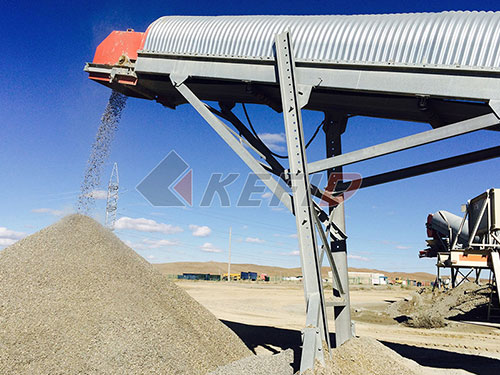
The affordability of white label plants stems from several factors:
2. Key Components of a White Label Iron Ore Crushing Plant
A typical white label iron ore crushing plant is designed to handle feed material with a top size of up to 1000 mm and reduce it to a product size suitable for downstream beneficiation or direct shipping (typically 0–40 mm or 0–20 mm, depending on the grade). The plant is usually configured in two or three stages: primary crushing, secondary crushing, and sometimes tertiary crushing.
2.1 Primary Crushing Stage
The primary crusher is often a jaw crusher or a gyratory crusher, selected based on feed hardness and throughput. In white label designs, jaw crushers are more common due to their lower cost, simpler maintenance, and availability in standardized sizes (e.g., 30×42, 42×48, or 48×60 inches). The primary stage reduces run-of-mine ore to a size of 150–300 mm.
2.2 Secondary and Tertiary Crushing
Secondary crushing typically employs cone crushers, which are well-suited for hard, abrasive iron ore. White label plants often use standardized cone crusher models (e.g., Symons, HP, or GP series equivalents) that are widely available and have interchangeable parts. Tertiary crushing, if required, may involve high-pressure grinding rolls (HPGR) or vertical shaft impactors (VSI), though these are less common in basic white label configurations due to higher cost.
2.3 Screening and Conveying
Vibrating screens (single or double deck) are used to separate crushed material into different size fractions. Over-sized material is recirculated to the crusher. Belt conveyors, designed with standard widths (e.g., 800 mm, 1000 mm, 1200 mm) and lengths, link the stages. White label plants often use modular conveyor sections that can be easily assembled on site.
2.4 Control and Automation
Modern white label plants include PLC-based control systems that monitor crusher loads, belt speeds, and screen efficiency. While not as sophisticated as fully customized systems, these controls are sufficient for most medium-scale operations and can be upgraded with remote monitoring capabilities.
3. Affordability: Cost Breakdown and Economic Analysis
The term “affordable” is relative and depends on the scale of the operation, the quality of components, and the level of automation. However, a white label iron ore crushing plant can be significantly cheaper than a custom-engineered plant. Below is a generalized cost comparison for a plant with a capacity of 200–300 tons per hour (tph):
| Cost Category | Custom-Engineered Plant (USD) | White Label Plant (USD) | Savings (%) |
|---|---|---|---|
| Engineering & Design | 500,000 – 800,000 | 50,000 – 100,000 | 80–90% |
| Major Equipment (Crushers, Screens) | 2,500,000 – 3,500,000 | 1,800,000 – 2,500,000 | 20–30% |
| Structural Steel & Conveyors | 1,200,000 – 1,800,000 | 800,000 – 1,200,000 | 30–40% |
| Electrical & Control Systems | 600,000 – 900,000 | 400,000 – 600,000 | 30–40% |
| Installation & Commissioning | 800,000 – 1,200,000 | 500,000 – 800,000 | 30–40% |
| Total Estimated Cost | 5,600,000 – 8,200,000 | 3,550,000 – 5,200,000 | 35–40% |
Note: Costs are indicative and vary by region, supplier, and specific plant configuration.
The total cost of ownership (TCO) for a white label plant is also lower due to standardized spare parts, simpler maintenance procedures, and shorter downtime during repairs. However, buyers must be aware that white label plants may have lower energy efficiency or slightly higher wear rates compared to premium custom designs, particularly if the ore is extremely abrasive or variable in hardness.
4. Operational Considerations and Limitations
While white label plants offer clear cost advantages, they are not universally suitable. The following factors must be evaluated objectively:
4.1 Ore Variability
Iron ore deposits can vary significantly in hardness, moisture content, and abrasiveness. A standardized white label plant may not be optimized for highly variable feed. For example, if the ore contains high levels of clay or fines, the screening efficiency may drop, leading to recirculation loads and reduced throughput. In such cases, additional modifications (e.g., grizzly feeders, washing systems) may be required, eroding some of the cost savings.
4.2 Throughput and Scalability
White label plants are typically designed for a fixed throughput range (e.g., 100–400 tph). Scaling up beyond the design capacity often requires replacing major components, which can be costly. For operations that anticipate rapid expansion, a modular white label design with parallel processing lines may be a better option, but this increases complexity.
4.3 After-Sales Support and Warranty
Since white label plants are sold under the buyer’s brand, the original manufacturer may not provide direct after-sales support. Buyers must ensure that they have in-house maintenance capabilities or a service agreement with a third-party provider. Warranty terms are often shorter (e.g., 12 months) compared to premium brands (24–36 months).
4.4 Regulatory and Safety Compliance
White label plants must still meet local safety and environmental regulations. In jurisdictions with strict emission or noise standards, the standardized design may require retrofitting of dust suppression systems, silencers, or enclosures. This can add 5–10% to the total cost.
5. Case Studies: Real-World Applications
Case Study 1: Junior Miner in Western Australia
A junior iron ore miner with a 2-million-ton-per-annum (Mtpa) operation opted for a white label two-stage crushing plant (jaw crusher + cone crusher) at a cost of USD 4.2 million, compared to a custom quote of USD 6.8 million. The plant was delivered in 14 weeks and commissioned in 4 weeks. The client reported that while the plant required more frequent liner changes (every 3 months vs. 4 months for a premium brand), the overall cost per ton was 18% lower due to reduced capital depreciation.
Case Study 2: Contractor in Brazil
A crushing contractor serving multiple iron ore mines purchased a white label mobile crushing plant (track-mounted) for USD 1.8 million. The plant was used for toll crushing at various sites. The standardized design allowed the contractor to train a single crew to operate the plant across different locations. The payback period was 14 months.
6. Comparison with Alternative Solutions
| Solution | Capital Cost | Flexibility | Lead Time | Maintenance Complexity |
|---|---|---|---|---|
| Custom-Engineered Plant | High | High | Long (6–12 months) | Moderate |
| White Label Plant | Medium | Medium | Short (3–6 months) | Low to Moderate |
| Mobile/Modular Plant | Medium-High | High | Short (2–4 months) | Low |
| Used/Refurbished Plant | Low | Low | Variable | High |
White label plants occupy a middle ground, offering a balance between cost and performance. For operations that require a reliable, quick-to-deploy solution without the premium price tag of a fully custom plant, they are often the most affordable option.
7. Future Trends and Innovations
The white label market for iron ore crushing is evolving. Key trends include:
Conclusion
A white label iron ore crushing plant represents a pragmatic and affordable solution for many mining operations, particularly those with limited capital budgets, tight project timelines, or a need for operational simplicity. By leveraging standardized designs, bulk procurement, and reduced engineering overhead, these plants can deliver cost savings of 35–40% compared to custom-engineered alternatives. However, they are not a one-size-fits-all solution. Buyers must carefully assess ore characteristics, throughput requirements, and long-term maintenance capabilities before committing to a white label approach.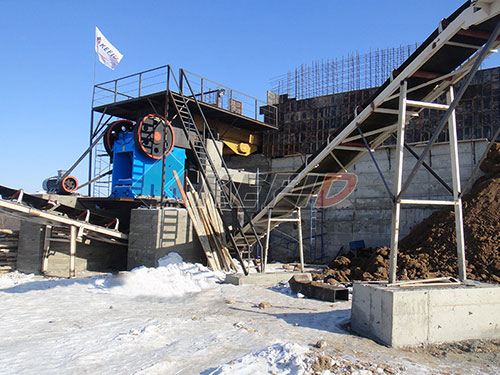
For junior miners, contractors, and even established producers looking to expand capacity at minimal risk, the white label model offers a viable path to profitability. As the industry continues to embrace modularity and standardization, the affordability and reliability of these plants are likely to improve further, making them an increasingly attractive option in the global iron ore processing landscape.
If you have any questions about our products, please feel free to contact us. We take all inquiries and suggestions very seriously.