Sustainable Stone Crusher Machine Factory: Engineering a Greener Future for the Aggregate Industry
The global demand for construction aggregates—crushed stone, sand, and gravel—is projected to exceed 50 billion metric tons annually by the end of this decade. This insatiable appetite for raw materials places immense pressure on the environment, from quarrying operations to the energy-intensive processes of crushing and screening. At the heart of this supply chain lies the stone crusher machine factory, a facility traditionally associated with heavy industrial emissions, high energy consumption, and significant waste generation. However, a paradigm shift is underway. The concept of a Sustainable Stone Crusher Machine Factory is no longer an oxymoron but a critical necessity. This article provides a professional, objective, and in-depth examination of what constitutes a sustainable factory in this sector, exploring the technological, operational, and strategic pillars that define it.
1. Redefining the Factory: Beyond Compliance to Regenerative Design
A sustainable stone crusher machine factory is not merely a facility that meets local environmental regulations. It is a holistic system designed to minimize its ecological footprint across the entire lifecycle—from raw material sourcing and manufacturing to the operation of the machines it produces and their eventual end-of-life recycling. The core philosophy shifts from a linear “take-make-dispose” model to a circular economy approach. This involves three fundamental principles: Eco-Efficiency (doing more with less), Eco-Effectiveness (designing for positive environmental impact), and Social Responsibility (ensuring fair labor and community engagement).
2. The Pillars of Sustainability in Crusher Manufacturing
To achieve true sustainability, a factory must excel across several interconnected domains:
2.1. Energy Efficiency and Renewable Integration
The crushing process is notoriously energy-intensive. A sustainable factory addresses this head-on: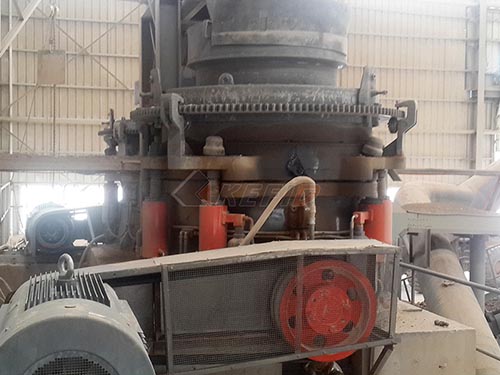
- High-Efficiency Motors and Drives: Replacing standard induction motors with IE4 or IE5 (Super Premium Efficiency) synchronous reluctance motors can reduce energy consumption by 20-30%. Variable Frequency Drives (VFDs) are standard, allowing crushers to operate at optimal speeds based on load, rather than running at full capacity constantly.
- Intelligent Control Systems: Advanced PLC (Programmable Logic Controller) and SCADA (Supervisory Control and Data Acquisition) systems monitor real-time power draw, material flow, and wear rates. These systems automatically adjust feed rates and crusher settings to maintain peak efficiency, minimizing idle time and energy waste.
- On-Site Renewable Generation: Leading factories are installing rooftop solar photovoltaic (PV) arrays, often with capacities exceeding 1 MW, to power lighting, offices, and auxiliary systems. Some are even exploring wind turbines or biomass boilers for process heat. The goal is to achieve net-zero or even net-positive energy status.
- Waste Heat Recovery: Crushers generate significant heat through friction and mechanical work. Advanced factories capture this waste heat and use it for space heating, pre-heating raw materials, or even generating additional electricity through Organic Rankine Cycle (ORC) systems.
2.2. Material Sourcing and Circularity
The machines themselves are made of steel, cast iron, and wear-resistant alloys. Sustainability demands a radical rethink of these materials:
- Recycled and Low-Carbon Steel: A sustainable factory prioritizes steel with a high recycled content (e.g., 90%+ from Electric Arc Furnace (EAF) processes) and low embodied carbon. This drastically reduces Scope 3 emissions (indirect emissions in the value chain).
- Eco-Design for Longevity and Repairability: Crushers are designed for modularity and ease of maintenance. Instead of replacing entire assemblies, wear parts like liners, hammers, and jaw plates are designed to be easily swapped. This extends machine life and reduces material waste. Factories offer “remanufacturing” services, where worn components are rebuilt to original specifications, consuming far less energy and material than producing new ones.
- Closed-Loop Material Flows: Scrap metal generated during manufacturing (e.g., from cutting, machining, and casting) is meticulously segregated and sent directly back to steel mills for recycling. No ferrous scrap leaves the factory as waste.
2.3. Water Stewardship and Zero-Liquid Discharge
Water is used extensively in crusher factories for cooling, dust suppression, and washing. A sustainable facility treats water as a precious resource:
- Closed-Loop Cooling Systems: Instead of once-through cooling, water is recirculated through cooling towers or chillers, reducing freshwater consumption by 95-99%.
- Rainwater Harvesting: Large roof areas are used to capture rainwater, which is stored in tanks and used for non-potable applications like dust control and landscape irrigation.
- Zero-Liquid Discharge (ZLD): The most advanced factories implement ZLD systems. All process water is treated, filtered, and reused. Any remaining brine or sludge is either evaporated or processed into solid waste for responsible disposal. This eliminates any water pollution discharge to the environment.
2.4. Emission Control and Air Quality
Dust and noise are the most visible environmental impacts of a crusher factory. Sustainable facilities employ multiple layers of control:
- High-Efficiency Particulate Air (HEPA) Filtration: Baghouse filters with pulse-jet cleaning capture over 99.9% of particulate matter (PM2.5 and PM10) from crushing, screening, and conveying operations. These systems are often combined with wet scrubbers for additional control.
- Enclosed Processing Lines: All material transfer points, crushers, and screens are fully enclosed in sound-dampened, dust-tight structures. Negative air pressure is maintained inside these enclosures to prevent fugitive dust emissions.
- Noise Mitigation: Acoustic enclosures, vibration dampeners, and low-noise motors are standard. Factories are often located away from residential areas, and landscaping (e.g., earth berms and dense tree lines) is used as a natural sound barrier.
- Carbon Capture and Utilization (CCU): While still emerging, some pioneering factories are exploring CCU technologies to capture CO2 from their own operations (e.g., from cement used in concrete foundations) and convert it into synthetic fuels or building materials.
2.5. Waste Minimization and Circular Economy
Beyond scrap metal, a sustainable factory tackles all waste streams:
- Zero Waste to Landfill: A comprehensive waste management plan ensures that all non-hazardous waste (e.g., packaging, wood pallets, plastics, office paper) is either recycled, composted, or sent to waste-to-energy facilities. Hazardous waste (e.g., used lubricants, hydraulic fluids) is collected and sent to licensed treatment facilities for recycling or safe disposal.
- Product-as-a-Service (PaaS) Models: Some factories are shifting from selling machines to offering “crushing as a service.” Under this model, the factory retains ownership of the equipment and is responsible for its maintenance, repair, and eventual end-of-life recycling. This incentivizes the factory to design for maximum durability and recyclability, as they bear the long-term costs.
3. The Business Case for Sustainability
Adopting these practices is not just an ethical choice; it is a sound business strategy. The benefits are tangible:
- Reduced Operating Costs: Energy efficiency, water recycling, and waste minimization directly lower utility bills and raw material costs. A 20% reduction in energy consumption can translate to millions of dollars in savings over a decade.
- Regulatory Compliance and Risk Mitigation: As governments worldwide tighten emission standards and carbon taxes, sustainable factories are ahead of the curve. They face fewer fines, legal challenges, and operational disruptions.
- Enhanced Brand Reputation and Market Access: Construction companies and infrastructure developers are increasingly demanding “green” materials and equipment. A certified sustainable factory can command premium prices and win contracts that require a low-carbon supply chain.
- Attracting Talent and Investment: Younger generations of engineers and workers prefer to work for companies with strong environmental, social, and governance (ESG) credentials. Similarly, investors are increasingly screening for sustainable practices.
4. Challenges and the Path Forward
Despite the clear benefits, the transition to a fully sustainable stone crusher machine factory is not without challenges:
- High Initial Capital Investment: Implementing advanced energy systems, ZLD plants, and HEPA filtration requires significant upfront capital. However, the long-term return on investment (ROI) is often favorable, especially with government incentives and green financing.
- Technological Maturity: Some technologies, like large-scale CCU for industrial processes, are still in the pilot phase. Widespread adoption will require further R&D and cost reduction.
- Supply Chain Complexity: Ensuring that all suppliers of steel, castings, and electronics also adhere to sustainability standards is a complex task. It requires robust auditing and traceability systems.
- Skilled Workforce: Operating and maintaining advanced sustainable systems requires a workforce with specialized skills in automation, data analytics, and environmental engineering. Factories must invest in continuous training and upskilling.
5. Conclusion: The Factory of the Future
The sustainable stone crusher machine factory is not a distant vision; it is an operational reality for industry leaders. It represents a fundamental re-engineering of industrial processes, driven by a commitment to environmental stewardship, operational excellence, and long-term economic viability. By embracing energy efficiency, circular material flows, water stewardship, and emission control, these factories are proving that heavy industry can be a force for good. They are not just producing the machines that build our world; they are building a future where industrial growth and ecological health are not mutually exclusive but mutually reinforcing. The factory of the future is green, smart, and regenerative—and it is being built today, one sustainable crusher at a time.
