
Sustainable Slag Crusher Plant Assembly Plant: Engineering, Process Integration, and Environmental Stewardship
Introduction
In the modern metallurgical and construction industries, the management of industrial by-products has transitioned from a mere waste-disposal obligation to a strategic pillar of circular economy. Among these by-products, slag—the non-metallic residue generated during metal smelting and refining—represents both a significant environmental liability and a valuable secondary resource. The processing of slag into reusable aggregates, cementitious materials, and road base requires robust, high-capacity crushing and screening infrastructure. However, the conventional slag crusher plant has historically been energy-intensive, dust-generating, and water-consuming. The emergence of the Sustainable Slag Crusher Plant Assembly Plant addresses these deficiencies by integrating advanced engineering design, closed-loop process systems, and renewable energy sources into a cohesive, environmentally responsible manufacturing unit.
This article provides a comprehensive, technical examination of a sustainable slag crusher plant assembly plant, covering its design philosophy, core equipment, process flow, sustainability metrics, and operational best practices. The objective is to present a professional, objective overview suitable for engineers, project managers, and environmental compliance officers.
1. Definition and Scope of a Slag Crusher Plant Assembly Plant
A slag crusher plant assembly plant is a dedicated facility where the complete crushing, screening, conveying, and storage systems for slag processing are fabricated, pre-assembled, and tested before being shipped to the operational site. Unlike a conventional field-erected plant, an assembly plant emphasizes modular construction, standardized components, and factory-controlled quality assurance. The “sustainable” designation implies that the assembly process itself—and the design of the crusher plant it produces—minimizes carbon footprint, maximizes material recovery, and adheres to stringent environmental regulations.
The scope of such a plant includes:
2. Design Philosophy: Sustainability as a Core Engineering Parameter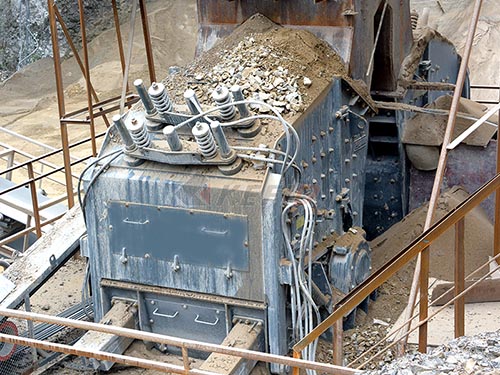
The design of a sustainable slag crusher plant assembly plant is governed by three interlocking principles: resource efficiency, energy optimization, and emission control.
2.1 Resource Efficiency
Slag, particularly blast furnace slag (BFS) and steel slag, contains recoverable metallic fractions (5–10% by weight) and a high proportion of calcium silicate, which is valuable in cement production. A sustainable plant is designed to achieve >95% recovery of ferrous metals through multi-stage magnetic separation. The remaining non-metallic slag is crushed to specified gradations for use as aggregate in concrete, asphalt, or railway ballast. The assembly plant ensures that all process water is recycled in a closed loop, achieving near-zero liquid discharge.
2.2 Energy Optimization
Crushing is an energy-intensive operation. Sustainable assembly plants incorporate variable frequency drives (VFDs) on all major motors, allowing power consumption to match load demand. Additionally, the plant layout is optimized to minimize conveyor lengths and elevation changes, reducing parasitic energy losses. Where feasible, the assembly plant integrates solar photovoltaic panels on its roof structure to offset auxiliary power requirements, and the crusher plant design includes provisions for hybrid power (grid + renewable) at the final operational site.
2.3 Emission Control
Dust is the primary airborne pollutant in slag crushing. The sustainable design employs a three-tier dust control strategy: (a) water spray systems with atomizing nozzles at transfer points, (b) fully enclosed conveyor galleries with negative pressure ventilation, and (c) high-efficiency cartridge dust collectors with a filtration efficiency of ≥99.9% for particulate matter below 10 microns (PM10). Furthermore, noise emissions are mitigated through acoustic enclosures around crushers and screens, reducing operational noise from 95 dB(A) to below 75 dB(A) at a 1-meter distance.
3. Core Equipment and Modular Assembly
The assembly plant operates as a precision manufacturing line, producing standardized modules that are later transported to the field. The key equipment modules are:
3.1 Primary Crushing Module
A heavy-duty jaw crusher (e.g., 900×1200 mm) is mounted on a reinforced steel skid. The module includes a vibrating grizzly feeder with adjustable bars to remove fines (<50 mm) before the crusher, reducing wear and energy consumption. The discharge chute is lined with abrasion-resistant steel (AR 500) to extend service life.
3.2 Magnetic Separation Module
This module consists of a cross-belt magnetic separator and a drum-type magnetic separator arranged in series. The cross-belt unit removes large metallic pieces (≥25 mm), while the drum unit captures finer ferrous particles. The recovered metal is directed to a dedicated storage bin, which is later sold to steel mills as scrap.
3.3 Secondary and Tertiary Crushing Modules
Cone crushers (for hard, abrasive slag) or impact crushers (for softer, porous slag) are used in the secondary stage. The tertiary stage employs a high-frequency vibrating screen to produce fine aggregates (0–5 mm, 5–10 mm, 10–20 mm). Each module is pre-wired and pre-piped, with quick-connect flanges for field assembly.
3.4 Dust Collection and Water Treatment Module
This module houses a pulse-jet cartridge dust collector, a settling tank, and a hydrocyclone. Water from dust suppression is collected in a sump, clarified in the hydrocyclone, and recirculated. The sludge from the settling tank is dewatered using a filter press, producing a dry cake that can be used as a soil conditioner or disposed of safely.
3.5 Control and Automation Module
A centralized PLC (Programmable Logic Controller) system monitors all sensors, including vibration, temperature, belt speed, and motor current. The system automatically adjusts crusher settings and feeder rates to maintain optimal throughput while minimizing energy use. Remote access via SCADA (Supervisory Control and Data Acquisition) allows plant operators to diagnose issues without physical presence, reducing maintenance downtime.
4. Assembly Process Flow
The assembly plant follows a systematic sequence to ensure quality and safety:
5. Environmental and Economic Performance Metrics
A sustainable slag crusher plant assembly plant is evaluated against specific Key Performance Indicators (KPIs):
Economically, the assembly plant model reduces on-site installation time by 40% (from 12 weeks to 7 weeks), lowering labor costs and allowing faster return on investment. The recovered metal from slag processing can offset up to 20% of the plant’s operational costs.
6. Operational Best Practices and Safety
Sustainable operation extends beyond equipment design. The assembly plant mandates:
7. Case Study: Implementation in a European Steel Cluster
A representative example is the assembly plant built for a steel mill in the Ruhr Valley, Germany. The plant produces 200 tons per hour of processed slag, with a metallic recovery rate of 96%. The closed-loop water system reduces freshwater intake by 1,200 m³ per month. The solar array on the assembly facility generates 15% of the plant’s auxiliary electricity. The modular design allowed the crusher plant to be operational within 6 weeks of delivery, compared to the regional average of 14 weeks for conventional construction. The project achieved a 28% reduction in lifecycle CO₂ emissions, verified by a third-party environmental audit.
8. Challenges and Future Directions
Despite its advantages, the sustainable slag crusher plant assembly plant faces challenges:
Future developments include the integration of AI-based predictive control to optimize crusher settings in real-time based on slag feed characteristics, and the use of hydrogen-powered mobile crushers for remote sites. Additionally, the adoption of digital twin technology will allow virtual commissioning of the plant before physical assembly, further reducing errors and waste.
Conclusion
The Sustainable Slag Crusher Plant Assembly Plant represents a paradigm shift in industrial by-product processing. By combining modular manufacturing precision with rigorous environmental engineering, it delivers a crushing system that is not only economically viable but also ecologically responsible. The plant’s closed-loop water systems, high-efficiency dust control, and energy-optimized design set a new benchmark for the industry. As global regulations on industrial emissions tighten and the demand for recycled construction materials grows, the sustainable assembly plant model will become the standard for slag processing infrastructure. For engineers and investors, adopting this approach is not merely a compliance measure—it is a strategic investment in long-term operational resilience and environmental stewardship.
If you have any questions about our products, please feel free to contact us. We take all inquiries and suggestions very seriously.