
Stone Quarry Crushing Plant OEM Factory Design Service: A Comprehensive Overview
In the global aggregates and mining industry, the efficient extraction and processing of raw stone materials are fundamental to infrastructure development, construction, and industrial production. A stone quarry crushing plant is the core facility that transforms large, unprocessed rock into graded aggregates, manufactured sand, and other valuable products. As demand for customized, high-capacity, and cost-effective crushing solutions grows, the role of an OEM (Original Equipment Manufacturer) factory design service has become increasingly critical. This article provides a detailed, objective examination of what such a service entails, its technical scope, operational benefits, and key considerations for quarry operators and project developers.
Defining the OEM Factory Design Service
An OEM factory design service for a stone quarry crushing plant refers to a comprehensive engineering and manufacturing offering provided by an equipment manufacturer. Unlike a simple equipment supplier that sells off-the-shelf machines, an OEM factory design service integrates the manufacturer’s proprietary equipment with customized plant layout, process flow design, electrical and automation systems, and structural engineering. The service typically begins with a detailed analysis of the client’s raw material characteristics—such as rock type, hardness, abrasiveness, moisture content, and feed size—and ends with a fully operational, optimized crushing plant.
The “OEM” aspect is significant. It means the manufacturer not only designs the plant but also produces the core crushing equipment (jaw crushers, cone crushers, impact crushers, vibrating screens, feeders, etc.) under its own brand and quality control systems. This vertical integration allows for greater compatibility between components, simplified spare parts management, and a single point of responsibility for performance guarantees.
Core Components of the Design Service
A professional OEM factory design service for a quarry crushing plant generally encompasses several distinct but interrelated phases.
Material Characterization and Test Work
Before any design work begins, representative samples of the quarry rock are analyzed. Laboratory tests determine compressive strength, abrasion index, silica content, and particle size distribution. These data are essential for selecting the correct crusher type and wear material. For example, high-silica, abrasive rocks like granite require cone crushers with manganese steel liners, while softer limestone may be processed efficiently with impact crushers.
Process Flow Design and Simulation
The OEM’s engineers develop a process flow diagram that specifies the number of crushing stages (primary, secondary, tertiary, and sometimes quaternary), screening steps, and material recirculation loops. Modern design services use discrete element modeling (DEM) and plant simulation software to predict throughput, product gradation, and power consumption. This virtual prototyping reduces the risk of bottlenecks and ensures that the plant can meet target capacities—often ranging from 100 to over 2,000 tonnes per hour.
Equipment Selection and Sizing
Based on the process flow, the OEM selects specific models from its product line. Key decisions include the size of the primary jaw or gyratory crusher, the configuration of secondary and tertiary cone crushers (standard, short head, or fine head), and the dimensions of vibrating screens. The design service also specifies chute angles, conveyor belt widths and speeds, and surge bin capacities to ensure smooth material flow and minimal spillage.
Structural, Civil, and Electrical Engineering
A complete plant design includes steel structure drawings for crusher frames, screen towers, and conveyor galleries, as well as foundation loads for civil works. Electrical single-line diagrams, motor control centers, and automation logic (PLC/SCADA) are also part of the OEM’s scope. This integrated approach ensures that mechanical, structural, and electrical systems are coordinated, reducing interface risks during construction.
Fabrication, Assembly, and Quality Control
Because the service is provided by an OEM factory, the manufacturing of crushers, screens, and feeders occurs in a controlled environment. Quality control procedures include non-destructive testing of welds, dynamic balancing of rotating parts, and performance testing of individual machines. Pre-assembly of modular plant sections is often performed at the factory to minimize on-site installation time.
Installation, Commissioning, and Training
The OEM’s service typically extends to on-site supervision of installation, commissioning of the entire plant, and training of the operator’s maintenance and production staff. Performance tests are conducted to verify that the plant meets contractual guarantees for capacity, product quality, and energy consumption.
Technical and Operational Benefits
The primary advantage of engaging an OEM factory design service is the assurance of a single-source solution. The client avoids the complexity of coordinating multiple vendors for crushers, screens, conveyors, and controls. This reduces project timelines and eliminates disputes over performance responsibility.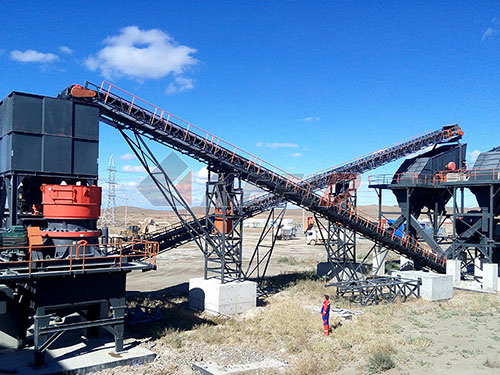
From a technical perspective, an OEM-designed plant is optimized for the specific characteristics of the quarry. For instance, a plant designed for a hard rock quarry will incorporate robust, heavy-duty crushers with high reduction ratios, while a plant for a soft, sticky material will include special feeder designs and screen media to prevent clogging. The OEM’s deep knowledge of its own equipment allows for fine-tuning of eccentric speeds, closed-side settings, and stroke angles to maximize throughput and wear life.
Operationally, an OEM-designed plant often features modular construction, which facilitates future expansion. If the quarry needs to increase capacity or add a new product size, the OEM can design the original plant with预留 space and structural capacity for additional equipment. Furthermore, because the OEM controls the design, spare parts are readily available, and maintenance procedures are standardized.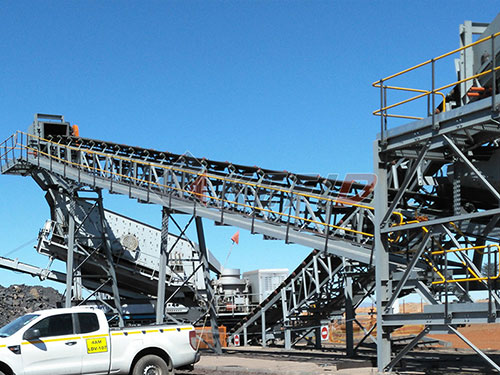
Economic Considerations and Return on Investment
While an OEM factory design service may have a higher upfront engineering cost compared to a generic plant design, the total cost of ownership is often lower. Factors contributing to this include:
For a typical quarry producing 500,000 tonnes per year, a 10% improvement in plant availability can translate into tens of thousands of tonnes of additional product, easily justifying the design service investment.
Key Selection Criteria for an OEM Partner
Not all OEM factory design services are equal. Quarry operators should evaluate potential partners based on:
Challenges and Limitations
It is important to acknowledge that an OEM factory design service is not without challenges. The client may become locked into a single supplier for spare parts and future upgrades, potentially limiting competitive bidding. Also, the OEM’s equipment line may not include every possible machine type, forcing compromises in process design. Finally, cultural and communication differences between the OEM’s engineers and the quarry’s operational team can lead to misunderstandings during design reviews.
To mitigate these risks, contracts should include clear performance guarantees, open-book pricing for spare parts, and provisions for third-party audits of the design.
Future Trends
The stone quarry crushing plant OEM design service is evolving. Digital twins—virtual replicas of the plant that update in real time—are becoming common, allowing operators to simulate changes before implementation. Automation and remote monitoring are enabling OEMs to provide predictive maintenance and performance optimization as ongoing services. Additionally, sustainability requirements are driving designs that reduce dust, noise, and water consumption, as well as incorporate recycled materials.
Conclusion
A stone quarry crushing plant OEM factory design service represents a holistic, engineering-driven approach to aggregates production. By integrating material testing, process simulation, equipment manufacturing, and site commissioning, the OEM delivers a plant that is tailored to the quarry’s specific geology and market requirements. While the service demands careful partner selection and contractual clarity, the benefits—higher efficiency, lower operating costs, and a single point of accountability—make it an attractive option for quarry operators seeking a competitive edge. As the industry moves toward greater automation and sustainability, the role of the OEM design service will only grow in importance, shaping the next generation of crushing plants worldwide.
If you have any questions about our products, please feel free to contact us. We take all inquiries and suggestions very seriously.