Sustainable Impact Crushers: Redefining Aggregate Production for a Circular Economy

The global construction industry, a cornerstone of modern civilization, is undergoing a profound transformation driven by the imperative of sustainability. At the heart of this shift lies the management of construction and demolition (C&D) waste, which constitutes a significant portion of total solid waste worldwide. Enter the concept of Sustainable Impact Crushers—not merely as machinery, but as a technological and philosophical evolution within the crushing sector. These advanced systems represent the convergence of efficient mineral processing engineering, environmental stewardship, and circular economy principles. This article explores the defining characteristics, technological innovations, key industry players, and the broader impact of companies leading this charge toward sustainable aggregate production.

Defining the Sustainable Impact Crusher

A traditional impact crusher operates on the principle of rapid impact to fracture materials. A high-speed rotor hurls feed material against stationary anvils or curtains, breaking it into smaller, cubical aggregates. The “sustainable” modifier elevates this basic function through a holistic design and operational philosophy focused on:

  1. Resource Efficiency: Maximizing the yield of high-quality recycled aggregates from C&D waste (concrete, asphalt, bricks) and natural stone with minimal waste.
  2. Energy Optimization: Incorporating technologies that reduce specific energy consumption (kWh per ton of processed material) through efficient drives, optimized kinematics, and intelligent control systems.
  3. Emission Reduction: Drastically curtailing dust and noise emissions—the primary environmental nuisances of crushing operations—through integrated containment and suppression systems.
  4. Longevity and Serviceability: Designing robust machines with longer lifespans, using durable components, and enabling easy access for maintenance and part replacement to reduce material footprint over time.
  5. Safety and Automation: Enhancing operator safety through remote monitoring and automated processes that also contribute to consistent, optimal performance.

Technological Pillars of Sustainability

Companies pioneering in this field differentiate themselves through integrated technological suites:

1. Advanced Crushing Chamber & Rotor Design: Modern sustainable impactors feature precisely engineered chambers and rotors (often as monolithic structures for greater mass and durability) that optimize impact forces. This ensures superior fragmentation with less recirculation load, directly boosting throughput and reducing energy waste. The shape of hammers (blow bars) and aprons is designed to produce a well-graded, cubic end product ideal for new concrete or road base applications.Sustainable Impact Crushers Companies

2. Intelligent Automation & Process Control: Sophisticated programmable logic controllers (PLCs) and human-machine interfaces (HMIs) are now standard. Systems like SANDVIK’s Automine® or Metso Outotec’s IC™ crusher automation continuously monitor load conditions, feed rates, and power draw. They can automatically adjust crusher parameters in real-time to maintain peak efficiency or perform emergency shut-downs to prevent damage. This “smart crushing” minimizes downtime, optimizes product gradation, and conserves energy.

3. Integrated Environmental Protection Systems: Sustainability leaders go beyond bolt-on solutions.

  • Dust Suppression: High-pressure misting systems with nano-particle technology agglomerate fine dust at its source without oversaturating material (which can degrade product quality). Fully enclosed conveyor transfer points and negative pressure systems within the crusher itself are critical.
  • Noise Abatement: Sound-dampening enclosures made from composite materials, lined crushing chambers, and vibration-isolated components work together to reduce operational noise by 10-15 dBA or more compared to open designs.

4. Hybrid & Electric Drive Systems: A frontier in sustainability is moving away from sole reliance on diesel generators for mobile units. Companies like Keestrack have been trailblazers with their “e-drive” mobile impact crushers (e.g., Keestrack R5e), which can be plugged into an external electric grid or powered by an onboard generator for mobility. This allows for zero-local-emission operation on site where grid power is available, drastically cutting carbon footprint and operational noise.

Leading Companies Shaping the Market

Several companies stand out for embedding sustainability into their core product development strategies:
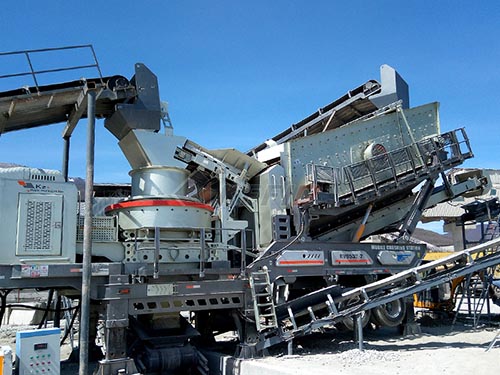
  • Sandvik Mining & Rock Solutions: A global leader, Sandvik emphasizes “sustainable productivity.” Their Prisec™ impactor range offers versatility for recycling applications. Their focus on digitalization with tools like My Sandvik portals allows for predictive maintenance based on real-time data analytics from connected equipment across fleets globally—a key enabler for resource efficiency.
  • Metso Outotec (Now Metso): Metso’s Lokotrack® LT Series mobile impact plants are renowned for their efficiency. The company champions circularity not just in end-product but in its own value chain through services like liner recycling programs for worn parts—a true closed-loop service model that extends beyond machine sales.
  • Keestrack: Often hailed as a pioneer in electric-driven mobile processing technology since 2010’s introduction of hybrid/electric models across its entire range including its impact crushers like R6e model which features plug-in capability along with powerful diesel-electric setup offering flexibility while reducing fuel consumption up-to70% when plugged-in . Their commitment extends towards designing compact yet highly efficient screeners/crushers combos minimizing logistical footprint while maximizing onsite processing capabilities .
  • Terex MPS & Terex Finlay: Both brands under Terex Corporation offer robust track-mounted impactors designed with serviceability in mind—reducing downtime thus enhancing overall lifecycle sustainability . Finlay’s I-140RS model incorporates features such as recirculating conveyor returning oversized material back into chamber ensuring maximum utilization without additional handling .
  • Rubble Master (an SBM Group company): An Austrian specialist in compact mobile crushers specifically tailored for C&D recycling markets . Rubble Master machines are known not only being highly maneuverable but also incorporating sophisticated dust suppression systems making them ideal candidates operating within urban environments where environmental regulations stringent .
  • Eagle Crusher Company Inc.: An American manufacturer focusing heavily on durability reliability aspects ensuring long service life thereby reducing need frequent replacements thus conserving resources over time . Their UltraMax® series includes models specifically engineered handling reinforced concrete asphalt debris efficiently producing spec products ready reuse .Sustainable Impact Crushers Companies

Challenges & Future Trajectories

Despite advancements significant challenges remain including high initial capital investment required adopting latest technologies ; variability composition C&D waste streams affecting consistency output ; need skilled operators manage sophisticated automated systems effectively etc .

Future trends point towards deeper integration renewable energies such solar panels powering stationary plants support operations ; increased use artificial intelligence machine learning predict failures optimize production schedules based market demand ; development novel wear-resistant materials extend component life further ; standardization grading recycled aggregates boost confidence among specifiers contractors promoting wider acceptance secondary materials mainstream construction projects .

Conclusion: Beyond Machinery Towards Systemic Change

Sustainable Impact Crushers represent far more than incremental improvements; they symbolize a fundamental rethinking how society views mineral resources particularly within built environment context.

Leave Message

*

If you have any questions about our products, please feel free to contact us. We take all inquiries and suggestions very seriously.