
Certified Stone Quarry Crushing Plant Manufacturing: Engineering, Standards, and Operational Excellence
The global demand for construction aggregates—crushed stone, sand, and gravel—continues to rise, driven by urbanization, infrastructure development, and industrial expansion. At the heart of this supply chain lies the stone quarry crushing plant, a complex industrial system designed to transform raw rock into graded, marketable aggregates. However, not all crushing plants are created equal. The term “Certified Stone Quarry Crushing Plant Manufacturing” refers to the design, fabrication, and commissioning of crushing systems that meet rigorous international standards for safety, environmental compliance, structural integrity, and operational efficiency. This article provides a comprehensive, objective examination of the certified manufacturing process, key components, certification frameworks, quality control measures, and the economic and environmental implications of such plants.
1. The Foundation: Understanding the Stone Quarry Crushing Plant
A stone quarry crushing plant is an integrated system of machinery that reduces large rocks (typically from 300–1000 mm in diameter) into smaller, uniform fragments ranging from 5 mm to 40 mm or more, depending on the application. The plant typically includes primary, secondary, and tertiary crushers, vibrating screens, conveyors, feeders, dust suppression systems, and control rooms. The manufacturing of such a plant is not merely the assembly of off-the-shelf equipment; it requires a deep understanding of material science, mechanical engineering, electrical automation, and site-specific geology.
Certified manufacturing goes beyond basic functionality. It ensures that every component—from the steel structure to the electrical wiring—complies with recognized standards such as ISO 9001 (quality management), ISO 14001 (environmental management), and OHSAS 18001 or ISO 45001 (occupational health and safety). Additionally, for plants operating in seismic zones or extreme climates, certifications may include ASME (American Society of Mechanical Engineers) for pressure vessels, CE marking for European markets, or GOST-R for Russian Federation compliance.
2. The Manufacturing Process: From Design to Delivery
Certified manufacturing follows a structured lifecycle:
2.1. Feasibility and Site-Specific Design
The process begins with a geological survey of the quarry. The hardness, abrasiveness, moisture content, and chemical composition of the rock dictate the crusher type (jaw, cone, impact, or gyratory) and the plant layout. Certified manufacturers employ computer-aided design (CAD) and finite element analysis (FEA) to simulate stress loads, fatigue life, and dynamic behavior. For example, a plant processing granite (Mohs hardness 6–7) will require different wear-resistant materials than one processing limestone (Mohs hardness 3–4). The design phase also incorporates local regulations regarding noise, dust, and water usage.
2.2. Material Sourcing and Component Fabrication
Certified manufacturers source steel, bearings, motors, and hydraulic components from suppliers with their own certifications. Structural steel (e.g., S355JR or ASTM A36) must be tested for tensile strength, yield point, and weldability. Crusher liners and mantles are often cast from high-manganese steel (e.g., ASTM A128 Grade B) or chrome-moly alloys to withstand abrasive wear. Welding procedures must be qualified under standards such as AWS D1.1 (structural welding) or ISO 3834. Each weld is subject to non-destructive testing (NDT) including ultrasonic, magnetic particle, or radiographic inspection.
2.3. Assembly and Pre-Commissioning
Components are assembled in a controlled factory environment. Conveyor belts are aligned, crushers are balanced, and electrical panels are wired according to IEC or NEC standards. Pre-commissioning tests include no-load run tests, vibration analysis, and thermal imaging of motors. For certified plants, a third-party inspection agency (e.g., SGS, Bureau Veritas, or TÜV) may be present to verify compliance with the contract specifications and applicable standards.
2.4. Transportation and On-Site Installation
Crushing plants are often modular or semi-mobile to facilitate transport. Certified manufacturers provide detailed installation manuals, foundation drawings, and lifting plans. On-site installation is supervised by experienced engineers who ensure that the plant is level, anchored, and connected to utilities. Commissioning includes load testing with actual quarry material, calibration of control systems, and training of local operators.
3. Key Certification Standards and Their Implications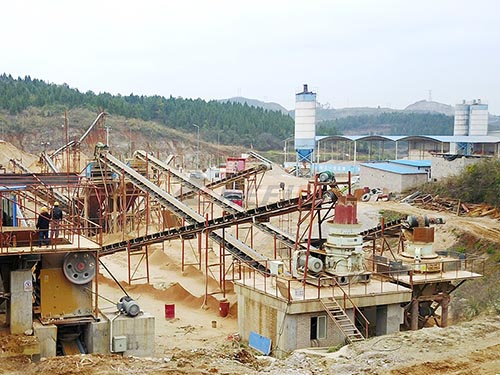
3.1. ISO 9001:2015 – Quality Management
This certification ensures that the manufacturer has a documented quality management system (QMS) covering design, procurement, production, and after-sales service. For a crushing plant, this means traceability of every bolt, bearing, and hydraulic hose. Non-conformances are tracked and corrected through root cause analysis. ISO 9001 certification is often a prerequisite for bidding on large infrastructure projects.
3.2. ISO 14001:2015 – Environmental Management
Quarry crushing plants are significant sources of particulate matter (PM10 and PM2.5), noise, and vibration. Certified manufacturers must design dust suppression systems (water sprays, mist cannons, or baghouse filters) that meet local emission limits. They must also provide plans for waste management (e.g., recycling of scrap metal, proper disposal of lubricants) and water recirculation systems to minimize freshwater consumption.
3.3. ISO 45001:2018 – Occupational Health and Safety
Crushing plants are inherently hazardous, with risks including caught-in machinery, falling objects, electrical shock, and hearing loss. Certified manufacturing includes safety features such as emergency stop pull cords, interlocked guards, lockout/tagout (LOTO) provisions, and noise enclosures. The manufacturer must also provide a safety manual and conduct risk assessments for each operational scenario.
3.4. CE Marking (EU) and UKCA
For plants sold in the European Economic Area or the United Kingdom, the manufacturer must declare conformity with the Machinery Directive (2006/42/EC) and other applicable directives (e.g., EMC, Low Voltage). This involves a technical file, risk assessment, and often a notified body assessment for complex machinery. CE marking is a legal requirement, not a voluntary certification.
3.5. ASME and Other Pressure Vessel Standards
If the plant includes pneumatic systems, hydraulic accumulators, or compressed air receivers, these components must be designed and tested according to ASME Boiler and Pressure Vessel Code (Section VIII) or equivalent local standards. Failure to do so can result in catastrophic rupture.
4. Quality Control and Testing Protocols
Certified manufacturing relies on a multi-layered quality control (QC) system:
5. Economic and Operational Benefits of Certified Manufacturing
5.1. Reduced Downtime and Maintenance Costs
Certified plants are built with higher tolerances and better materials, leading to longer component life. For example, certified crusher liners may last 20–30% longer than non-certified equivalents. This reduces the frequency of shutdowns for liner replacement and lowers overall maintenance costs.
5.2. Enhanced Safety and Regulatory Compliance
In many jurisdictions, operating a non-certified plant can result in fines, shutdown orders, or legal liability in case of accidents. Certified plants facilitate faster permitting and insurance approvals. They also reduce the risk of worker compensation claims.
5.3. Higher Resale Value
A certified plant with documented maintenance history and third-party inspections commands a premium in the used equipment market. Buyers are willing to pay more for equipment that has been built to recognized standards.
5.4. Energy Efficiency
Certified manufacturers often incorporate variable frequency drives (VFDs), energy-efficient motors (IE3 or IE4), and optimized crusher chamber designs. This can reduce energy consumption by 10–15% compared to conventional plants, translating to significant cost savings over the plant’s lifetime.
6. Environmental and Social Responsibility
Modern certified manufacturing emphasizes sustainability. Dust and noise control are not afterthoughts but integral design parameters. Many certified plants include closed-loop water systems that recycle 90% of process water. Some manufacturers offer carbon footprint calculations and use recycled steel in non-structural components.
Socially, certified manufacturers often engage with local communities by providing training programs, employing local labor during installation, and ensuring that the plant does not disrupt nearby residential areas. Compliance with IFC (International Finance Corporation) performance standards is increasingly common for projects funded by multilateral development banks.
7. Challenges and Considerations
Despite the advantages, certified manufacturing comes with higher upfront costs—typically 15–30% more than non-certified alternatives. The design and certification process can add 4–8 weeks to the project timeline. Additionally, maintaining certification requires ongoing audits, documentation, and training, which can be burdensome for small manufacturers.
For quarry operators, it is essential to verify that the certification is genuine and applicable to the specific plant configuration. Some manufacturers claim “certified” but only have certification for their management system, not for the actual product. Buyers should request copies of certificates, inspection reports, and performance test results.
8. Future Trends in Certified Crushing Plant Manufacturing
The industry is moving toward digitalization and automation. Certified plants now often include IoT sensors for real-time monitoring of wear, temperature, and vibration. Predictive maintenance algorithms can forecast component failure weeks in advance. Some manufacturers are developing “smart” crushers that automatically adjust settings based on feed material characteristics.
Sustainability is also driving innovation. Electrification of mobile plants, use of solar power for remote sites, and development of fully recyclable plant components are emerging trends. Certification bodies are updating their standards to include criteria for circular economy and carbon neutrality.
Conclusion
Certified Stone Quarry Crushing Plant Manufacturing is not a marketing slogan but a rigorous, engineering-driven approach to producing reliable, safe, and environmentally responsible equipment. It encompasses every stage from geological analysis to final commissioning, with adherence to international standards that protect workers, communities, and the environment. While the initial investment is higher, the long-term benefits—reduced downtime, lower operating costs, regulatory compliance, and enhanced marketability—make certified plants the preferred choice for serious quarry operators and infrastructure developers. As the construction industry continues to evolve, certified manufacturing will remain a cornerstone of sustainable aggregate production.
If you have any questions about our products, please feel free to contact us. We take all inquiries and suggestions very seriously.