
China Gold Ore Crushing Equipment Testing: A Comprehensive Technical Analysis
Introduction
China stands as the world’s largest gold producer, with annual output exceeding 300 metric tons. The country’s gold mining industry relies heavily on efficient and reliable ore processing equipment, particularly in the crushing stage, which is critical for liberating gold particles from the host rock. Gold ore crushing equipment testing in China is a rigorous, multi-faceted process that ensures machinery meets the demanding conditions of hard rock mining, high throughput requirements, and strict environmental regulations. This article provides a detailed, professional, and objective examination of the testing protocols, equipment types, key performance indicators, and industry standards governing gold ore crushing equipment in China.
1. The Importance of Crushing in Gold Processing
Gold ore typically contains gold particles at microscopic or sub-microscopic levels, often encapsulated within sulfide minerals or quartz veins. The crushing stage reduces run-of-mine (ROM) ore from boulders (up to 1.5 meters in diameter) to a particle size of 10–50 mm, preparing it for subsequent grinding and leaching. Inefficient crushing leads to higher energy consumption, reduced throughput, and poor gold recovery. Therefore, equipment testing is not merely a quality assurance step but a fundamental requirement for optimizing the entire gold extraction chain.
2. Types of Gold Ore Crushing Equipment Tested in China
Chinese manufacturers produce a wide range of crushing equipment tailored to gold ore properties, including hardness (typically 6–8 on Mohs scale), abrasiveness, and moisture content. The most common types tested include:
3. Testing Standards and Regulatory Framework
China’s gold ore crushing equipment testing is governed by a combination of national standards (GB standards), industry-specific norms, and international benchmarks (e.g., ISO 9001, ISO 14001). Key standards include:
Additionally, testing must comply with China’s “Green Mine” regulations, which mandate dust suppression, noise control, and energy efficiency benchmarks.
4. Pre-Testing Preparation and Sample Selection
Before any equipment test, a detailed ore characterization is performed. Samples from representative gold mines (e.g., Shandong, Henan, Xinjiang) are analyzed for:
Equipment is then calibrated using standard reference materials (e.g., quartzite blocks) to ensure baseline performance.
5. Key Testing Parameters and Methodologies
5.1. Throughput Capacity Test
The crusher is fed with ore at a controlled rate (e.g., 100–500 t/h) for a minimum of 4 hours. The actual throughput is measured using belt scales or volumetric methods. Chinese standards require that actual throughput must be within ±5% of the manufacturer’s rated capacity.
5.2. Particle Size Distribution (PSD) Analysis
Samples are collected from the crusher discharge at 15-minute intervals. Sieve analysis (using standard mesh sizes from 100 mm down to 0.5 mm) determines the percentage of material passing each screen. For gold ore, the target is typically 80% passing 50 mm for primary crushing and 80% passing 12 mm for secondary crushing. The PSD curve must match the design specifications, with a maximum oversize fraction of 5%.
5.3. Power Consumption and Energy Efficiency
Power draw is monitored using three-phase power analyzers. Specific energy consumption (kWh/t) is calculated. For jaw crushers, typical values range from 0.3–0.8 kWh/t; for cone crushers, 0.5–1.2 kWh/t. Chinese testing protocols require that energy consumption does not exceed the manufacturer’s declared value by more than 10%.
5.4. Wear Rate and Component Durability
Wear parts (liners, mantles, blow bars) are weighed before and after a 100-hour continuous operation test. Wear rate is expressed in grams per ton of ore processed. For gold ore with high quartz content, acceptable wear rates for manganese steel liners are 0.5–1.5 g/t. Advanced testing includes scanning electron microscopy (SEM) to analyze wear mechanisms such as abrasion, impact, and corrosion.
5.5. Noise and Vibration Levels
Sound level meters and accelerometers are placed at operator positions and 1 meter from the crusher. Chinese regulations (GB 3096-2008) limit noise to 85 dB(A) for continuous operation. Vibration velocity must not exceed 4.5 mm/s RMS for crusher bearings and 2.5 mm/s for the base frame.
5.6. Safety and Reliability Tests
Emergency stop systems, overload protection, and hydraulic relief valves are tested under simulated fault conditions. A 72-hour continuous run test is conducted to identify potential failures in bearings, seals, and lubrication systems. Mean Time Between Failures (MTBF) is calculated; for modern Chinese crushers, MTBF targets exceed 2,000 hours.
6. Advanced Testing Facilities in China
Several state-of-the-art testing centers specialize in gold ore crushing equipment:
These facilities use computer simulation (e.g., DEM – Discrete Element Method) to model particle flow and predict wear patterns before physical testing, reducing time and cost.
7. Case Study: Testing a Chinese-Made Cone Crusher for a Gold Mine in Xinjiang
A leading Chinese manufacturer, Shanghai Shibang Machinery Co., Ltd., recently tested its HPT-300 cone crusher for a gold mine in the Altai Mountains. The ore had a Bond Work Index of 18.5 kWh/t and an abrasion index of 0.6. Testing results:
The crusher was approved for installation after minor adjustments to the hydraulic system to improve throughput.
8. Challenges and Future Trends in Testing
8.1. Challenges
8.2. Future Trends
9. Conclusion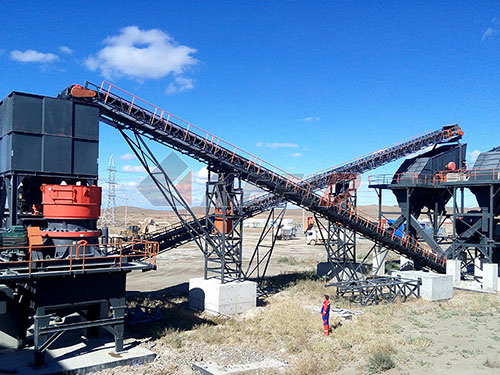
Gold ore crushing equipment testing in China is a sophisticated, data-driven process that ensures machinery meets the rigorous demands of the gold mining industry. From throughput and particle size to wear resistance and environmental compliance, each parameter is meticulously evaluated using national standards and advanced analytical tools. As China continues to dominate global gold production, its testing protocols will evolve to incorporate digitalization, AI, and sustainability, setting new benchmarks for efficiency and reliability. For mining companies and equipment buyers, understanding these testing procedures is essential for selecting crushers that maximize gold recovery while minimizing operational costs and environmental footprint.
If you have any questions about our products, please feel free to contact us. We take all inquiries and suggestions very seriously.