
Quality Control in Stone Quarry Crushing Plant Operations: A Comprehensive Analysis
Introduction
Quality control in a stone quarry crushing plant is a systematic, multi-stage process that determines whether the final aggregate products meet the physical, chemical, and dimensional specifications required by end users. Unlike manufacturing industries where raw materials are homogeneous and tightly controlled, aggregate production begins with a naturally variable resource—the rock deposit itself. This inherent geological variability makes quality control both more challenging and more critical. A well-designed quality control program encompasses deposit characterization, drilling and blasting optimization, crushing circuit configuration, screening efficiency, stockpile management, and laboratory testing. Each stage influences the next, and failures at any point propagate through the entire production chain. This article provides a detailed examination of quality control practices in stone quarry crushing plants, covering the principal parameters, testing methods, operational controls, and management systems that together ensure consistent, specification-compliant aggregate production.
1. Geological Characterization and Deposit Evaluation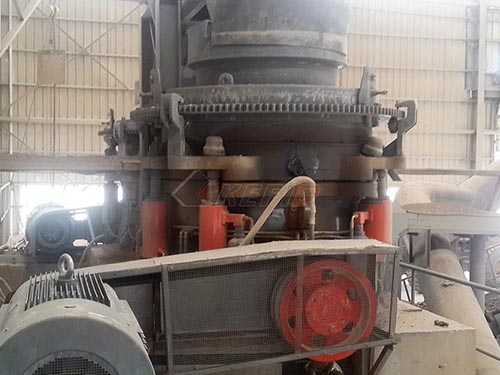
Effective quality control begins long before the first ton of rock is crushed. During the exploration phase, core drilling, test pitting, and geophysical surveys are used to delineate the extent, thickness, and quality of the deposit. Samples are subjected to petrographic analysis, chemical analysis, and physical testing to determine suitability for intended applications. Key parameters include unconfined compressive strength, Los Angeles abrasion value, sodium sulfate soundness, water absorption, and potential alkali-silica reactivity. The spatial distribution of these properties is mapped to identify zones of acceptable and unacceptable material. In quarry operations, this information guides the sequencing of extraction so that problematic zones—such as weathered seams, clay pockets, or high-silica intrusions—are either avoided or blended in controlled proportions. Without this geological foundation, downstream quality control becomes reactive rather than preventive, and product consistency suffers.
2. Drilling and Blasting Control
The fragmentation achieved by drilling and blasting directly affects crushing efficiency and product shape. Poor fragmentation produces oversized boulders that reduce primary crusher throughput and increase wear, while excessive fines generated by over-blasting can contaminate certain product fractions. Quality control at this stage involves accurate burden and spacing calculations, selection of appropriate explosive types and initiation sequences, and monitoring of blast outcomes through fragmentation analysis. Photographic or laser-based fragmentation measurement systems allow operators to quantify the size distribution of blasted rock and adjust blast designs accordingly. Additionally, blast-induced vibration and flyrock must be controlled to protect nearby structures and ensure safety. The objective is a run-of-quarry material that is well fragmented, reasonably uniform, and free of excessive fines, thereby providing a stable feed to the crushing circuit.
3. Crushing Circuit Design and Operational Control
The crushing circuit is the heart of the plant, and its configuration determines the size reduction ratio, product shape, and particle size distribution. Primary crushing, typically performed by a jaw or gyratory crusher, reduces run-of-quarry rock to a size suitable for secondary and tertiary stages. Secondary crushing, often using cone crushers, further reduces material and begins to shape the product. Tertiary and quaternary stages, employing cone or vertical shaft impact (VSI) crushers, produce the final cubical shape and precise gradation required for concrete, asphalt, and railway ballast applications.
Quality control in crushing focuses on several variables. Closed-side setting (CSS) must be monitored and adjusted regularly, as wear on manganese liners changes the effective gap and shifts the product gradation. Crusher throughput, power draw, and hydraulic pressure are monitored to detect abnormal conditions such as tramp metal, packing, or liner wear. The reduction ratio must be balanced to avoid over-crushing, which generates excess fines and reduces yield of valuable coarse fractions. In addition, the selection of crusher type and chamber configuration must match the rock’s hardness and abrasiveness; a poorly matched circuit will produce inconsistent gradation and accelerate wear. Modern plants increasingly employ automated control systems that adjust CSS and feed rate in real time based on belt scale readings and power draw, improving consistency and reducing operator error.
4. Screening and Classification
Screening is the primary means by which crushed material is separated into saleable size fractions. Screen efficiency depends on factors including feed rate, bed depth, aperture size, screen angle, stroke, and moisture content. Quality control here requires regular inspection of screen media for wear, breakage, or blinding, as even small holes or worn apertures can allow oversize particles into a product fraction, causing rejection by customers. Vibrating screen performance is monitored through periodic gradation tests of each product stream. Where specifications demand tight tolerances—such as for asphalt aggregate or concrete sand—air classification or washing may be employed to remove excess fines or dust. Sand production, in particular, requires careful control of the fines content and gradation, often achieved through screw classifiers, hydrocyclones, or dewatering screens. The goal is to ensure that each product stream consistently meets its specified gradation envelope with minimal variability.
5. Stockpile Management and Segregation Control
Even a perfectly crushed and screened product can be rendered non-compliant by poor stockpile management. Segregation occurs when coarse and fine particles separate as material is discharged from a conveyor or dropped from a loader. This leads to spatial variation within a stockpile, so that samples taken from different locations yield different gradations. To mitigate segregation, plants use controlled discharge methods such as telescopic chutes, luffing conveyors, or stockpile stacking with limited drop heights. Stockpiles should be built in horizontal layers rather than conical piles, and material should be reclaimed from the face in a manner that remixes the layers. Contamination between stockpiles must be prevented through physical separation, clear signage, and proper equipment cleaning. Moisture content should also be managed, as wet stockpiles can drain and create variability, while dry stockpiles generate dust that affects both quality and environmental compliance.
6. Laboratory Testing and Statistical Process Control
The laboratory is the verification arm of the quality control system. Routine testing includes sieve analysis (gradation), moisture content, specific gravity, absorption, and, less frequently, durability and chemical tests. Sampling must be representative; incorrect sampling is one of the most common sources of erroneous quality data. Standardized sampling procedures, such as those described in ASTM D75 or equivalent national standards, should be followed. Test results are recorded and analyzed using statistical process control (SPC) techniques. Control charts for key parameters—such as percent passing a critical sieve—allow operators to detect trends before specifications are violated. When a process is found to be out of control, root cause analysis is conducted to identify whether the issue lies in feed material, crusher settings, screen condition, or stockpile handling. SPC transforms quality control from a reactive inspection function into a proactive management tool.
7. Documentation, Certification, and Customer Interface
Aggregate producers must maintain detailed records of test results, production parameters, and corrective actions. These records support product certification and traceability, which are increasingly required by customers and regulators. In many jurisdictions, plants must demonstrate compliance with specifications such as AASHTO M43, EN 12620, or ASTM C33. Certification may involve third-party audits and periodic proficiency testing. Effective customer interface is also part of quality control: understanding the customer’s intended use allows the plant to tailor production and to communicate honestly about product limitations. When non-conformance occurs, a documented process for investigation, correction, and prevention should be in place.
Conclusion
Quality control in a stone quarry crushing plant is not a single activity but an integrated system spanning geology, blasting, crushing, screening, stockpiling, testing, and documentation. Because the raw material is naturally variable, control must be exercised at every stage to prevent variability from accumulating in the final product. The most successful operations are those that combine robust process design, real-time monitoring, disciplined sampling and testing, and a culture of continuous improvement. As specifications become tighter and customers demand greater consistency, the role of quality control will only grow in importance. By treating quality as a plant-wide responsibility rather than a laboratory function alone, quarry operators can achieve reliable, specification-compliant production while minimizing waste, rework, and customer complaints.
If you have any questions about our products, please feel free to contact us. We take all inquiries and suggestions very seriously.