Title: Comprehensive Analysis and Performance Evaluation of a CE-Marked 250–300 TPH Stone Crushing Plant: Testing Protocols, Operational Parameters, and Compliance Verification
Abstract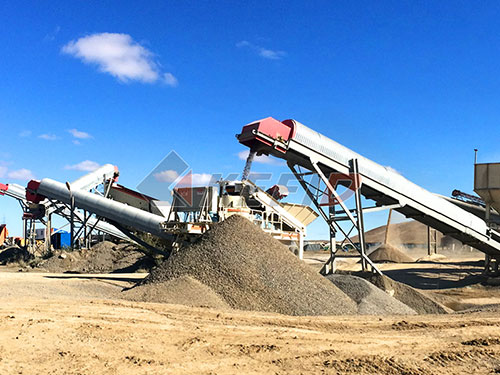
The stone crushing industry is a cornerstone of infrastructure development, supplying essential aggregates for construction, road building, and concrete production. Among the various configurations available, the 250–300 tons per hour (TPH) crushing plant represents a mid-to-high capacity solution suitable for large-scale commercial operations. This article provides a detailed, objective, and professional examination of a CE-marked 250–300 TPH stone crushing plant, with a specific focus on its testing procedures, performance metrics, safety compliance, and quality assurance mechanisms. The discussion encompasses pre-commissioning checks, load testing, material flow analysis, electrical and mechanical system validation, dust and noise control verification, and conformity with European Union (CE) directives. By dissecting each phase of the testing process, this article aims to serve as a technical reference for plant operators, project managers, and regulatory inspectors involved in the deployment of such equipment.
1. Introduction
Stone crushing plants are complex assemblies of feeders, crushers, screens, conveyors, and control systems designed to reduce large rocks into specified aggregate sizes. The capacity range of 250–300 TPH is particularly significant because it balances high throughput with manageable operational costs, making it a popular choice for medium-to-large quarries and recycling facilities. The CE marking on such equipment is not merely a label; it is a legal requirement for products sold within the European Economic Area (EEA), indicating conformity with health, safety, and environmental protection standards. Testing a CE-marked 250–300 TPH stone crushing plant is therefore a rigorous process that validates both mechanical performance and regulatory compliance.
This article systematically explores the testing of such a plant, from initial setup to final certification. The focus is on objective data collection, adherence to international standards (e.g., EN 1009, ISO 21873), and the practical implications of test results for plant reliability and safety.
2. Pre-Testing Preparations and Documentation Review
Before any physical testing begins, a thorough review of the plant’s technical documentation is mandatory. For a CE-marked plant, this includes:
- Declaration of Conformity (DoC): A formal statement that the plant meets all applicable EU directives, including the Machinery Directive (2006/42/EC), the Electromagnetic Compatibility Directive (2014/30/EU), and the Noise Emission Directive (2000/14/EC).
- Technical File: Contains design calculations, risk assessments, circuit diagrams, hydraulic schematics, and material specifications.
- User Manual: Must include installation, operation, maintenance, and safety instructions in the official language of the destination country.
- CE Labeling: Verification that the CE mark is affixed visibly and permanently, accompanied by the manufacturer’s name, serial number, and year of construction.
Pre-testing physical checks include:
- Foundation and Anchoring: Ensuring the plant is mounted on a stable, level concrete base with proper vibration isolation.
- Lubrication and Fluid Levels: Checking oil levels in crushers, gearboxes, and hydraulic systems.
- Electrical Continuity: Verifying that all motors, sensors, and control panels are correctly wired and grounded.
- Belt Tension and Alignment: Inspecting conveyor belts for proper tension, tracking, and splice integrity.
3. Component-Level Testing
A 250–300 TPH plant typically comprises a primary jaw crusher, a secondary cone or impact crusher, vibrating screens, and a network of conveyors. Each component must be tested individually before integrated system testing.
3.1 Primary Jaw Crusher Testing
- No-Load Run: The crusher is operated without material for 30–60 minutes to check bearing temperature, vibration levels, and oil pressure. Acceptable bearing temperature rise is typically ≤ 40°C above ambient.
- Jaw Plate Clearance: Measured using lead slugs or digital gap sensors to ensure the closed-side setting (CSS) matches the design specification (e.g., 100–150 mm for primary crushing).
- Eccentric Shaft Runout: Verified using a dial indicator; maximum allowable runout is usually 0.05 mm.
3.2 Secondary Crusher (Cone or Impact) Testing
- Hydraulic System Pressure: Checked against manufacturer’s specifications (e.g., 12–16 MPa for cone crusher hydroset).
- Mantle and Concave Wear: Measured using templates; initial clearance must allow for proper crushing chamber geometry.
- Speed and Amperage: Motor current draw is recorded under no-load and compared to rated full-load amperage.
3.3 Vibrating Screen Testing
- Amplitude and Stroke: Measured using a vibration analyzer; typical stroke for a 2-deck screen is 8–12 mm at 800–1000 RPM.
- Screen Cloth Tension: Checked with a tension gauge; loose cloth can cause premature wear and inefficient screening.
- Angle of Inclination: Verified using an inclinometer; usually 15–20 degrees for aggregate screening.
3.4 Conveyor System Testing
- Belt Speed: Measured with a tachometer; must match design speed (e.g., 1.5–2.0 m/s).
- Idler Rotation: All idlers must rotate freely; seized idlers cause belt wear and power loss.
- Emergency Stop Functionality: Each pull-cord and stop button is tested for immediate motor shutdown.
4. Integrated System Testing (Load Testing)
After individual components pass inspection, the plant is subjected to a full-load test using representative feed material (e.g., granite, limestone, or basalt with a maximum feed size of 600–800 mm). The testing protocol follows a structured sequence:
4.1 Start-Up Sequence
- The plant is started in reverse order of material flow: conveyors first, then screens, then crushers, and finally the feeder.
- All interlock systems are verified: if a downstream conveyor stops, upstream feeders must automatically halt.
4.2 Material Feed and Throughput Measurement
- Feed rate is gradually increased from 50% to 100% of rated capacity (250–300 TPH).
- Actual throughput is measured using belt scales or weighbridges at the discharge point.
- Data is recorded every 15 minutes over a 4-hour continuous run. Acceptable deviation from rated capacity is ±5%.
4.3 Product Gradation Analysis
- Samples are taken from each product stream (e.g., 0–5 mm, 5–20 mm, 20–40 mm) every 30 minutes.
- Sieve analysis is performed according to EN 933-1 or ASTM C136.
- The plant must produce aggregates within specified tolerances (e.g., ≤10% oversize in the final product).
4.4 Power Consumption Monitoring
- Total power draw is recorded using a power analyzer. For a 250–300 TPH plant, typical installed power is 400–600 kW. Specific energy consumption should be in the range of 1.5–2.5 kWh per ton of product.
- Peak demand and power factor are noted for electrical system optimization.
4.5 Vibration and Structural Integrity
- Accelerometers are placed on crusher housings, screen decks, and main structural beams.
- Vibration velocity should not exceed 10 mm/s RMS for crushers and 5 mm/s for conveyors.
- Any abnormal resonance or structural deflection is documented and corrected.
5. Safety and Environmental Compliance Testing
CE marking mandates strict adherence to safety and environmental standards. Testing in these areas is non-negotiable.
5.1 Guarding and Interlock Verification
- All rotating parts (belts, pulleys, flywheels) must have fixed guards that cannot be removed without tools.
- Interlock switches on access doors and maintenance hatches are tested: opening a guard must immediately stop the associated machinery.
- Lockout/tagout (LOTO) points are verified for isolation capability.
5.2 Noise Level Measurement
- Sound pressure levels are measured at a distance of 1 meter from the plant boundary and at operator positions.
- According to the Noise Emission Directive (2000/14/EC), the guaranteed sound power level for a plant of this size must not exceed 110 dB(A) unless otherwise declared.
- If levels exceed 85 dB(A) at the operator station, mandatory hearing protection zones must be clearly marked.
5.3 Dust Emission Control
- Dust suppression systems (water sprays, mist cannons, or baghouse filters) are tested for coverage and efficiency.
- Particulate matter (PM10) concentration is measured using a portable dust monitor. For CE compliance, ambient dust levels must remain below 10 mg/m³ at the plant boundary.
- Enclosures and chutes are inspected for leaks; any fugitive dust sources are sealed.
5.4 Electrical Safety
- Earth leakage current is measured; must be <30 mA for sensitive equipment.
- Insulation resistance between live conductors and earth must be >1 MΩ.
- Emergency stop circuits are tested for fail-safe operation (normally closed contacts).
6. Performance Benchmarking and Data Analysis
Post-testing, all data is compiled into a comprehensive test report. Key performance indicators (KPIs) include:
- Actual vs. Rated Capacity: The plant should consistently achieve 250–300 TPH with a feed material of average hardness (e.g., 150–200 MPa compressive strength).
- Crushing Ratio: Typically 4:1 to 6:1 for primary and secondary stages combined.
- Product Shape: Flakiness index (EN 933-3) should be <15% for high-quality aggregates.
- Availability: The plant must operate for at least 90% of the test duration without unscheduled downtime.
Any deviations from these benchmarks trigger a root cause analysis. Common issues include:
- Belt slippage due to under-tensioning.
- Screen blinding caused by high moisture content in feed.
- Crusher liner wear accelerating due to incorrect CSS.
7. Certification and Final Acceptance
Upon successful completion of all tests, the following documents are issued:
- CE Certificate of Conformity: Valid for the specific serial number and configuration.
- Test Report: Signed by a qualified engineer, including all raw data and pass/fail criteria.
- Operator Training Record: Confirming that site personnel have been trained on safe operation and emergency procedures.
The plant is then deemed ready for commercial operation. However, periodic re-testing (e.g., annual noise and vibration surveys) is recommended to maintain CE compliance.
8. Conclusion
Testing a CE-marked 250–300 TPH stone crushing plant is a multi-faceted process that goes beyond simple throughput verification. It encompasses mechanical integrity, electrical safety, environmental control, and regulatory compliance. The rigorous testing protocols described in this article ensure that the plant not only meets its design capacity but also operates safely and sustainably within the legal framework of the European Union. For operators, understanding these testing procedures is essential for maximizing uptime, minimizing liability, and producing high-quality aggregates that meet market specifications. As the demand for infrastructure continues to grow, the role of properly tested and certified crushing plants will remain indispensable.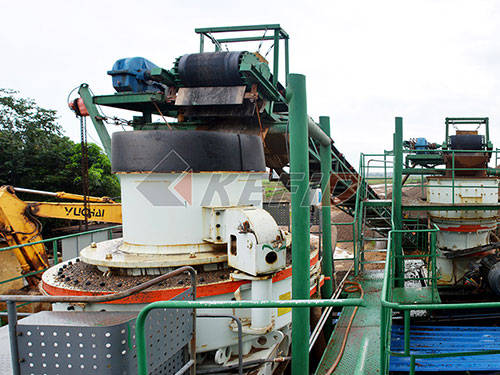
References
- European Committee for Standardization (CEN). EN 1009:2020 – Machines for mechanical processing of minerals and similar solid materials – Safety.
- International Organization for Standardization (ISO). ISO 21873-1:2015 – Building construction machinery and equipment – Mobile crushers – Part 1: Terminology and commercial specifications.
- European Parliament and Council. Directive 2006/42/EC on machinery.
- European Parliament and Council. Directive 2000/14/EC on noise emission in the environment.
- ASTM International. ASTM C136/C136M-19 – Standard Test Method for Sieve Analysis of Fine and Coarse Aggregates.
