Stone Quarry Crushing Plant Exporter Cost: A Comprehensive Analysis of Pricing, Factors, and Market Dynamics
The global demand for construction aggregates, road base materials, and industrial minerals has driven the expansion of stone quarrying and crushing operations across emerging and developed economies alike. For international buyers—ranging from infrastructure contractors to mining conglomerates—the decision to procure a complete stone quarry crushing plant from an exporter involves a complex evaluation of capital expenditure (CAPEX), operational expenditure (OPEX), logistics, and long-term reliability. This article provides a detailed, professional examination of the cost structure associated with exporting stone quarry crushing plants, the variables that influence pricing, and strategic considerations for buyers seeking optimal value.
1. Defining the Scope of a “Stone Quarry Crushing Plant”
Before dissecting costs, it is essential to clarify what constitutes a modern crushing plant in the context of quarry operations. A typical turnkey system includes:
- Primary crushing unit (jaw crusher or gyratory crusher)
- Secondary and tertiary crushers (cone crushers, impact crushers, or vertical shaft impactors)
- Vibrating feeders, screens, and conveyors
- Dust suppression systems
- Control panels and automation software
- Structural steel, chutes, and hoppers
- Optional mobile or semi-mobile configurations
Exporters may offer these as individual machines, as a fixed complete line, or as modular containerized plants. The cost quoted by an exporter is rarely a single figure; it is a composite of equipment manufacturing, engineering design, compliance with destination-country standards, and freight.
2. Base Equipment Cost: The Core of the Price
The most significant portion of the exporter’s quoted cost—typically 60% to 70%—is the manufacturing cost of the crushing and screening equipment. This varies dramatically based on capacity (tons per hour, TPH), feed material hardness (e.g., granite, basalt, limestone), and final product specifications.
- Small-scale plants (50–150 TPH): For small quarries or recycling projects, a basic jaw + cone or jaw + impact configuration may cost between USD 150,000 and USD 500,000 (FOB, ex-works). These units often use standard manganese steel liners and simpler hydraulic systems.
- Medium-scale plants (150–400 TPH): These are the most commonly exported. Prices range from USD 500,000 to USD 1.5 million. At this level, exporters include more robust frames, higher-grade bearings, and optional automation.
- Large-scale plants (400–1000+ TPH): High-capacity installations for major infrastructure projects command prices from USD 2 million to USD 8 million or more. These systems feature multiple crushing stages, advanced PLC controls, and heavy-duty vibrating screens capable of handling abrasive feed.
It is critical to note that the exporter’s cost is not uniform across regions. Chinese exporters, for instance, often offer 20–30% lower base equipment prices compared to European or North American manufacturers, but this gap narrows when considering after-sales support and spare parts availability.
3. Engineering, Design, and Customization Costs
A standard catalog price rarely suffices for a quarry site. Exporters incur engineering costs to adapt the plant to the buyer’s specific geological conditions, site topography, and local electrical standards. These costs include:
- Process flow design: Determining the optimal crushing stages and screen apertures to achieve desired aggregate gradation.
- Structural engineering: Designing foundations, support frames, and access platforms. For seismic zones or high-wind areas, additional steel reinforcement adds 5–10% to the total.
- Electrical and control engineering: Customizing motor power, voltage (e.g., 380V, 415V, 660V), and frequency (50Hz vs. 60Hz) to match the destination grid. This can add USD 20,000 to USD 100,000 depending on complexity.
- Dust and noise mitigation: Many importing countries (e.g., EU member states, Australia) enforce strict environmental regulations. Adding water spray systems, enclosed transfer points, and acoustic enclosures can increase the exporter’s cost by 8–15%.
4. Logistics and Export-Related Costs
The term “exporter cost” inherently includes the expenses incurred to move the plant from the factory to the buyer’s port of entry. These are often underestimated by first-time buyers.
- Packing and containerization: Crushers and screens are heavy (often 20–50 tons per unit). Exporters must use reinforced steel frames, waterproof wrapping, and desiccants. Packing costs range from USD 5,000 to USD 30,000 per container or flat rack.
- Ocean freight: A 40-foot flat rack or open-top container for a primary jaw crusher may cost USD 3,000 to USD 8,000 depending on the route (e.g., Shanghai to Mombasa vs. Rotterdam to Houston). For complete plants requiring 10–20 containers, freight alone can reach USD 50,000 to USD 150,000.
- Inland transportation to the port: If the factory is located inland (e.g., in Zhengzhou or Chengdu), trucking to the export port adds USD 2,000 to USD 5,000 per truckload.
- Insurance and customs brokerage: Marine insurance typically costs 0.3–0.5% of the declared value. Exporters may also include documentation fees (bill of lading, certificate of origin, inspection certificates) ranging from USD 1,000 to USD 3,000.
5. Incoterms and Their Impact on Exporter Cost
The quoted price is heavily influenced by the chosen Incoterm (International Commercial Terms). A common misunderstanding is that the exporter’s cost is fixed; in reality, it shifts based on risk and responsibility transfer.
- EXW (Ex Works): The exporter’s cost is lowest—only the factory price plus packing. The buyer assumes all transport, export clearance, and freight costs. This is often the baseline for comparing exporters.
- FOB (Free on Board): The exporter covers inland transport to the port and loading onto the vessel. This adds USD 10,000 to USD 40,000 to the base cost, depending on distance and port congestion.
- CIF (Cost, Insurance, and Freight): The exporter pays for ocean freight and insurance up to the destination port. This can add USD 30,000 to USD 120,000 to the total, making CIF quotes appear higher but offering the buyer convenience.
- DDP (Delivered Duty Paid): The exporter handles all costs including import duties and local delivery. This is the most expensive option for the exporter, often adding 15–25% over EXW, but it simplifies the buyer’s budget.
6. Hidden Costs and Contingencies
Professional buyers must scrutinize the exporter’s quotation for hidden line items that inflate the final invoice: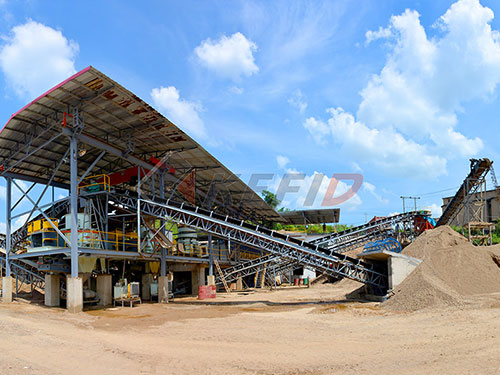
- Spare parts package: A mandatory first-year spare parts kit (worn liners, belts, bearings, filters) typically costs 5–10% of the equipment value. Some exporters include this; others list it separately.
- Commissioning and training: If the exporter sends engineers to supervise installation and train local operators, expect USD 300–800 per engineer per day plus travel, accommodation, and visas. A two-week commissioning visit can cost USD 15,000–30,000.
- Performance testing: Some buyers require a factory acceptance test (FAT) or site performance test. This adds engineering hours and potential material costs.
- Currency fluctuation and payment terms: Exporters often quote in USD or EUR. If the buyer’s currency weakens, the effective cost rises. Additionally, letters of credit (L/C) involve bank fees (0.5–1.5%) that may be passed to the buyer.
7. Regional Cost Variations Among Exporters
The global market for stone quarry crushing plants is dominated by several key exporting nations, each with distinct cost structures:
- China: The largest exporter by volume. Chinese manufacturers (e.g., in Henan, Shanghai, Zhejiang) offer the lowest base costs due to economies of scale, lower labor costs, and a mature supply chain for castings and forgings. However, quality control varies; reputable exporters charge a premium of 10–20% over the lowest bidder to ensure compliance with ISO and CE standards.
- India: Similar to China but with slightly higher freight costs to many destinations. Indian exporters often excel in secondary crushers and screens, with prices 5–10% higher than Chinese equivalents but with better English documentation.
- Turkey: A rising hub for European and Middle Eastern markets. Turkish exporters offer competitive prices (10–15% higher than China) but with faster lead times and better access to European components.
- Europe (Germany, Italy, Spain) and North America: These exporters command 50–100% premiums over Chinese prices. The higher cost is justified by superior automation, longer service life, and lower energy consumption per ton. For high-abrasion materials like quartzite or hard granite, the total cost of ownership (TCO) may favor these premium brands.
8. Total Cost of Ownership (TCO) vs. Initial Exporter Cost
A wise buyer evaluates the exporter’s cost not as a one-time purchase but as part of a 10–15 year operational horizon. The TCO includes:
- Energy consumption: A 300 TPH plant may consume 800–1200 kW. At USD 0.10/kWh, annual electricity costs can exceed USD 500,000. Higher-efficiency European crushers can reduce this by 10–15%, offsetting their higher initial cost within 3–4 years.
- Wear parts replacement: Manganese liners for a cone crusher cost USD 20,000–50,000 per set and may need replacement every 6–12 months depending on feed abrasiveness. Exporters offering locally sourced wear parts (or with regional warehouses) reduce downtime and logistics costs.
- Maintenance labor: Simpler, modular designs reduce the need for skilled mechanics. A plant that requires fewer specialized tools will have lower annual maintenance costs.
- Resale value: Premium European and American plants retain 40–50% of their value after 10 years, whereas budget Chinese plants may retain only 20–30%.
9. Negotiation Strategies and Cost Reduction
To obtain the most favorable exporter cost, buyers should employ the following tactics:
- Request a detailed BOQ (Bill of Quantities): Insist on itemized pricing for each crusher, screen, conveyor, and electrical component. This exposes inflated margins.
- Compare FOB vs. CIF quotes: Ask for both. If the exporter’s CIF quote is only 5% higher than FOB, it indicates efficient freight arrangements; if it is 20% higher, consider using your own freight forwarder.
- Leverage bulk orders: If you are procuring multiple plants (e.g., for two or three quarries), negotiate a 5–10% volume discount.
- Consider used or refurbished equipment: Some exporters offer reconditioned plants at 40–60% of new cost, with a shorter warranty. This is viable for low-abrasion limestone projects.
- Timing of purchase: Exporters often offer discounts during off-peak seasons (e.g., Q1 in China due to the Lunar New Year slowdown) or when steel prices are low.
10. Conclusion: The Realistic Cost Benchmark
In summary, the exporter cost for a stone quarry crushing plant is not a single number but a spectrum. For a typical 250 TPH granite quarry, a realistic FOB price from a reputable Chinese exporter is USD 800,000 to USD 1.2 million. Adding freight, insurance, and commissioning brings the landed cost to USD 1.0–1.5 million. For a European premium plant of the same capacity, the landed cost may reach USD 2.0–2.8 million.
The key takeaway for procurement professionals is to avoid selecting an exporter solely on the lowest initial quote. Instead, perform a rigorous TCO analysis, verify the exporter’s track record with third-party inspections, and negotiate clear performance guarantees (e.g., throughput, product gradation, and power consumption). By understanding the components of exporter cost—equipment, engineering, logistics, Incoterms, and hidden fees—buyers can make informed decisions that balance upfront expenditure with long-term operational efficiency. In a market where margins are tight and project deadlines are unforgiving, the true cost of a crushing plant is measured not in the invoice, but in the tons of aggregate delivered per dollar invested over the plant’s lifetime.
