
Title: Optimizing Aggregate Production: A Comprehensive Guide to Stone Quarry Crushing Plant Assembly and Operations
Introduction
In the construction, infrastructure, and mining sectors, the demand for high-quality aggregates is insatiable. From the foundation of highways and skyscrapers to the raw materials for concrete and asphalt, crushed stone serves as the backbone of modern development. At the heart of this supply chain lies the Stone Quarry Crushing Plant. A sophisticated assembly of heavy machinery, these plants transform massive, raw quarried rock into precisely sized materials. This article provides a detailed, technical overview of the assembly, components, operational workflow, and strategic considerations involved in establishing and operating a stone quarry crushing plant.
Chapter 1: The Strategic Assembly of a Crushing Plant
The term “assembly plant” in the context of stone quarrying does not refer to a manufacturing facility where machines are built, but rather the strategic on-site configuration and installation of various crushing, screening, and conveying units. The assembly process is a complex engineering feat that must account for the geological characteristics of the quarry, the desired final product specifications, and the logistical constraints of the site.
The assembly of a crushing plant is generally categorized into three stages: primary, secondary, and tertiary crushing. The configuration—whether mobile, semi-mobile, or stationary—dictates the assembly methodology.
Chapter 2: Core Components of the Assembly
A standard stone quarry crushing plant assembly comprises several critical components, each playing a specific role in the reduction ratio and material handling process.
1. Feeding System:
The process begins with the raw material feed. This is typically handled by a Vibrating Grizzly Feeder. The feeder performs two functions: it regulates the flow of material into the primary crusher and scalps out fine materials or dirt before crushing, reducing the load on the crusher.
2. Primary Crushing Unit:
This is the first stage of size reduction. The choice of primary crusher depends on the hardness and abrasiveness of the rock.
3. Screening and Conveying:
After primary crushing, the material is transported via belt conveyors to a screening station. Vibrating screens classify the material by size. Oversized material is sent to the secondary crusher, while undersized material may bypass the secondary stage or be stockpiled as a finished product.
4. Secondary and Tertiary Crushing:
To achieve smaller, more uniform aggregate sizes, secondary and tertiary crushers are employed.
5. Auxiliary Equipment:
A complete assembly includes dust suppression systems (water sprays or baghouse filters), magnetic separators to remove tramp metal, and centralized control systems for monitoring throughput and safety.
Chapter 3: The Operational Workflow
The operational workflow of a crushing plant is a continuous, interconnected loop. It begins with blasting in the quarry face, followed by hauling via dump trucks to the plant’s feed hopper.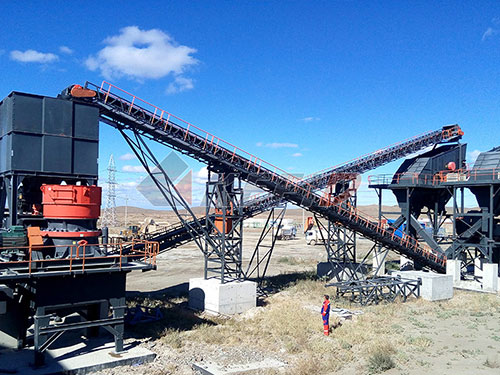
The material undergoes a series of reductions:
Throughout this process, belt scales monitor tonnage, and sampling systems ensure the final product meets the required gradation standards (e.g., ASTM or BS standards).
Chapter 4: Design and Assembly Considerations
Assembling a crushing plant requires meticulous planning. Several factors must be evaluated:
Chapter 5: Maintenance and Optimization
A crushing plant is a high-wear environment. The assembly must facilitate easy maintenance. Access platforms, cranes, and inspection doors are critical. Regular maintenance schedules are essential for replacing crusher liners, screen meshes, and conveyor belts.
Optimization involves analyzing the “crushing circuit.” Using software to simulate material flow can identify bottlenecks. For instance, if the screen is overloaded, the efficiency of the crushers drops. Adjusting the stroke of the screen or the speed of the feeder can balance the load.
Chapter 6: Safety Protocols in Plant Assembly and Operation
Safety is the paramount concern in quarry operations. The assembly must comply with strict safety standards (such as MSHA in the US or CE marking in Europe). Key safety features include:
Conclusion
The Stone Quarry Crushing Plant is a marvel of industrial engineering. Its assembly is not merely the erection of steel and motors, but a carefully calibrated system designed to convert geological resources into essential construction materials. As the industry moves toward automation and sustainability, modern crushing plants are incorporating IoT sensors for predictive maintenance and advanced dust suppression to minimize environmental impact.
Understanding the intricacies of plant assembly—from the primary jaw to the tertiary cone and the intricate web of conveyors—is essential for any quarry operator aiming to maximize efficiency, product quality, and safety. As infrastructure demands continue to grow globally, the optimization of these assembly plants will remain a critical component of the construction supply chain.
If you have any questions about our products, please feel free to contact us. We take all inquiries and suggestions very seriously.