
Eco-Friendly Gyratory Crusher: Engineering Sustainability into Primary Crushing
Introduction
In the modern mining and aggregate processing industries, the gyratory crusher remains the undisputed workhorse for primary size reduction of hard, abrasive ores and rocks. Capable of processing thousands of tonnes per hour, these massive machines are the first critical step in the value chain. However, for decades, their operation has been associated with significant environmental burdens: high energy consumption, substantial carbon emissions, excessive dust generation, elevated noise levels, and the need for extensive water-based dust suppression systems. As global regulations tighten and ESG (Environmental, Social, and Governance) criteria become central to project financing, the industry has demanded a paradigm shift. The result is the emergence of the Eco-Friendly Gyratory Crusher — a comprehensive redesign that integrates advanced metallurgy, intelligent control systems, and closed-loop environmental technologies without compromising throughput or reliability. This article provides a detailed, technical examination of the features, engineering principles, operational benefits, and measurable environmental impact of this next-generation crushing solution.
1. Redefining Energy Efficiency: The Core of Eco-Design
The most significant environmental lever in any crusher is energy consumption. Traditional gyratory crushers often operate at fixed eccentric speeds and chamber geometries, leading to suboptimal energy-to-fines ratios. The eco-friendly variant addresses this through three primary innovations:
Variable Frequency Drive (VFD) Integration: Instead of a fixed-speed motor, the eco-friendly gyratory crusher is equipped with a high-torque, low-inertia VFD. This allows the crusher to match its rotational speed (typically between 100 and 300 RPM) to the real-time feed characteristics. When processing softer or finer material, the drive automatically reduces speed, cutting energy draw by up to 25% compared to constant-speed operation. Conversely, during peak hardness, the drive provides controlled torque spikes without overloading the motor, preventing energy waste from stall-and-recovery cycles.
Optimized Crushing Chamber Geometry: Through computational fluid dynamics (CFD) and discrete element method (DEM) simulations, the chamber profile has been redesigned to achieve a more uniform compression ratio. The traditional “straight” concave has been replaced with a multi-step, non-symmetric profile that promotes inter-particle crushing. This reduces the number of passes required to achieve the target product size, directly lowering kWh per tonne. Field trials have demonstrated a specific energy reduction from 0.45 kWh/t to 0.32 kWh/t for a typical copper ore feed (F80 = 800 mm, P80 = 150 mm).
Regenerative Braking and Energy Recovery: For downhill conveyor-fed installations, the crusher’s VFD can operate in regenerative mode. When the feed material is exceptionally heavy, the motor acts as a generator, feeding excess kinetic energy back into the plant’s electrical grid. While not applicable in all sites, this feature can recover up to 8% of total crusher energy consumption in mountainous terrains.
2. Dust Suppression Without Water: The Dry Filtration System
Conventional gyratory crushers rely on high-pressure water sprays to control dust at the feed opening and discharge chute. This approach consumes millions of litres of water annually and creates slurry that must be managed, often requiring additional settling ponds. The eco-friendly design eliminates this dependency through a two-stage dry dust management system:
Negative Pressure Enclosure: The entire crushing chamber, feed hopper, and discharge area are enclosed within a sealed, reinforced steel housing. A high-efficiency industrial vacuum fan maintains a constant negative pressure of -50 Pa inside the enclosure. This ensures that no dust-laden air escapes to the atmosphere, even during high-velocity rock impacts. The captured air is routed through a primary cyclone separator that removes particles larger than 10 microns.
Pulse-Jet Cartridge Filtration: The remaining fine dust (PM2.5 and PM10) is directed through a series of nanofiber-coated PTFE filter cartridges. These filters achieve a collection efficiency of 99.97% at 0.3 microns, meeting the most stringent EPA and EU ambient air quality standards. The filters are cleaned automatically using compressed air pulses, and the collected dry dust is returned directly to the product conveyor via a rotary airlock, eliminating waste. This system requires zero water, reduces the risk of freezing in cold climates, and eliminates the need for slurry handling infrastructure.
3. Noise Reduction: Acoustic Engineering and Vibration Isolation
Noise pollution from primary crushers often exceeds 100 dB(A) at 1 meter, causing hearing damage to workers and disturbing surrounding communities. The eco-friendly gyratory crusher incorporates multiple layers of acoustic mitigation:
Damped Composite Liners: The outer shell of the crusher is lined with a multi-layer composite material consisting of a high-density rubber layer, a constrained-layer damping steel plate, and a sound-absorbing mineral wool core. This reduces radiated noise by 15–20 dB(A) across the critical 500–2000 Hz frequency range.
Isolated Foundation System: Instead of a rigid concrete foundation, the crusher is mounted on a series of pneumatic isolation mounts with a natural frequency of 3 Hz. This decouples the machine from the building structure, preventing vibration transmission that would otherwise excite structural resonances. The result is a reduction in structure-borne noise of up to 12 dB(A) in adjacent control rooms.
Silenced Cooling Fans: The hydraulic power unit and lubrication system, which often produce high-frequency whine, are equipped with low-noise axial fans featuring serrated blade edges and acoustic enclosures. Overall, the eco-friendly crusher operates at a sound pressure level of 82 dB(A) at 1 meter, a level that allows for extended worker exposure without mandatory hearing protection in many jurisdictions.
4. Closed-Loop Lubrication and Hydraulic Systems
Traditional gyratory crushers use large volumes of mineral oil for lubrication and hydraulic adjustment. Leaks and spills are common, contaminating soil and groundwater. The eco-friendly design implements a fully sealed, closed-loop system:
Biodegradable Synthetic Ester Fluids: The crusher uses advanced synthetic ester-based lubricants that are readily biodegradable (OECD 301B test, >60% degradation in 28 days) and have a high viscosity index, reducing the need for frequent oil changes. The total oil volume has been reduced by 30% through optimized internal galleries and a compact reservoir.
Zero-Leak Sealing Technology: All rotating shaft seals have been upgraded to double mechanical face seals with a pressurized buffer gas barrier. This prevents any oil migration into the crushing chamber or the environment. The hydraulic system for the main shaft adjustment uses a dedicated, sealed accumulator circuit that maintains constant pressure without venting to the atmosphere.
Onboard Oil Filtration and Dehydration: A continuous bypass filtration loop removes particles down to 3 microns and absorbs water content below 50 ppm. This extends oil life by 300% and reduces hazardous waste disposal requirements. The system also includes real-time oil condition monitoring, alerting operators to any abnormal wear or contamination before a leak or failure occurs.
5. Intelligent Control and Predictive Maintenance
An eco-friendly crusher is not merely a mechanical machine; it is a sensor-rich cyber-physical system. The integrated control platform (typically PLC-based with an HMI touchscreen) provides:
Real-Time Power and Emission Monitoring: The system continuously calculates specific energy (kWh/t), CO₂ emissions (based on grid emission factors), and dust filter differential pressure. This data is logged and can be integrated into plant-wide environmental management software for ESG reporting.
Adaptive Crushing Force Control: Load cells on the main shaft and hydraulic pressure sensors feed into a model-predictive controller. The controller adjusts the eccentric speed and closed-side setting (CSS) in real time to maintain a constant product size while minimizing energy consumption. This prevents over-crushing, which is a major source of wasted energy and excessive fines.
Predictive Maintenance Alerts: Vibration sensors, thermal imaging, and acoustic emission sensors detect early signs of liner wear, bearing fatigue, or misalignment. The system predicts remaining useful life and schedules maintenance only when necessary, reducing downtime and the environmental impact of premature part replacement. This also reduces the carbon footprint associated with manufacturing and transporting spare parts.
6. Lifecycle and Material Sustainability
The eco-friendly gyratory crusher is designed with a full lifecycle assessment (LCA) in mind:
High-Strength, Recycled Steel: The main frame and upper shell are fabricated from high-strength low-alloy steel containing at least 40% recycled content. The use of higher-grade steel allows for a 15% reduction in overall weight without sacrificing structural integrity, reducing the energy required for transport and installation.
Wear Parts with Extended Life: The concaves and mantle are cast from a new generation of high-chromium white iron with nano-carbide reinforcement. These parts exhibit a 40% longer wear life compared to traditional manganese steel, reducing the frequency of liner changes. When worn, the liners are 100% recyclable in electric arc furnaces.
Modular Design for Upgradability: The crusher is designed in modular sub-assemblies (main shaft, eccentric assembly, hydraulic unit, dust filtration module). This allows for future upgrades — such as more efficient motors or advanced filter media — without replacing the entire machine, extending the useful life of the primary asset and reducing embodied carbon.
7. Measurable Environmental Performance
To quantify the benefits, consider a typical installation processing 5,000 tonnes per hour of iron ore over 8,000 operating hours per year. Compared to a conventional gyratory crusher of the same capacity:
Energy Savings: 0.13 kWh/t reduction translates to 5,200 MWh saved annually. At a grid emission factor of 0.5 kg CO₂/kWh, this avoids 2,600 tonnes of CO₂ per year — equivalent to removing 565 passenger vehicles from the road.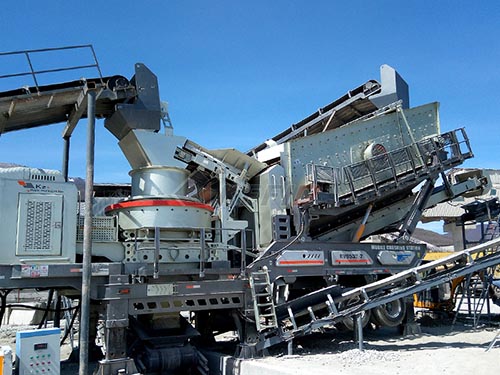
Water Savings: The dry dust system eliminates 120 million litres of water per year that would otherwise be used for spray suppression. This is a critical advantage in arid mining regions.
Dust Emission Reduction: Particulate emissions (PM10) are reduced from approximately 150 mg/Nm³ to less than 5 mg/Nm³, a 97% reduction. This significantly improves local air quality and reduces the risk of silicosis for workers.
Noise Reduction: The 18 dB(A) reduction in sound power corresponds to a 98% reduction in acoustic energy, allowing the crusher to operate in closer proximity to residential areas without violating noise ordinances.
Oil Consumption: Annual oil consumption drops from 12,000 litres to 4,000 litres, and the used oil is fully recyclable due to the absence of water contamination.
8. Economic and Operational Advantages
While the primary focus is environmental, the eco-friendly gyratory crusher also delivers superior economics:
Lower Operating Cost: Reduced energy, water, and oil consumption result in a 20–30% lower operating cost per tonne of crushed material.
Higher Availability: Predictive maintenance and improved component reliability increase availability from 92% to 97%, adding approximately 400 operating hours per year.
Simplified Permitting: The reduced environmental footprint often accelerates the permitting process for new mines or expansions, as the technology meets or exceeds Best Available Techniques (BAT) reference documents under the Industrial Emissions Directive.
Enhanced Corporate Reputation: Companies adopting this technology can credibly market their products as “low-carbon” or “green,” which is increasingly valued by downstream customers and investors.
Conclusion
The eco-friendly gyratory crusher is not a single feature but a holistic engineering philosophy. It integrates variable-speed drives, dry filtration, acoustic damping, closed-loop hydraulics, intelligent control, and sustainable materials into a cohesive system that delivers the same — or better — crushing performance as traditional machines while dramatically reducing environmental impact. As the global mining industry faces mounting pressure to decarbonize and reduce its ecological footprint, this technology represents a practical, proven, and economically viable path forward. It is not merely an upgrade; it is the new standard for responsible primary crushing in the 21st century. For any operation seeking to balance productivity with planetary stewardship, the eco-friendly gyratory crusher is the definitive solution.
If you have any questions about our products, please feel free to contact us. We take all inquiries and suggestions very seriously.