Title: Comprehensive Analysis of OEM Impact Crushers: Design, Applications, and Performance Considerations
Introduction
In the realm of mineral processing and aggregate production, impact crushers have established themselves as indispensable machines for reducing a wide variety of materials. Among the myriad of options available in the market, Original Equipment Manufacturer (OEM) impact crushers represent the pinnacle of engineering precision, reliability, and performance. This article provides a detailed, objective, and professional examination of OEM impact crushers, focusing on their design principles, operational mechanics, material handling capabilities, key advantages, and critical factors for selection. The discussion is grounded in industry standards and technical specifications, avoiding promotional language and instead emphasizing factual, data-driven analysis.
1. Definition and Core Design Principles
An OEM impact crusher is a machine manufactured by a company that designs, engineers, and produces the equipment under its own brand name, ensuring full control over quality, spare parts, and after-sales support. Unlike generic or aftermarket alternatives, OEM units are built to exact specifications, with rigorous testing and adherence to international standards such as ISO 9001 for quality management and ISO 14001 for environmental management.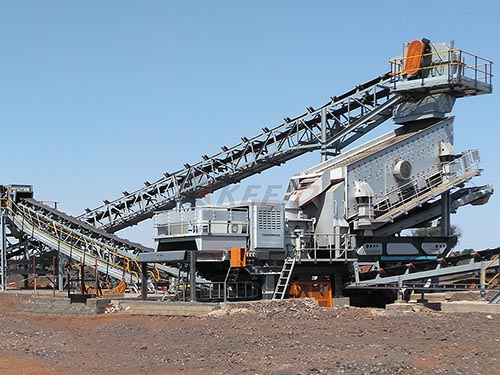
The fundamental operating principle of an impact crusher involves the use of high-speed impact forces to break materials. The machine typically consists of a rotor, equipped with blow bars (also known as hammers or impact bars), which rotates at high velocity. Material is fed into the crushing chamber, where it strikes the rotating blow bars, is thrown against stationary impact plates (aprons), and is further reduced by repeated collisions. The process is characterized by high reduction ratios, typically ranging from 10:1 to 20:1, and the ability to produce cubical, well-graded end products.
OEM designs vary, but common configurations include:
- Horizontal Shaft Impactors (HSI): The most common type, where the rotor is mounted horizontally. These are suitable for secondary and tertiary crushing of softer to medium-hard materials like limestone, gypsum, and recycled concrete.
- Vertical Shaft Impactors (VSI): Featuring a vertical rotor, these crushers are used for shaping and fine crushing. They are particularly effective for producing high-quality sand and gravel, as well as for processing hard, abrasive materials like granite and basalt.
2. Key Components and Their Engineering
The performance and longevity of an OEM impact crusher are heavily dependent on the quality and design of its core components:
- Rotor Assembly: The rotor is the heart of the crusher. OEM rotors are typically fabricated from high-strength steel, with precision-machined mounting surfaces for blow bars. Advanced designs incorporate wear-resistant liners and optimized geometry to minimize stress concentrations and maximize energy transfer. Some OEMs use solid, one-piece rotors for enhanced durability, while others employ segmented designs for easier maintenance.
- Blow Bars: These are the primary wear parts. OEM blow bars are manufactured from high-chrome iron, martensitic steel, or ceramic composites, depending on the application. High-chrome bars offer excellent wear resistance against abrasive materials, while martensitic steel provides toughness for impact-heavy applications. OEMs often provide a range of blow bar profiles (e.g., high-lift, medium-lift, or flat) to optimize crushing efficiency for specific feed sizes and product requirements.
- Impact Plates (Aprons): These stationary surfaces absorb the kinetic energy of the material. OEM aprons are designed with adjustable settings to control the gap between the rotor and the aprons, thereby regulating product size. They are typically lined with replaceable wear plates made from manganese steel or other abrasion-resistant alloys.
- Frame and Housing: The crusher body must withstand immense forces. OEM frames are constructed from heavy-duty steel plates, reinforced with internal ribs and cross-members. The housing is designed to be split or hinged for easy access to internal components during maintenance.
- Drive System: OEM crushers are equipped with high-efficiency electric motors, V-belt drives, or direct-drive systems. The drive system is engineered to deliver consistent torque and speed, with built-in overload protection to prevent damage from uncrushable materials.
3. Operational Mechanics and Material Processing
The crushing process in an OEM impact crusher can be broken down into three distinct zones:
- Feed Zone: Material enters the crusher through a feed chute, which is designed to distribute the material evenly across the rotor width. OEM feed chutes often incorporate wear-resistant liners and may include a pre-screening system to remove fines, reducing unnecessary wear.
- Acceleration Zone: The rotor accelerates the material to high velocity (typically 30–80 m/s). The kinetic energy imparted is directly proportional to the square of the rotor tip speed. OEMs calibrate rotor speed based on material hardness and desired product gradation.
- Crushing Zone: The material impacts the blow bars and is then thrown against the aprons. The repeated impacts cause fracture along natural cleavage planes, resulting in a cubical shape. The final product size is determined by the gap setting between the rotor and the aprons, as well as the number of impact zones (single, double, or triple apron configurations).
OEM impact crushers are particularly effective for:
- Soft to Medium-Hard Rocks: Limestone, dolomite, sandstone, and gypsum.
- Recycled Materials: Concrete, asphalt, and demolition waste.
- Industrial Minerals: Coal, phosphate, and bauxite.
However, they are generally not recommended for highly abrasive materials like quartzite or hard granite, as excessive wear on blow bars and aprons can lead to high operating costs. In such cases, VSI crushers or cone crushers may be more suitable.
4. Advantages of OEM Impact Crushers
Choosing an OEM impact crusher over generic or aftermarket alternatives offers several distinct advantages:
- Engineering Precision: OEMs invest heavily in research and development, using computational fluid dynamics (CFD) and finite element analysis (FEA) to optimize rotor design, airflow, and wear patterns. This results in higher efficiency, lower energy consumption per ton, and longer component life.
- Consistent Quality Control: Every component is manufactured to strict tolerances, ensuring interchangeability and predictable performance. OEMs conduct rigorous testing, including dynamic balancing of rotors and stress testing of frames.
- Comprehensive Support: OEMs provide detailed technical documentation, installation guidance, and training. They also maintain extensive inventories of genuine spare parts, reducing downtime. Many offer service contracts, remote monitoring, and predictive maintenance programs.
- Warranty and Liability: OEMs stand behind their products with comprehensive warranties, typically covering defects in materials and workmanship for a specified period. This reduces financial risk for the buyer.
- Performance Guarantees: OEMs often provide guaranteed throughput, product gradation, and wear life, based on the specific material and operating conditions. This level of assurance is rarely available from generic suppliers.
5. Selection Criteria and Considerations
When evaluating OEM impact crushers, several technical and economic factors must be considered:
- Material Characteristics: The crusher must be matched to the feed material’s abrasiveness, moisture content, compressive strength, and feed size distribution. For example, a crusher designed for limestone may not perform well on river gravel.
- Capacity Requirements: OEMs provide capacity curves based on rotor diameter, width, and speed. It is essential to select a model that can handle peak feed rates without overloading.
- Product Specifications: The desired final product size, shape, and gradation will influence the choice of rotor speed, blow bar profile, and apron configuration. For cubical aggregates, a VSI or a multi-apron HSI is preferred.
- Operating Costs: While OEM crushers may have a higher initial purchase price, the total cost of ownership (TCO) must be evaluated. This includes energy consumption, wear part replacement frequency, maintenance labor, and downtime. OEMs typically offer lower TCO due to optimized wear life and higher efficiency.
- After-Sales Support: The availability of local service centers, spare parts warehouses, and technical support is critical, especially for operations in remote locations. OEMs with a global presence often provide faster response times.
- Regulatory Compliance: OEM crushers are designed to meet noise, dust, and safety regulations. Features such as dust suppression systems, sound enclosures, and emergency stop mechanisms are often standard.
6. Maintenance and Longevity
Proper maintenance is essential to maximize the lifespan of an OEM impact crusher. Key practices include:
- Regular Inspection: Daily checks of blow bar wear, apron gap settings, and rotor balance. OEMs provide detailed inspection checklists and wear measurement tools.
- Lubrication: Bearings and other moving parts require scheduled lubrication with OEM-recommended greases or oils. Over-lubrication can be as harmful as under-lubrication.
- Wear Part Replacement: Blow bars and apron liners should be replaced when they reach a predetermined wear limit. OEMs offer wear monitoring services, often using laser scanning or ultrasonic thickness gauges.
- Rotor Rebuilding: Over time, the rotor may require rebuilding due to wear on the mounting surfaces. OEMs provide certified rebuild kits and services to restore the rotor to original specifications.
- Alignment and Balancing: After any major repair, the rotor must be dynamically balanced to prevent vibration, which can lead to premature bearing failure and structural damage.
7. Industry Applications and Case Examples
OEM impact crushers are widely used in:
- Aggregate Production: For producing road base, concrete aggregates, and asphalt chips. A typical HSI crusher from a leading OEM can process 200–500 tons per hour of limestone, producing a 0–20 mm product with a high percentage of cubical particles.
- Cement Industry: For primary and secondary crushing of limestone and clay. OEM crushers are designed to handle sticky, high-moisture materials without clogging.
- Recycling: For processing concrete and asphalt rubble. OEM crushers often feature hydraulic opening mechanisms for easy removal of rebar and other contaminants.
- Mining: For crushing coal, phosphate, and other industrial minerals. VSI crushers are used for fine crushing and shaping of ore before further processing.
Conclusion
OEM impact crushers represent a significant investment in quality, reliability, and performance. Their engineering precision, robust construction, and comprehensive support make them the preferred choice for demanding applications in aggregate, mining, and recycling industries. While the initial cost may be higher than generic alternatives, the long-term benefits—including lower operating costs, consistent product quality, and reduced downtime—often justify the investment. When selecting an OEM impact crusher, it is crucial to conduct a thorough analysis of material properties, capacity requirements, and total cost of ownership. By doing so, operators can ensure that their crushing operations are efficient, sustainable, and profitable over the machine’s entire lifecycle.
