
Title: Optimizing Capital Investment: A Comprehensive Analysis of Stone Crusher Plant Pricing and Value Procurement
Introduction
In the realm of heavy construction, infrastructure development, and aggregate production, the stone crusher plant stands as a foundational asset. Whether for road construction, dam building, or commercial concrete production, the efficiency and reliability of a crushing system directly dictate project timelines and profitability. However, for procurement managers, project owners, and contractors, the phrase “stone crusher plant best price” is often misleading. A low upfront cost can be eclipsed by high operational expenses, frequent downtime, and substandard output quality. Conversely, the most expensive plant is not necessarily the most economical over its lifecycle.
This article provides a professional, objective, and data-driven examination of what constitutes the “best price” for a stone crusher plant. We will dissect the cost structure, analyze the factors that influence pricing, compare different plant configurations, and offer a framework for total cost of ownership (TCO) evaluation. The goal is to equip decision-makers with the knowledge to move beyond sticker price and toward strategic value procurement.
1. Defining “Best Price” in the Context of Crushing Equipment
The term “best price” is inherently subjective. In a purely transactional sense, it refers to the lowest quoted amount for a specific model. However, in engineering and capital equipment procurement, the “best price” must be defined as the lowest cost per ton of produced aggregate over the plant’s designed lifespan, while meeting specified quality standards (e.g., particle shape, gradation, and fines content).
Therefore, the best price is a function of three variables:
A plant offered at USD 200,000 with high energy consumption and a 15% downtime rate may be significantly more expensive than a USD 350,000 plant with superior efficiency and 95% uptime, when calculated over a five-year period.
2. Core Components and Their Cost Drivers
To understand pricing, one must understand the anatomy of a stone crusher plant. A typical stationary or mobile plant consists of the following subsystems, each contributing differently to the total price:
3. Market Price Ranges: A Realistic Benchmark (2024-2025)
While prices fluctuate with steel prices, shipping costs, and currency exchange rates, a professional benchmark for new equipment is as follows (excluding site civil works and import duties):
It is critical to note that “best price” in the global market often comes from manufacturers in China, India, and Turkey. Chinese manufacturers (e.g., , , ) offer aggressive pricing, often 20-40% lower than European (e.g., , ) or American (e.g., ) counterparts. However, the lower price may reflect lower metallurgical standards, less rigorous quality control, and shorter warranty periods. Conversely, European brands offer superior after-sales support and higher resale value but at a significant premium.
4. Hidden Costs That Inflate the “Lowest Quote”
Procurement professionals often fall into the trap of comparing only the base machine price. The following hidden costs must be factored into any objective comparison: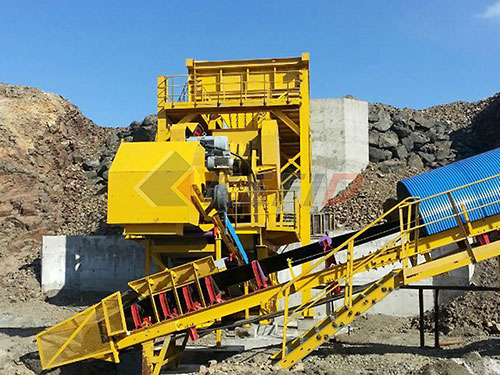
5. New vs. Used vs. Refurbished: The Price-Quality Trade-off
6. Total Cost of Ownership (TCO) Model: A Practical Framework
To determine the true “best price,” use the following simplified TCO formula:
TCO = CAPEX + (OPEX × Years) + (Downtime Cost × Years) – Resale Value
Example Comparison:
Option A (Low-Cost Chinese Plant): CAPEX = USD 300,000. OPEX = USD 120,000/year (higher energy, cheaper but shorter-lasting wear parts). Downtime = 15 days/year, costing USD 5,000/day in lost profit = USD 75,000/year. Resale after 5 years = USD 60,000.
Option B (Premium European Plant): CAPEX = USD 450,000. OPEX = USD 85,000/year (efficient motors, long-lasting liners). Downtime = 3 days/year, costing USD 5,000/day = USD 15,000/year. Resale after 5 years = USD 180,000.
In this objective model, Option B is significantly cheaper over five years despite a 50% higher initial price. Therefore, the “best price” is unequivocally Option B.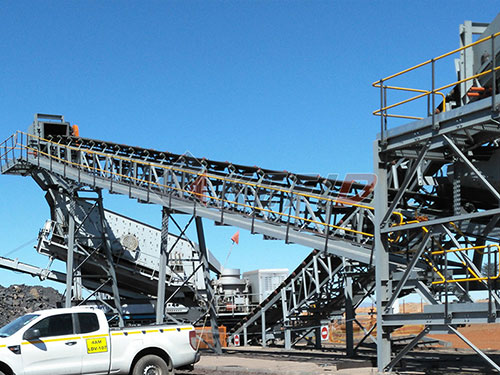
7. Negotiation Strategies for Achieving the Best Price
8. The Role of After-Sales Service in Price Perception
The “best price” is meaningless if the supplier cannot provide technical support. For imported plants, the availability of a local service engineer or a responsive remote diagnostic system is critical. Some low-cost suppliers offer no after-sales support, leaving the buyer to troubleshoot complex hydraulic or electrical issues alone. When comparing quotes, assign a monetary value to the supplier’s response time (e.g., 24 hours vs. 7 days) and their stock of critical spares in your region. A supplier with a local warehouse, even if their machine costs 10% more, often provides a better overall value.
9. Environmental and Regulatory Compliance Costs
Modern stone crusher plants must comply with dust emission and noise regulations. The “best price” should include adequate dust suppression systems (water spray nozzles, mist cannons) and acoustic enclosures. Retrofitting these after purchase is 2-3 times more expensive than including them in the original design. Additionally, some regions require a specific type of electrical panel (e.g., CE certification for Europe, or specific voltage/frequency for the Middle East). Ensure the quoted price includes the correct electrical configuration to avoid costly on-site modifications.
10. Conclusion: Moving Beyond the Sticker Price
In conclusion, the “stone crusher plant best price” is not a single number but a strategic calculation. It requires a holistic assessment of the machine’s engineering integrity, the manufacturer’s reputation, the efficiency of the crushing chamber, the durability of wear parts, and the robustness of the after-sales network. A professional buyer must resist the allure of the lowest initial quote and instead conduct a rigorous Total Cost of Ownership analysis.
The objectively best price is the one that delivers the lowest cost per ton of finished aggregate, with maximum uptime, and minimal environmental risk. By applying the frameworks and negotiation tactics outlined in this article, procurement professionals can confidently navigate the complex global market for crushing equipment, ensuring that their capital investment yields the highest possible return over the plant’s operational life. Remember: in heavy industry, you do not pay for the machine; you pay for the tons it produces. Optimize for those tons, and the price will take care of itself.
If you have any questions about our products, please feel free to contact us. We take all inquiries and suggestions very seriously.