
Title: Impact Crushers Company Wholesale Price: A Comprehensive Market Analysis for Bulk Procurement
Introduction
In the global aggregate, mining, and recycling industries, the impact crusher stands as a cornerstone of secondary and tertiary size reduction. Unlike jaw crushers, which rely on compression, impact crushers utilize high-speed impact forces to fracture material, offering superior reduction ratios and cubical product shapes. For contractors, quarry operators, and construction material suppliers, the procurement of these machines is a capital-intensive decision. However, for large-scale projects, equipment dealers, and regional distributors, the wholesale price offered by an impact crushers company is the single most critical factor determining profitability and competitive bidding capacity.
This article provides a detailed, professional, and objective analysis of the wholesale pricing structure for impact crushers. It examines the factors that influence manufacturer pricing, the typical price ranges across different machine configurations, the differences between OEM and private-label wholesale, and strategic procurement considerations for buyers seeking volume discounts. The goal is to equip procurement managers and industry analysts with a clear framework for navigating the complex landscape of bulk machinery purchasing.
1. Defining “Wholesale Price” in the Heavy Machinery Context
In the context of impact crushers, the term “wholesale price” does not simply mean a discounted retail price. It refers to a tiered pricing structure offered by a manufacturer or an authorized master distributor to qualified buyers. These buyers typically include:
A wholesale price agreement usually includes terms beyond the unit cost, such as bulk shipping discounts, extended warranty packages, and priority access to spare parts. The wholesale price is typically 15% to 30% lower than the Manufacturer’s Suggested Retail Price (MSRP), but this margin varies significantly based on market demand, raw material costs, and the manufacturer’s production capacity.
2. Core Determinants of Wholesale Pricing
To understand why an impact crushers company quotes a specific wholesale price, one must analyze the following technical and economic variables:
2.1. Machine Type and Configuration
Impact crushers are not a monolithic product. The wholesale price is heavily dictated by the specific type:
2.2. Rotor Diameter and Drive Power
The physical size of the rotor and the installed motor power are direct cost drivers. A crusher with a 1,200mm rotor and a 250kW motor will have a wholesale price that is exponentially higher than a 800mm rotor with a 90kW motor. This is due to the increased mass of cast steel, the size of the bearings, and the required flywheel inertia. Wholesale buyers must calculate the cost per ton of throughput, not just the sticker price.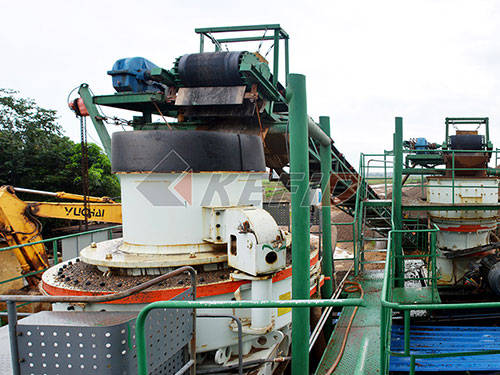
2.3. Wear Parts and Metallurgy
The blow bars, impact plates, and liners are the consumable components of an impact crusher. The wholesale price of the machine often includes an initial set of wear parts, but the quality of these parts (e.g., Manganese steel, Chrome White Iron, or Ceramic Matrix Composites) affects the base machine price. A manufacturer offering a crusher with high-chrome blow bars as standard will have a higher wholesale price than one offering standard manganese, but the total cost of ownership (TCO) may be lower.
2.4. Automation and Control Systems
Modern impact crushers are equipped with PLC (Programmable Logic Controller) systems, remote monitoring, and automatic gap adjustment. These features add $10,000 to $30,000 to the wholesale unit cost. However, for fleet buyers, this automation reduces the need for highly skilled on-site operators, justifying the higher upfront wholesale price.
3. Market Price Benchmarks (2024-2025 Analysis)
Based on recent industry data, export records, and manufacturer price lists, the following are objective wholesale price benchmarks for impact crushers from established companies (excluding freight and import duties):
4. The OEM vs. Private Label Wholesale Dynamic
A significant portion of the global wholesale market is dominated by private-label manufacturing. Many “brand” companies do not manufacture their own crushers; they source them from contract manufacturers in low-cost regions.
For a wholesale buyer, the decision between OEM-direct and branded depends on the end-user’s financing requirements. Many end-users require a recognized brand name to secure bank loans. In such cases, the wholesale buyer must pay the branded premium.
5. Volume Discounts and Negotiation Levers
When negotiating wholesale prices with an impact crushers company, procurement professionals should focus on the following levers:
5.1. Order Volume (The “Lumpy” Order)
The most obvious lever is quantity. A single-unit purchase rarely qualifies for a true wholesale price. A commitment to purchase 3-5 units within a 12-month period typically unlocks a 10-15% discount. A commitment to 10+ units can unlock a 20-25% discount, plus free spare parts kits.
5.2. Off-Season and Counter-Cyclical Purchasing
The construction and mining sectors are cyclical. During economic downturns, manufacturers have excess inventory. Wholesale buyers who can commit to purchasing during these periods can negotiate prices that are 15% lower than peak-season quotes. Additionally, purchasing at the end of a manufacturer’s fiscal year (e.g., Q4) can yield aggressive discounts as factories strive to meet sales targets.
5.3. “Bare Shaft” vs. “Turnkey” Pricing
A sophisticated wholesale buyer can negotiate a “bare shaft” price—the crusher without a motor, without a base frame, and without hydraulic power packs. This reduces the wholesale price by 15-20%. The buyer then sources these components locally, saving on import taxes and freight. This is a common practice among large distributors who have established local supply chains for electric motors.
5.4. Payment Terms and Letters of Credit
Wholesale prices are also influenced by payment terms. A buyer offering a 100% irrevocable Letter of Credit (L/C) at sight or a 30% down payment with 70% balance against the Bill of Lading will receive a lower price than a buyer requesting 180-day credit terms. The manufacturer’s cost of capital is embedded in the wholesale price.
6. Hidden Costs in Wholesale Pricing
A professional buyer must look beyond the quoted unit price. The “wholesale price” is often misleading if it excludes:
7. Regional Price Variations
The wholesale price of impact crushers varies by region due to tariffs and logistics:
8. Strategic Recommendations for Wholesale Buyers
To secure the most favorable wholesale price from an impact crushers company, the following objective strategies are recommended:
Conclusion
The wholesale price of impact crushers is a complex equation involving metallurgy, automation, market cycles, and logistics. It is not a static number but a negotiated outcome based on volume, timing, and the buyer’s technical expertise. For an impact crushers company, offering a competitive wholesale price is a balance between maintaining profit margins and securing large-volume orders that keep their factories operational.
For the buyer, the lowest wholesale price is rarely the best value. The optimal procurement strategy involves analyzing the total cost of ownership—including energy consumption, wear part life, and downtime risk—against the initial capital outlay. By understanding the factors outlined in this article, procurement professionals can engage in informed negotiations, secure favorable terms, and ensure that their investment in impact crushing technology yields maximum operational and financial returns. In a market where margins are tight, the difference between a good and a great wholesale deal lies in the details of the contract, not just the headline price.
If you have any questions about our products, please feel free to contact us. We take all inquiries and suggestions very seriously.