
Stone Crusher Machine Manufacturers Brochure: A Comprehensive Industry Overview
Introduction
The global mining, quarrying, and construction industries rely heavily on the efficiency, durability, and technological sophistication of stone crushing machinery. Stone crusher machines are fundamental to the production of aggregates, sand, gravel, and recycled materials used in infrastructure development, road construction, building projects, and industrial manufacturing. This brochure serves as a detailed, objective, and professional guide to the landscape of stone crusher machine manufacturers, examining the types of equipment they produce, the key technical specifications, market dynamics, and criteria for selecting a reliable supplier. The content is designed for procurement managers, project engineers, and industry stakeholders seeking in-depth knowledge without promotional bias.
1. The Role of Stone Crusher Machines in Modern Industry
Stone crushers are mechanical devices designed to reduce large rocks into smaller fragments, gravel, or rock dust. They are essential in primary, secondary, and tertiary crushing stages. The primary function is to produce material of a specific size and shape for downstream processing or direct use. Without these machines, the extraction of minerals and the production of construction aggregates would be economically unfeasible.
The types of materials processed include limestone, granite, basalt, river gravel, quartzite, dolomite, and recycled concrete. Each material presents unique challenges in terms of hardness, abrasiveness, and moisture content, which directly influence the design and selection of crushing equipment.
2. Major Categories of Stone Crusher Machines
Manufacturers worldwide produce a range of crushers, each optimized for specific applications. The following are the most common categories:
2.1 Jaw Crushers
Jaw crushers are the workhorses of primary crushing. They operate using a compressive force between a fixed jaw and a moving jaw. The feed material is crushed between the two plates as the moving jaw closes against the fixed jaw. They are ideal for hard, abrasive materials and are characterized by high reduction ratios (typically 4:1 to 6:1) and robust construction. Leading manufacturers offer capacities ranging from 50 tons per hour (TPH) to over 1,500 TPH, with feed openings up to 1,500 mm.
2.2 Cone Crushers
Cone crushers are used for secondary and tertiary crushing. They utilize a rotating mantle within a concave bowl to compress material. They are highly efficient for producing cubical-shaped aggregates and are suitable for medium-hard to hard materials. Modern cone crushers feature hydraulic adjustment systems, tramp iron relief, and automated control systems that optimize throughput and product gradation. Capacities typically range from 30 TPH to 800 TPH.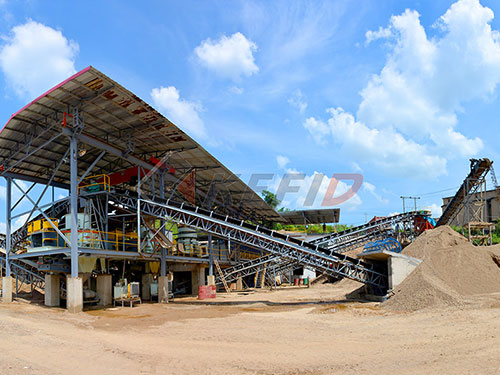
2.3 Impact Crushers
Impact crushers use high-speed impact forces to break material. They are available in horizontal shaft impact (HSI) and vertical shaft impact (VSI) configurations. HSI crushers are excellent for softer materials like limestone and for recycling applications. VSI crushers are preferred for producing high-quality sand and fine aggregates with excellent particle shape. Impact crushers generally have lower wear costs for non-abrasive materials but require more frequent maintenance when processing hard rock.
2.4 Gyratory Crushers
Gyratory crushers are similar in concept to jaw crushers but are designed for very high capacity primary crushing. They feature a conical head gyrating inside a concave bowl. They are used in large-scale mining operations where throughput exceeds 2,000 TPH. Their design allows for continuous crushing, making them more efficient than jaw crushers for extremely high tonnage applications.
2.5 Roll Crushers and Hammer Mills
Roll crushers use two or more rotating rolls to compress and shear material. They are used for secondary or tertiary crushing of softer materials. Hammer mills employ rotating hammers to impact and shatter material, often used in cement plants and for coal crushing.
3. Key Technical Specifications and Innovations
When evaluating stone crusher machine manufacturers, understanding technical parameters is critical. The following specifications are commonly listed in manufacturer brochures:
Innovations in Modern Crushers:
4. Global Landscape of Stone Crusher Machine Manufacturers
The market for stone crushers is highly competitive, with manufacturers concentrated in regions with strong mining and construction sectors. The following are representative categories of manufacturers:
4.1 Established Global Leaders
Companies such as Metso Outotec (Finland), Sandvik (Sweden), Terex (USA), and Thyssenkrupp (Germany) dominate the high-end segment. They offer comprehensive crushing solutions, including complete stationary and mobile plants, with extensive aftermarket support, global service networks, and decades of engineering expertise. Their equipment is characterized by high reliability, advanced automation, and premium pricing.
4.2 Regional and Mid-Tier Manufacturers
In China, companies like Shanghai Shibang Machinery (SBM), Zhengzhou Yifan Machinery, and Henan Liming Heavy Industry produce a wide range of crushers at competitive prices. These manufacturers have improved quality control and now export to markets across Asia, Africa, and South America. Indian manufacturers such as Puzzolana, Propel Industries, and Torsa Machines also serve domestic and international markets with cost-effective solutions.
4.3 Specialized and Niche Manufacturers
Some manufacturers focus on specific crusher types. For example, Barmac (now part of Metso) is renowned for VSI crushers. Others specialize in mobile crushers (e.g., Kleemann, a Wirtgen Group company) or heavy-duty jaw crushers for mining (e.g., FLSmidth).
5. Criteria for Selecting a Stone Crusher Manufacturer
Choosing the right manufacturer requires a systematic evaluation based on the following objective criteria:
6. Market Trends and Future Outlook
The stone crusher machine market is evolving in response to several key trends:
7. Conclusion
Stone crusher machine manufacturers play a pivotal role in the global supply chain of construction materials and mineral processing. The industry offers a diverse range of equipment, from rugged jaw crushers for primary reduction to sophisticated cone and impact crushers for fine shaping. Selecting the right manufacturer requires a careful balance of technical specifications, total cost of ownership, aftermarket support, and alignment with sustainability goals.
As the industry moves toward automation, electrification, and digital integration, manufacturers that invest in innovation and customer-centric service will lead the market. For buyers, a thorough evaluation of manufacturer capabilities, combined with a clear understanding of their own operational requirements, is essential to making a sound investment. This brochure has provided an objective, detailed overview to assist in that decision-making process, emphasizing that the best crusher is not necessarily the most expensive or the cheapest, but the one that delivers the highest value over its operational lifetime.
Disclaimer: This document is for informational purposes only and does not constitute an endorsement of any specific manufacturer or product. All technical data should be verified with the respective manufacturer.
If you have any questions about our products, please feel free to contact us. We take all inquiries and suggestions very seriously.