
Title: The Economics and Engineering of Affordable Quarry Ballast Crushing Equipment Assembly Plants
Introduction
In the global construction and railway infrastructure sectors, ballast—typically composed of crushed stone—plays a critical role in providing stability, drainage, and load distribution. Quarry ballast, specifically, refers to the coarse aggregate used to support railway tracks, road bases, and heavy-duty foundations. The production of this material requires robust, high-capacity crushing equipment. However, the capital expenditure associated with establishing a dedicated assembly plant for such machinery can be prohibitive for small-to-medium enterprises (SMEs) and emerging economies. This article provides a professional, objective analysis of the concept of an “affordable quarry ballast crushing equipment assembly plant.” It examines the technical specifications, cost drivers, assembly methodologies, and market dynamics that define affordability without compromising operational reliability.
1. Understanding Quarry Ballast and Its Crushing Requirements
Quarry ballast must meet stringent physical and geometric specifications. According to standards such as AREMA (American Railway Engineering and Maintenance-of-Way Association) and EN 13450, ballast particles must be angular, durable, and free from deleterious materials. The typical size range is 25 mm to 63 mm, with a high resistance to attrition and weathering. To achieve this, crushing equipment must perform multiple stages of reduction—primary, secondary, and often tertiary—while maintaining precise control over particle shape.
The core machinery involved includes:
An assembly plant for such equipment is not a single machine but a facility that integrates these components into modular, transportable, or stationary crushing systems.
2. Defining “Affordable” in the Context of Assembly Plants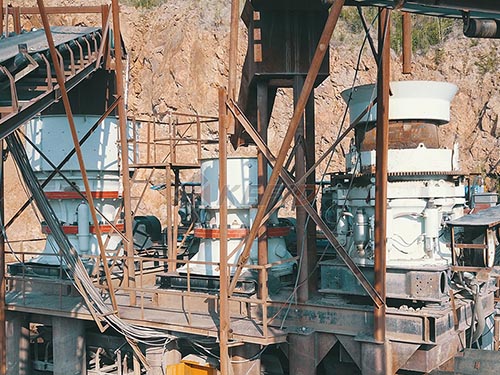
Affordability in heavy machinery assembly is relative. It does not imply low quality or reduced performance. Instead, it refers to a cost structure that minimizes initial capital outlay, operational expenditure (OPEX), and maintenance costs over the equipment’s lifecycle. Key factors that contribute to affordability include:
3. Technical Architecture of an Affordable Assembly Plant
An affordable quarry ballast crushing equipment assembly plant typically follows a modular assembly line approach. The plant is divided into functional zones:
3.1. Fabrication and Welding Zone
This zone produces structural frames, hoppers, chutes, and support stands. For affordability, the plant should utilize standard steel profiles (e.g., I-beams, H-beams) and automated welding jigs to reduce labor hours. Plasma cutting tables and bending machines are essential but can be sourced as reconditioned units.
3.2. Mechanical Assembly Zone
Here, crushers, screens, and conveyors are assembled. To keep costs low, the plant should focus on assembling standardized crusher models that are widely used in ballast production. For example, a single-toggle jaw crusher with a 600×900 mm feed opening is a common, cost-effective primary crusher. Cone crushers with hydraulic adjustment systems offer a balance between cost and performance.
3.3. Electrical and Control Integration Zone
Affordable plants often use PLC-based control systems with basic HMI interfaces. While advanced automation (e.g., remote monitoring, AI-based wear prediction) adds value, it also increases cost. For affordability, the plant should offer a base-level control system with optional upgrades.
3.4. Testing and Quality Assurance Zone
Before dispatch, each assembled unit must undergo load testing, vibration analysis, and dimensional verification. Affordable plants can use portable testing equipment rather than dedicated test beds to reduce infrastructure costs.
4. Cost Breakdown and Affordability Strategies
A typical assembly plant with a capacity to produce 20–30 crushing units per year (including screens and conveyors) can be established with an initial investment ranging from $1.5 million to $4 million, depending on location and automation level. The major cost components are:
Affordability strategies include:
5. Market Demand and Economic Viability
The global demand for railway ballast is driven by infrastructure expansion in developing nations (e.g., India, Indonesia, Brazil) and maintenance of existing networks in developed countries. According to industry reports, the railway ballast market is projected to grow at a CAGR of 3–4% through 2030. This creates a sustained need for cost-effective crushing equipment.
An affordable assembly plant can target:
The payback period for such a plant, assuming a 15–20% profit margin on each unit, is typically 3–5 years. This is attractive for investors seeking moderate risk with stable returns.
6. Challenges and Mitigation
Despite the appeal, establishing an affordable assembly plant is not without challenges:
7. Case Study: A Model for Affordable Assembly
Consider a hypothetical assembly plant in Southeast Asia. The facility covers 5,000 square meters, employs 60 workers, and produces three standard models: a 30-ton jaw crusher, a 15-ton cone crusher, and a 10-ton vibrating screen. By sourcing steel locally, using reconditioned electric motors, and implementing a modular design, the plant achieves a 40% cost reduction compared to importing equivalent European equipment. The selling price of a complete ballast crushing line (primary + secondary + screen) is approximately $250,000, versus $400,000 for an imported system. The plant achieves break-even within 18 months and generates annual revenue of $5 million by year three.
8. Future Trends and Innovations
The concept of affordability is evolving with technology. Future assembly plants may incorporate:
These innovations will further enhance the affordability and sustainability of quarry ballast crushing equipment assembly plants.
Conclusion
An affordable quarry ballast crushing equipment assembly plant is a viable and strategic investment for regions with growing infrastructure needs. By focusing on modular design, localized sourcing, lean manufacturing, and scalable production, such a plant can deliver high-quality equipment at a fraction of the cost of imported alternatives. While challenges exist, they can be mitigated through careful planning, certification, and workforce development. For entrepreneurs, governments, and quarry operators seeking cost-effective solutions, the assembly plant model offers a path to self-sufficiency and economic growth. The key is to balance affordability with reliability—ensuring that lower costs do not compromise the durability and performance essential for ballast production. With the right approach, these plants can become the backbone of regional railway and construction development.
If you have any questions about our products, please feel free to contact us. We take all inquiries and suggestions very seriously.