
Title: Comprehensive Analysis of Bulk 250–300 TPH Stone Crushing Plant Prices: Factors, Configurations, and Market Trends
Introduction
The stone crushing industry serves as the backbone of infrastructure development, providing essential aggregates for road construction, building foundations, concrete production, and asphalt mixing. Among the various capacities available in the market, the 250–300 tons per hour (TPH) stone crushing plant occupies a strategic niche. It is large enough to support medium-to-large scale commercial projects, yet not so massive as to require the logistical and capital commitments of a 500+ TPH mega-plant. For contractors, mining companies, and aggregate producers seeking a balance between throughput, operational cost, and initial investment, understanding the pricing dynamics of a bulk 250–300 TPH stone crushing plant is critical.
This article provides a detailed, professional, and objective examination of the factors that influence the price of such plants. We will explore equipment configurations, cost breakdowns, regional variations, brand influences, and long-term operational economics. The goal is to equip buyers and industry professionals with the knowledge needed to make informed procurement decisions.
1. Defining the 250–300 TPH Stone Crushing Plant
A 250–300 TPH stone crushing plant is a complete processing system designed to reduce large rocks (typically from 200–600 mm feed size) into smaller aggregates of specified sizes, such as 0–5 mm (sand), 5–10 mm, 10–20 mm, and 20–40 mm. The plant typically includes:
The “bulk” designation in the keyword implies that the buyer is seeking a complete, integrated system rather than individual components, often with a focus on cost efficiency through volume procurement.
2. Price Range Overview
As of 2025, the price of a bulk 250–300 TPH stone crushing plant can vary significantly based on configuration, brand, and region. A realistic price range for a complete, turnkey plant (excluding civil works, installation, and land) is approximately:
It is crucial to note that these prices are for the machinery itself. Total project costs, including shipping, customs, foundation work, installation, and commissioning, can add 20–40% to the initial equipment cost.
3. Key Factors Influencing Price
3.1 Equipment Configuration and Crusher Type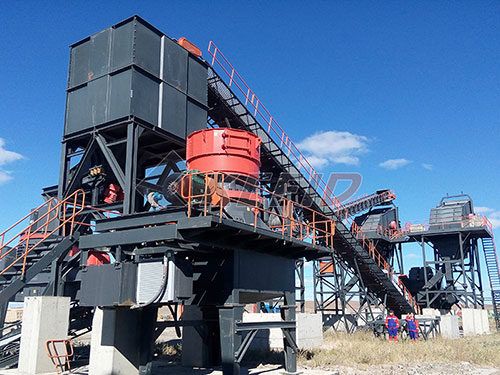
The choice of crushers dramatically affects price. A plant using a jaw crusher + cone crusher configuration is generally more expensive than one using a jaw + impact crusher setup, because cone crushers are more complex and durable for hard rock applications. However, for softer materials like limestone, an impact crusher may suffice and reduce cost.
3.2 Automation and Control Systems
Basic plants rely on manual operation and simple electrical panels. Modern plants incorporate PLC-based automation, remote monitoring, and variable frequency drives (VFDs) for conveyors. A fully automated system can add $50,000 – $200,000 to the price but reduces labor costs and improves efficiency.
3.3 Brand and Origin
3.4 Material Quality and Wear Parts
The price of a plant is also influenced by the quality of steel used in crusher frames, the type of manganese steel in wear parts, and the durability of screen meshes. Plants designed for high-abrasion materials (e.g., river gravel, quartzite) require thicker liners and stronger frames, increasing cost.
3.5 Mobility vs. Stationary
4. Regional Price Variations
4.1 Asia-Pacific (China, India, Southeast Asia)
China remains the largest producer and exporter of crushing equipment. A 250–300 TPH plant from a reputable Chinese manufacturer can be sourced for $400,000 – $600,000 FOB (Free on Board). Indian manufacturers offer similar capacity at $450,000 – $700,000. Southeast Asian buyers often benefit from lower shipping costs and regional dealer networks.
4.2 Middle East and Africa
Import duties, logistics, and dealer markups can increase prices by 15–30%. For example, a plant costing $500,000 FOB China may land in Nigeria or Saudi Arabia at $600,000 – $650,000 after shipping, insurance, and customs. Local agents often bundle installation and commissioning services, adding another $50,000 – $100,000.
4.3 Europe and North America
Due to higher labor costs, stricter environmental regulations, and preference for premium brands, prices in these regions are significantly higher. A 250–300 TPH plant from a European manufacturer can cost $1.5 million – $2.5 million, including installation and compliance with local noise and dust control standards.
5. Total Cost of Ownership (TCO) Considerations
Buyers should not focus solely on the purchase price. The total cost of ownership over a 5–10 year period includes:
A premium plant with better reliability and lower wear rates may have a higher upfront cost but a lower cost per ton over its lifetime.
6. Market Trends in 2025
6.1 Shift Toward Eco-Friendly Designs
Environmental regulations are tightening globally. New plants are being designed with enclosed structures, dust suppression systems (water sprays, bag filters), and noise reduction enclosures. These features add 10–15% to the initial cost but are increasingly mandatory in many jurisdictions.
6.2 Digitalization and IoT Integration
Smart crushing plants with real-time monitoring of crusher load, oil temperature, and wear status are becoming more common. These systems optimize throughput and predict maintenance needs, reducing unplanned downtime. The cost of such digital upgrades is declining, making them accessible even for mid-range plants.
6.3 Modular and Pre-Engineered Plants
Manufacturers are offering modular plants that can be quickly assembled on-site. These reduce civil engineering costs and installation time. While the equipment cost is slightly higher, the overall project cost may be lower due to reduced labor and foundation work.
6.4 Second-Hand and Refurbished Plants
For budget-conscious buyers, the second-hand market offers 250–300 TPH plants at 40–60% of new prices. However, buyers must carefully inspect wear parts, structural integrity, and electrical systems. Refurbished plants from reputable dealers often come with a limited warranty.
7. How to Get an Accurate Price Quote
To obtain a reliable price for a bulk 250–300 TPH stone crushing plant, buyers should:
8. Conclusion
The price of a bulk 250–300 TPH stone crushing plant is not a fixed number but a function of configuration, brand, automation, regional factors, and long-term operational costs. While a basic Chinese plant may be acquired for under $500,000, a fully automated European plant can exceed $2 million. The key to a successful investment lies in matching the plant’s capabilities to the specific project requirements, considering not just the initial capital outlay but also the total cost of ownership.
For most medium-scale aggregate producers, a mid-range plant from a reputable Chinese or Indian manufacturer, with moderate automation and a focus on energy efficiency, offers the best balance of price and performance. However, for projects in remote locations or with stringent quality standards, investing in a premium brand may yield better long-term returns.
Ultimately, thorough due diligence, clear specifications, and professional negotiation are essential to securing a fair price for a 250–300 TPH stone crushing plant that will deliver reliable performance for years to come.
If you have any questions about our products, please feel free to contact us. We take all inquiries and suggestions very seriously.