Title: Slag Crusher Plant Exporters: Achieving Operational Excellence at the Best Price
Introduction
In the global landscape of heavy industries, metallurgy, and construction, the efficient management of industrial by-products is not merely an environmental obligation but a significant economic opportunity. Slag, a glass-like by-product left over after the separation of metal from its ore, is produced in vast quantities by steel mills, smelters, and foundries. Historically considered waste, slag has been repurposed into valuable materials for road construction, cement manufacturing, and railway ballast. The critical link in this value chain is the Slag Crusher Plant—a specialized processing facility designed to crush, screen, and separate slag into usable aggregates and recover residual metals.
For businesses looking to establish or upgrade such facilities, sourcing from Slag Crusher Plant Exporters who offer the Best Price is a strategic imperative. However, “best price” in this context is not synonymous with the lowest upfront cost. It represents the optimal balance between capital expenditure, operational efficiency, equipment durability, after-sales support, and long-term return on investment. This article provides a comprehensive, professional, and objective analysis of the slag crusher plant export market, the factors that define true value, and how discerning buyers can identify exporters who deliver world-class equipment at competitive rates.
1. Understanding the Slag Crusher Plant: Core Components and Functionality
A slag crusher plant is a comprehensive system that transforms raw slag (often in large, irregular lumps) into graded, marketable products. The typical process flow includes:
- Feeding: Raw slag is fed into the system via a vibratory feeder or grizzly feeder, which removes oversized or unwanted materials.
- Primary Crushing: A jaw crusher or impact crusher reduces large slag boulders (up to 1 meter in size) to a manageable size (150-200 mm).
- Magnetic Separation: A critical step. Overband magnetic separators or drum magnets extract ferrous metals (iron, steel scrap) from the crushed slag. This recovered metal is a high-value by-product.
- Secondary & Tertiary Crushing: Cone crushers, roll crushers, or vertical shaft impactors further reduce the slag to specific sizes (e.g., 0-5 mm, 5-20 mm, 20-40 mm).
- Screening: Vibratory screens classify the crushed material into different fractions.
- Washing (Optional): For certain applications, a washing system removes dust and fine particles, improving the quality of the final aggregate.
The design of the plant must account for the extreme abrasiveness of slag (which contains silica, alumina, and calcium compounds) and the presence of metal. Therefore, wear-resistant liners, heavy-duty bearings, and robust structural frames are non-negotiable.
2. The Global Export Market for Slag Crusher Plants
The demand for slag crusher plants is driven by several macro-economic factors:
- Urbanization and Infrastructure Growth: Developing nations in Asia, Africa, and the Middle East require vast quantities of construction aggregates. Processed slag provides a cost-effective and sustainable alternative to natural stone.
- Steel Production Expansion: As countries like India, China, and Vietnam increase steel output, the volume of slag generated rises proportionally. Efficient processing is essential for both waste management and resource recovery.
- Environmental Regulations: Stricter laws regarding industrial waste disposal are forcing steel mills and contractors to adopt slag processing. Exporters who offer plants compliant with emission and noise standards gain a competitive edge.
- Circular Economy Initiatives: Governments and corporations are incentivizing the use of recycled materials. Slag aggregates are increasingly specified in green building certifications (e.g., LEED, BREEAM).
Major exporting nations include India, China, Turkey, and Germany. Indian exporters, in particular, have gained prominence due to their cost-competitive manufacturing, engineering expertise, and proximity to key markets in Africa, the Middle East, and Southeast Asia.
3. Defining “Best Price”: Beyond the Initial Invoice
When evaluating offers from Slag Crusher Plant Exporters, a sophisticated buyer must look beyond the quoted price. The “Best Price” is a function of several interrelated factors:
A. Total Cost of Ownership (TCO)
- Initial Capital Cost: The purchase price of the plant.
- Installation & Commissioning: Costs for civil works, foundation, erection, and electrical integration.
- Operating Costs: Power consumption (kWh per ton of processed slag), consumables (crusher liners, screen media, conveyor belts), and labor.
- Maintenance Costs: Frequency of downtime, cost of spare parts, and availability of local service.
- Residual Value: The potential resale value of the plant after its useful life.
An exporter offering a 10% lower initial price but with 20% higher power consumption and frequent breakdowns is not offering the best price.
B. Quality of Engineering and Materials
- Crusher Design: Are the crushing chambers optimized for slag? Are the manganese steel liners of high quality (e.g., 12-14% Mn)?
- Magnetic Separators: Are they using high-grade neodymium magnets or standard ferrite? The recovery rate of metal directly impacts profitability.
- Wear Parts Life: A plant that requires liner replacement every 3 months vs. every 6 months has a dramatically different operating cost.
- Automation Level: PLC-based control systems reduce human error and optimize throughput.
C. After-Sales Support and Warranty
- Warranty Period: A standard 12-month warranty is common, but some exporters offer extended warranties on critical components.
- Spare Parts Availability: Does the exporter have a local warehouse or a reliable logistics partner? Lead times for critical spares (e.g., jaw plates, bearings) can cripple production.
- Technical Support: Is remote troubleshooting available? Are field engineers provided for commissioning and training?
D. Customization and Scalability
- Feed Material Variation: Slag from different steelmaking processes (blast furnace, basic oxygen furnace, electric arc furnace) has different properties. A one-size-fits-all design may be inefficient.
- Capacity Requirements: The best price for a 50 TPH (tons per hour) plant is different from a 200 TPH plant. Exporters should offer modular designs that allow for future expansion.
4. How to Identify Reputable Exporters Offering the Best Price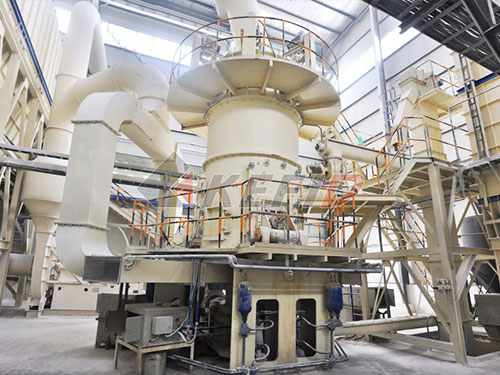
Given the complexity of the market, a systematic evaluation process is essential.
Step 1: Technical Due Diligence
Request detailed technical specifications, including:
- Motor power ratings for all crushers and screens.
- Material of construction for wear parts.
- Flow diagrams and layout drawings.
- Power consumption data per ton of output.
Step 2: Reference Checks
Ask for a list of at least three recent installations in similar operating conditions. Contact the end-users directly to inquire about:
- Actual throughput vs. claimed throughput.
- Frequency of breakdowns.
- Quality of after-sales service.
- Ease of obtaining spare parts.
Step 3: Factory Audit (Virtual or Physical)
A visit to the exporter’s manufacturing facility reveals a great deal about their quality standards. Look for:
- Organized production floor.
- Use of CNC machines and precision tooling.
- Quality control processes (e.g., hardness testing of liners, vibration analysis of rotating parts).
- Inventory of standard spare parts.
Step 4: Compare Total Cost of Ownership
Create a spreadsheet comparing the TCO over a 5-year period for each shortlisted exporter. Include:
- Purchase price.
- Estimated annual power cost (based on local electricity rates).
- Estimated annual wear part replacement cost.
- Estimated annual maintenance labor cost.
- Cost of one major breakdown (including lost production).
Step 5: Negotiate Commercial Terms
The “best price” is often achieved through negotiation. Consider:
- Payment Terms: Letter of Credit (L/C) vs. Telegraphic Transfer (T/T). L/Cs offer security but may have bank charges.
- Incoterms: FOB (Free on Board), CIF (Cost, Insurance, Freight), or DAP (Delivered at Place). CIF is common for exports, but DAP may be preferable for buyers with limited logistics experience.
- Performance Guarantees: Include clauses for guaranteed throughput and metal recovery rates, with penalties for non-performance.
5. Case Study: A Balanced Approach to Price and Quality
Consider a hypothetical buyer in Nigeria seeking a 100 TPH slag crusher plant.
- Exporter A (Lowest Price): Offers a plant for $350,000 FOB. However, the plant uses standard carbon steel liners (not manganese), a simple vibrating feeder without a grizzly, and a low-grade magnetic separator. Estimated annual wear part cost: $80,000. Power consumption: 1.2 kWh/ton.
- Exporter B (Mid-Range Price): Offers a plant for $420,000 FOB. Uses high-manganese steel liners, a heavy-duty grizzly feeder, and a high-intensity magnetic separator. Estimated annual wear part cost: $45,000. Power consumption: 0.9 kWh/ton.
- Exporter C (Premium Price): Offers a plant for $520,000 FOB. Includes full automation, European bearings, and a comprehensive warranty. Estimated annual wear part cost: $35,000. Power consumption: 0.8 kWh/ton.
TCO Analysis (5 years, 3000 operating hours/year, $0.10/kWh):
| Cost Component |
Exporter A |
Exporter B |
Exporter C |
| Initial Purchase |
$350,000 |
$420,000 |
$520,000 |
| Power Cost (5 yrs) |
$180,000 |
$135,000 |
$120,000 |
| Wear Parts (5 yrs) |
$400,000 |
$225,000 |
$175,000 |
| Total (5 yrs) |
$930,000 |
$780,000 |
$815,000 |
Conclusion: Exporter B, despite a higher initial price, offers the lowest Total Cost of Ownership over 5 years. This is the true “Best Price.”
6. Future Trends and Considerations for Exporters
The slag crusher plant market is evolving. Exporters who wish to offer the best price in the future must adapt to:
- Digitalization: Remote monitoring, predictive maintenance using IoT sensors, and data analytics to optimize plant performance.
- Energy Efficiency: Variable frequency drives (VFDs) on motors, high-efficiency crushers, and solar-powered auxiliary systems.
- Environmental Compliance: Dust suppression systems (dry fog, water mist), noise enclosures, and zero-liquid discharge (ZLD) for washing plants.
- Mobile and Semi-Mobile Plants: For steel mills that generate slag in different locations, mobile plants offer flexibility and reduced material handling costs.
Conclusion
Finding Slag Crusher Plant Exporters who offer the Best Price is a nuanced exercise that demands technical knowledge, financial acumen, and strategic foresight. The lowest initial quote is rarely the most economical choice. Instead, the best price is defined by the optimal balance of capital cost, operational efficiency, equipment longevity, and robust after-sales support.
Buyers should prioritize exporters who demonstrate a deep understanding of slag processing, use high-quality materials, provide transparent TCO data, and have a proven track record of installations in similar environments. By conducting thorough due diligence, negotiating intelligently, and focusing on long-term value rather than short-term savings, businesses can secure a slag crusher plant that not only meets their processing needs but also delivers superior financial returns for years to come.
In a world increasingly focused on sustainability and resource efficiency, the slag crusher plant is not just a piece of machinery—it is a cornerstone of the circular economy. Choosing the right exporter at the right price is the first step toward turning industrial waste into a profitable, environmentally responsible asset.
