
Quarry Ballast Crushing Equipment Suppliers: A Comprehensive Guide to Sourcing, Technology, and Global Shipping Logistics
Introduction
Railway ballast—the angular, crushed stone layer that forms the foundation of railway tracks—is a critical component in global infrastructure. Its primary functions include distributing train loads, providing drainage, resisting lateral track movement, and reducing vegetation growth. The production of high-quality ballast requires specialized crushing equipment capable of producing durable, cubical, and uniformly graded aggregates. As railway networks expand across emerging economies and existing lines undergo maintenance, the demand for efficient, reliable, and cost-effective ballast crushing systems has never been higher. This article provides a professional, objective analysis of quarry ballast crushing equipment suppliers, the technological landscape, and the complex logistics of shipping heavy machinery to global project sites.
1. The Nature of Ballast and Its Production Requirements
Before evaluating suppliers, it is essential to understand the technical specifications that ballast must meet. According to standards such as AREMA (American Railway Engineering and Maintenance-of-Way Association) and EN 13450 (European standard for railway ballast), ballast particles must be:
These requirements dictate the crushing process. Unlike ordinary construction aggregate, ballast cannot be produced by simple jaw crushers alone. It requires a multi-stage crushing circuit—typically primary jaw crushing, secondary cone or impact crushing, and tertiary shaping (vertical shaft impact or high-pressure grinding rolls)—followed by screening and washing. The equipment must be robust, energy-efficient, and capable of handling high silica-content rocks such as granite, basalt, quartzite, and trap rock.
2. Major Categories of Ballast Crushing Equipment
Suppliers offer a range of machinery, each with distinct operational roles:
Primary Crushers: Jaw crushers (e.g., Metso C-Series, Sandvik CJ-Series) are the industry standard for primary reduction of run-of-mine quarry rock. They handle feed sizes up to 1,200 mm and reduce material to 150–200 mm. For extremely hard rock, gyratory crushers may be used in very large quarries.
Secondary Crushers: Cone crushers (e.g., Nordberg HP-Series, Terex Cedarapids MVP) are preferred for secondary and tertiary stages due to their high reduction ratio and cubical output. For softer or less abrasive rock, horizontal shaft impactors (HSI) can be used, but they produce more fines and require more frequent wear-part replacement.
Tertiary/Shaping Crushers: Vertical shaft impactors (VSI) (e.g., Barmac B-Series) are essential for achieving the required cubical shape and surface texture. They are also used to increase the proportion of crushed faces, which is critical for ballast interlock.
Screening and Washing: Vibrating screens (inclined or horizontal) with multiple decks separate ballast into size fractions. Log washers and hydrocyclones remove clay and silt. Suppliers often provide complete modular plants that integrate crushing, screening, and washing on a single chassis.
Mobile vs. Stationary: Mobile crushers (track-mounted or wheeled) offer flexibility for temporary rail sidings or small quarries, while stationary plants provide higher throughput (500–1,500 tph) for large-scale operations.
3. Leading Global Suppliers and Their Market Positions
The market for ballast crushing equipment is dominated by a mix of multinational corporations and specialized regional players. Key suppliers include:
Metso Outotec (Finland): A global leader in aggregate processing. Their Lokotrack mobile plants and Nordberg stationary crushers are widely used in railway ballast production. They offer comprehensive aftermarket support, including wear parts and digital monitoring (e.g., Metso Metrics).
Sandvik Mining and Rock Solutions (Sweden): Known for their CH-Series cone crushers and UH-Series mobile screens. Sandvik emphasizes automation and safety, with features like ASRi (Automatic Setting Regulation) that optimize crusher performance in real time.
Terex Corporation (USA): Through brands like Terex Finlay and Terex MPS, they supply a wide range of jaw, cone, and impact crushers. Their modular plants are popular in North American and Australian rail projects.
ThyssenKrupp (Germany): Specializes in large-capacity gyratory crushers and double-roll crushers for very hard rock. They are less common for small quarries but dominate mega-projects.
Astec Industries (USA): Offers the KPI-JCI and Astec Mobile Screens brands. Their horizontal shaft impactors and high-frequency screens are competitive for medium-sized operations.
China-based Suppliers (e.g., Shanghai Shibang Machinery, Zhengzhou Yifan, Henan Liming): These manufacturers offer cost-effective solutions with significantly lower initial capital expenditure. However, buyers must carefully evaluate quality, spare parts availability, and after-sales service. Many Chinese suppliers now comply with ISO 9001 and CE standards, making them viable for budget-conscious projects.
Specialized European Manufacturers (e.g., BHS-Sonthofen, HAZEMAG): Focus on impact crushing technology and offer high-precision shaping for demanding ballast specifications.
4. Criteria for Selecting a Supplier
Choosing the right supplier is a multi-criteria decision that extends beyond price. Professional procurement teams evaluate:
Technical Capability: Does the supplier have proven reference installations for ballast production? Can they provide test data on particle shape distribution (e.g., flakiness index, elongation index) from their equipment?
Throughput and Scalability: The equipment must match the project’s annual tonnage requirement. For example, a high-speed rail project may require 2 million tonnes of ballast per year, necessitating a stationary plant with 800 tph capacity.
Energy Efficiency: Crushing is energy-intensive. Suppliers that offer variable-frequency drives, hybrid power systems, or optimized cavity designs can reduce operating costs by 10–20%.
Automation and Digitalization: Modern plants use PLC-based control systems, remote monitoring, and predictive maintenance. Suppliers with robust IoT platforms (e.g., Sandvik’s My Fleet, Metso’s IC series) provide a competitive advantage.
Wear Parts and Service Network: The availability of manganese steel liners, blow bars, and screens is critical. A supplier with a local warehouse or rapid logistics network reduces downtime. For remote sites, suppliers must offer containerized spare parts kits.
Compliance and Safety: Equipment must meet local safety regulations (e.g., OSHA, EU Machinery Directive) and environmental standards (dust suppression, noise control). Suppliers should provide full documentation, including CE or UL certification.
5. Shipping and Logistics: The Hidden Complexity
Shipping heavy crushing equipment—often weighing 30 to 150 tonnes per unit—is a logistical challenge that requires meticulous planning. The following factors are paramount:
5.1. Modes of Transport
Sea Freight (Breakbulk or RORO): Most crushers are too large for standard containers. They are shipped as breakbulk cargo on multi-purpose vessels or via Roll-on/Roll-off (RORO) ships if they are track-mounted. For example, a Metso Lokotrack LT106 weighs approximately 42 tonnes and can be driven onto a RORO vessel. Larger stationary crushers are disassembled into sub-assemblies (main frame, eccentric assembly, bowl) and shipped in open-top or flat-rack containers.
Project Cargo / Heavy-Lift Vessels: For components exceeding 100 tonnes, such as gyratory crusher main shafts, specialized heavy-lift vessels with cranes capable of 500+ tonnes are required. This significantly increases shipping costs.
Inland Transportation: After port discharge, equipment is moved by low-bed trailers (for mobile units) or flatbed trucks (for components). In developing countries, road weight limits and bridge clearances must be surveyed in advance. Rail transport may be used for very large components, but this requires coordination with national railway authorities.
5.2. Packaging and Preservation
Export Packing: Crushers are not simply loaded onto ships. They require:
Disassembly and Reassembly: Suppliers must provide detailed assembly drawings, torque specifications, and alignment procedures. Some suppliers offer on-site supervision for installation, which is often mandatory for warranty validation.
5.3. Incoterms and Customs
Incoterms Selection: Common terms include FOB (Free on Board), CIF (Cost, Insurance, and Freight), and DDP (Delivered Duty Paid). For large projects, DDP is preferred to avoid unexpected import duties and customs delays. However, DDP places significant responsibility on the supplier for local clearance, which not all suppliers can handle.
Customs Documentation: A complete shipping package must include:
5.4. Lead Times and Project Scheduling
Manufacturing Lead Time: Standard crushers may take 8–12 weeks from order. Custom-built units (e.g., special alloy liners, custom motor voltages) can take 20–30 weeks.
Shipping Time: From Europe to Asia, sea freight takes 30–45 days. From China to Africa, 20–35 days. From North America to South America, 15–25 days. These times must be factored into the overall project schedule.
Port Congestion: Major ports (e.g., Rotterdam, Singapore, Shanghai) can experience delays of 5–10 days. Suppliers with established freight forwarders can mitigate this by booking vessels in advance.
5.5. Case Example: Shipping to a Remote African Rail Project
Consider a project in Zambia, where a new railway line requires 500,000 tonnes of ballast. The chosen supplier is a Chinese manufacturer. The equipment includes:
The shipping plan:
Total logistics cost: approximately 18–22% of the equipment value. This example underscores why shipping costs must be included in the total cost of ownership (TCO) analysis.
6. After-Sales Support and Spare Parts Logistics
The relationship with a supplier does not end at delivery. Ballast crushing plants operate 24/7 during peak production. Therefore, suppliers must offer:
Consignment Stock: For high-wear items (jaw plates, mantle, concave), suppliers can place stock at a regional warehouse or at the quarry site. This reduces downtime from weeks to hours.
Remote Diagnostics: Modern crushers are equipped with sensors that transmit operational data to the supplier’s cloud platform. Engineers can identify abnormal vibration, temperature, or power draw and recommend corrective actions before a breakdown occurs.
Training: Suppliers should provide operator and maintenance training, either on-site or at their facilities. This is often overlooked but is critical for maximizing equipment lifespan.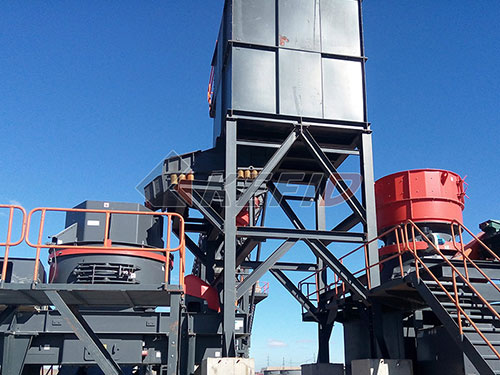
7. Cost Considerations and Total Cost of Ownership (TCO)
The initial purchase price of a ballast crushing plant can range from $500,000 for a small mobile unit to $10 million for a large stationary system. However, the TCO includes:
Energy consumption: A 300 tph plant may consume 1.5–2.5 MW of power. Over a 10-year life, energy costs can exceed the initial purchase price.
Wear parts: For abrasive granite, manganese liners may need replacement every 3–6 months. Annual wear part costs can be 5–8% of the equipment value.
Maintenance labor: Skilled mechanics and electricians are required. In remote locations, labor costs are higher due to travel and accommodation.
Financing: Leasing or equipment financing can spread costs, but interest rates in developing countries can be high (10–15% per annum).
8. Future Trends in Ballast Crushing Equipment
Electrification and Hybrid Power: Diesel-electric mobile crushers reduce fuel consumption by 30% and lower CO2 emissions. Fully electric stationary plants are becoming standard in regions with stable grid power.
AI and Machine Learning: Crusher automation systems now use AI to predict feed size distribution and adjust crusher settings in real time, improving product consistency.
Recycling and Circular Economy: Some suppliers are developing equipment that can process recycled railway ballast (spent ballast from track renewal) into new ballast, reducing quarrying pressure.
Modular and Containerized Plants: For temporary projects, suppliers offer containerized crushing units that can be shipped in standard 40-ft containers and assembled on-site within days.
Conclusion
Sourcing quarry ballast crushing equipment is a strategic decision that impacts project cost, timeline, and operational reliability. The global supplier landscape is diverse, ranging from premium European and American brands to cost-effective Chinese manufacturers. The selection process must be rigorous, considering technical specifications, after-sales support, and, critically, the logistics of shipping heavy machinery to the project site. Shipping is not an afterthought—it is a core component of procurement that can add 15–25% to the equipment cost and introduce significant schedule risks if not managed professionally. By adopting a holistic approach that integrates equipment selection, freight forwarding, customs clearance, and on-site installation, project owners can ensure that their ballast production lines operate efficiently for decades, supporting the safe and reliable expansion of global railway networks.
If you have any questions about our products, please feel free to contact us. We take all inquiries and suggestions very seriously.