
Title: ODM Impact Crushers Exporter: Engineering Excellence in Global Crushing Solutions
Introduction
In the contemporary landscape of mineral processing and construction aggregate production, the role of impact crushers has become indispensable. These machines are engineered to reduce large rocks into smaller, more manageable sizes through high-velocity impact forces. Among the myriad of manufacturers and suppliers worldwide, Original Design Manufacturer (ODM) impact crusher exporters occupy a unique and critical niche. Unlike Original Equipment Manufacturers (OEMs) that produce standardized models, ODM exporters offer customized design, engineering, and manufacturing services tailored to specific client requirements. This article provides a comprehensive, objective analysis of the ODM impact crusher export industry, examining its technological foundations, market dynamics, quality standards, logistical challenges, and future trends.
1. Understanding ODM in the Crushing Equipment Sector
An ODM (Original Design Manufacturer) is a company that designs and manufactures a product that is subsequently branded by another firm for sale. In the context of impact crushers, an ODM exporter does not merely replicate existing designs; instead, it possesses in-house research and development (R&D) capabilities to create bespoke crushing solutions. This model is particularly advantageous for international buyers who require specific rotor configurations, chamber geometries, or material specifications that are not available in standard catalogues.
The value proposition of an ODM exporter lies in its flexibility. A typical OEM may offer limited customization options—such as motor power or liner material—but an ODM partner can redesign the entire crushing chamber to optimize performance for a particular type of feed material (e.g., limestone vs. granite) or final product shape (cubical vs. elongated). This capability is especially valuable in emerging markets where local rock characteristics vary significantly from those in developed regions.
2. Technical Specifications and Engineering Capabilities
An experienced ODM impact crusher exporter must demonstrate proficiency across several critical engineering domains:
3. Quality Assurance and International Standards
For an ODM exporter targeting global markets—particularly Europe, North America, Australia, and the Middle East—compliance with international standards is non-negotiable:
A reputable exporter will also conduct rigorous factory acceptance tests before shipment . These include no-load running tests , vibration analysis , temperature rise measurements on bearings , sound level checks under load conditions .
4 . Market Analysis : Demand Drivers & Regional Preferences
The global demand for impact crushers is driven by several macroeconomic factors :
Infrastructure Development : Rapid urbanization in Asia-Pacific & Africa requires massive quantities of aggregates . Impact crushers are preferred over cone crushers when producing cubical-shaped aggregates used in asphalt concrete .
Mining Sector Growth : In hard-rock mining applications like gold & copper ore processing , secondary/tertiary crushing stages often employ vertical shaft impactors .
Recycling Industry Expansion : Construction demolition waste recycling increasingly relies on mobile impact crushers due their ability handle reinforced concrete & asphalt millings efficiently .
Regional preferences vary significantly :
– Middle East & Africa : High demand for heavy-duty primary horizontal shaft impactors capable handling abrasive limestone/dolomite . Clients prioritize robust mainframe construction & long-lasting blow bars .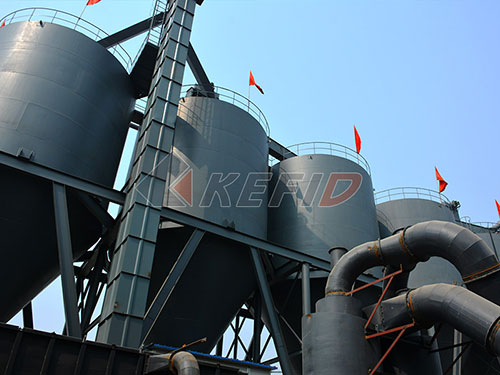
– Southeast Asia : Preference towards mobile track-mounted units due limited site infrastructure . Buyers seek compact designs with easy transportability between quarries .
– South America : Growing interest in vertical shaft impactors producing manufactured sand from river gravel deposits . Local content requirements often necessitate collaboration with local distributors who provide after-sales service .
– Europe : Stringent environmental regulations drive demand electric-powered units low noise levels dust suppression systems integrated water spray nozzles .
5 . Supply Chain Management & Logistics Challenges
Exporting heavy machinery weighing 20–50 tons per unit presents unique logistical hurdles :
Sea Freight Considerations : Crushers are typically shipped as breakbulk cargo rather than containers due oversized dimensions . Proper lashing calculations must account dynamic forces during ocean transit . Corrosion protection measures include applying VCI anti-rust coatings wrapping critical components polyethylene sheets desiccant bags inside sealed crates .
Documentation Complexity : Exporters must prepare commercial invoices packing lists bill lading certificate origin insurance documents customs declarations complying destination country import regulations . Some countries require pre-shipment inspection by third-party agencies like SGS Bureau Veritas verifying conformity declared specifications weight dimensions etc .
If you have any questions about our products, please feel free to contact us. We take all inquiries and suggestions very seriously.