
Professional Quarry Ballast Crushing Equipment Contract Manufacturers: A Strategic Partner for Aggregate Operations
In the modern quarrying and aggregate production industry, ballast crushing is a critical stage that directly influences the quality, consistency, and profitability of the final product. Whether the material is destined for railway ballast, road construction, concrete production, or specialized civil engineering applications, the crushing equipment used must deliver precise gradation, high throughput, and long-term reliability. For quarry operators seeking to optimize capital expenditure, reduce downtime, and maintain a competitive edge, partnering with a professional quarry ballast crushing equipment contract manufacturer has become an increasingly strategic decision. This article examines the role, capabilities, selection criteria, and operational benefits of engaging a contract manufacturer for ballast crushing equipment.
Understanding the Role of a Contract Manufacturer
A contract manufacturer in this context is a specialized engineering and fabrication firm that designs, produces, and often assembles crushing equipment according to the specific requirements of a quarry operator or project owner. Unlike a standard original equipment manufacturer (OEM) that offers a fixed catalog of machines, a contract manufacturer operates on a build-to-spec or build-to-print basis. This means the manufacturer collaborates closely with the client to interpret process flow diagrams, material characteristics, capacity targets, and site constraints, then delivers customized equipment that integrates seamlessly into the existing or planned plant.
The scope of work for a professional quarry ballast crushing equipment contract manufacturer typically includes:
This model is particularly valuable for quarry operations that require non-standard configurations, such as mobile or semi-mobile plants, high-reduction ratio circuits, or equipment that must comply with stringent regional standards.
Key Equipment in Ballast Crushing Circuits
To appreciate the expertise of a contract manufacturer, one must understand the equipment involved. Ballast crushing typically follows a multi-stage process:
Primary Crushing – Jaw crushers or gyratory crushers are used to reduce large run-of-mine rock to a manageable size. For hard rock quarries, heavy-duty jaw crushers with high manganese steel liners are common.
Secondary Crushing – Cone crushers, particularly hydraulic cone crushers, are employed to produce a cubical product with controlled gradation. This stage is critical for ballast specifications that demand minimal flakiness and elongation.
Tertiary and Quaternary Crushing – Vertical shaft impactors (VSIs) or high-speed cone crushers refine the material further, ensuring the final ballast meets strict particle size distribution curves.
Screening and Classification – Multi-deck vibrating screens separate the crushed material into required size fractions. Accurate screening is essential to avoid oversize or undersize contamination.
Material Handling – Feeders, belt conveyors, and stockpiling systems must be designed to handle abrasive, heavy loads without frequent breakdowns.
A contract manufacturer must possess deep knowledge of each component and how they interact. For example, the choice of crusher chamber configuration, eccentric speed, and closed-side setting (CSS) directly affects throughput and product shape. Similarly, the selection of screen media—woven wire, polyurethane, or rubber—depends on abrasiveness and moisture content. A professional manufacturer will not simply supply individual machines but will engineer a balanced circuit that maximizes overall plant efficiency.
Why Quarry Operators Choose Contract Manufacturing
There are several compelling reasons why quarry operators engage contract manufacturers rather than purchasing standard off-the-shelf equipment.
1. Customization for Specific Ballast Specifications
Railway ballast, for instance, must conform to standards such as AREMA, EN 13450, or local railway authority specifications. These standards dictate particle size distribution, flakiness index, Los Angeles abrasion value, and soundness. A contract manufacturer can design the crushing chamber and screen configuration to consistently meet these narrow windows. Off-the-shelf equipment may require costly modifications or may never achieve the desired gradation.
2. Integration with Existing Plants
Many quarry upgrades involve adding a new crushing stage or replacing a bottleneck component. A contract manufacturer can design equipment that matches existing foundations, drive systems, and control interfaces. This reduces civil works, minimizes production downtime, and ensures a smoother transition.
3. Cost Control and Transparency
Contract manufacturing often provides greater cost transparency. Clients can specify the brand of bearings, motors, and wear parts, avoiding unnecessary markups. For large projects, this can result in significant savings without compromising quality.
4. Access to Specialized Expertise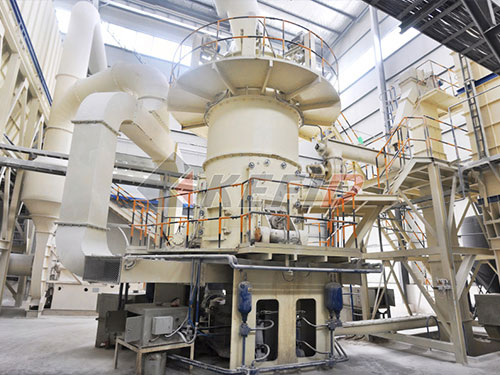
Not every quarry operator has in-house mechanical, structural, and process engineers. A professional contract manufacturer brings a multidisciplinary team that can address fatigue analysis, vibration isolation, dust suppression, and safety compliance. This expertise is especially valuable for complex projects such as semi-mobile ballast plants in remote locations.
5. Scalability and Future Expansion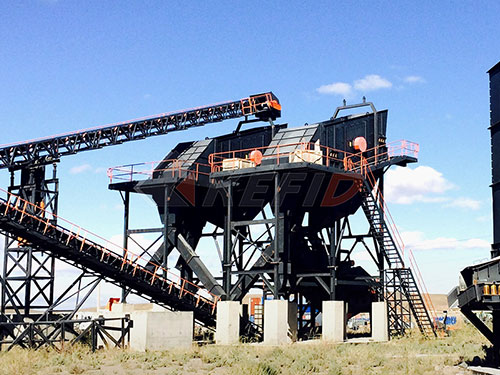
A well-designed contract-manufactured plant can be modular, allowing capacity increases or product diversification with minimal disruption. For example, a manufacturer might design a secondary cone crusher station that can later be upgraded with a tertiary VSI without replacing the entire structure.
Criteria for Selecting a Professional Contract Manufacturer
Not all contract manufacturers are equal. Quarry operators should evaluate potential partners against the following criteria:
The Contract Manufacturing Process: From Inquiry to Commissioning
A typical engagement with a professional quarry ballast crushing equipment contract manufacturer follows a structured path:
Operational and Financial Benefits
Engaging a contract manufacturer can yield measurable benefits:
Challenges and How to Address Them
Contract manufacturing is not without challenges. Communication gaps, scope creep, and quality inconsistencies can arise. To mitigate these:
Future Trends in Ballast Crushing Equipment Manufacturing
Several trends are shaping the contract manufacturing landscape:
A forward-looking contract manufacturer will invest in these areas to remain competitive.
Conclusion
For quarry operators producing railway ballast and other high-specification aggregates, the choice of crushing equipment is too important to leave to generic solutions. A professional quarry ballast crushing equipment contract manufacturer offers the engineering depth, customization, and accountability needed to achieve consistent product quality, high availability, and long-term cost efficiency. By carefully selecting a partner with proven expertise, robust quality systems, and strong after-sales support, operators can transform their crushing circuit from a cost center into a strategic asset. As the aggregates industry faces increasing pressure on quality, sustainability, and profitability, contract manufacturing will continue to play a vital role in delivering tailored, reliable, and future-ready crushing solutions.
If you have any questions about our products, please feel free to contact us. We take all inquiries and suggestions very seriously.