Premium Gyratory Crusher Datasheet: Comprehensive Technical Analysis and Application Guide
Introduction
In the realm of mineral processing and large-scale mining operations, the gyratory crusher stands as a cornerstone of primary crushing technology. Designed to handle the most demanding feed materials, from hard rock ores to abrasive aggregates, the premium gyratory crusher represents the pinnacle of engineering innovation in size reduction equipment. This datasheet provides an exhaustive technical overview of premium gyratory crushers, covering design principles, mechanical specifications, operational parameters, performance metrics, and maintenance considerations. The objective is to furnish engineers, project managers, and procurement specialists with a detailed, objective reference for evaluating and selecting these critical machines.
1. Fundamental Design and Operating Principle
A gyratory crusher operates on a unique mechanical principle that distinguishes it from jaw crushers and cone crushers. The machine consists of a fixed concave surface (the bowl liner) and a movable main shaft (the mantle) that gyrates eccentrically within the crushing chamber. The feed material enters from the top, and as the mantle rotates, it compresses and breaks the rock against the stationary concave. The crushing action is continuous, unlike the intermittent action of a jaw crusher, resulting in higher throughput and more uniform product size distribution.
The premium gyratory crusher incorporates advanced design features that enhance its performance and durability. The main shaft is supported by a massive, spherical bearing at the top and an eccentric bushing at the bottom, ensuring stable operation under extreme loads. The crushing chamber geometry is optimized for maximum reduction ratio while minimizing wear. The eccentric throw, which determines the stroke length, is adjustable to suit different feed characteristics and product requirements.
2. Key Mechanical Specifications
Premium gyratory crushers are available in a range of sizes to accommodate varying feed capacities and material hardness. Typical specifications include:
- Feed Opening: Ranges from 42 inches (1067 mm) to 72 inches (1829 mm) in diameter, allowing for the direct dumping of run-of-mine material from haul trucks.
- Maximum Feed Size: Up to 1.5 meters (60 inches) for the largest models, depending on the feed opening and material density.
- Capacity: Throughput capacities can exceed 10,000 metric tons per hour (mtph) for the largest units, making them ideal for high-tonnage operations.
- Power Rating: Motor power typically ranges from 300 kW to 1,500 kW, with some custom configurations exceeding 2,000 kW. Drive systems often include direct drive, V-belt, or gearbox options.
- Weight: The total weight of a premium gyratory crusher, including the base frame, can range from 150 to over 800 metric tons, reflecting the robust construction required for continuous heavy-duty service.
- Eccentric Throw: Adjustable from 20 mm to 50 mm, depending on the model and application. A larger throw increases reduction ratio but may reduce capacity.
- Closed Side Setting (CSS): The minimum distance between the mantle and concave at the discharge point. CSS can be adjusted hydraulically or mechanically, typically ranging from 100 mm to 300 mm.
3. Advanced Engineering Features
Premium gyratory crushers incorporate several proprietary technologies that set them apart from standard models: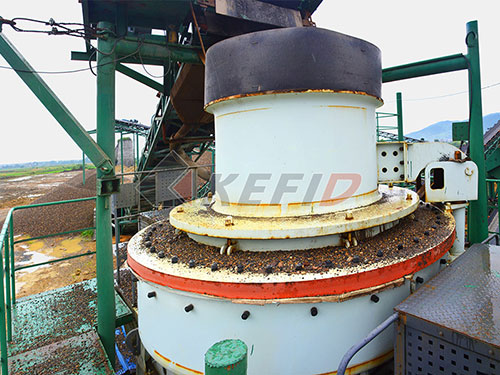
- Hydroset System: A hydraulic adjustment system that allows for real-time CSS changes and overload protection. The Hydroset system uses hydraulic cylinders to raise or lower the main shaft, enabling precise product size control and automatic tramp iron release.
- Spiral Bevel Gears: High-strength, case-hardened spiral bevel gears ensure smooth power transmission and long service life. These gears are designed to handle high torque loads while minimizing noise and vibration.
- Split Main Frame: Many premium models feature a split main frame design, which facilitates transportation and installation in underground or confined spaces. The frame is bolted and doweled for precise alignment.
- Wear Liners: The concave and mantle are constructed from high-manganese steel or chrome-moly alloys, with optional ceramic inserts for extreme abrasion resistance. The liners are designed for easy replacement, reducing downtime.
- Lubrication System: An automated, centralized lubrication system delivers oil to all bearings, bushings, and gears. The system includes filters, coolers, and flow sensors to ensure optimal lubrication under all operating conditions.
- Automation and Monitoring: Integrated sensors monitor key parameters such as power draw, bearing temperature, oil flow, and crusher load. Advanced control systems can adjust feed rate and CSS automatically to maintain optimal performance.
4. Performance Metrics and Operational Efficiency
The performance of a premium gyratory crusher is quantified through several key metrics:
- Reduction Ratio: Typically ranges from 4:1 to 8:1, depending on the CSS and feed characteristics. The reduction ratio is defined as the ratio of feed size to product size.
- Product Size Distribution: The crusher produces a well-graded product with a high percentage of fines. The P80 (the size at which 80% of the product passes) can be as low as 150 mm for fine crushing applications.
- Specific Energy Consumption: Energy consumption per ton of material processed is a critical economic factor. Premium gyratory crushers achieve specific energy values of 0.3 to 0.8 kWh per metric ton, depending on material hardness and reduction ratio.
- Availability and Reliability: With proper maintenance, premium gyratory crushers can achieve mechanical availability exceeding 95%. The robust design minimizes unplanned downtime, and major components are designed for service intervals of 5,000 to 10,000 operating hours.
- Throughput Stability: The continuous crushing action ensures a steady flow of material, reducing surges in downstream equipment. This stability improves the overall efficiency of the crushing circuit.
5. Application Suitability and Material Handling
Premium gyratory crushers are primarily used in the following applications:
- Primary Crushing in Hard Rock Mines: For copper, gold, iron ore, and other hard rock deposits, the gyratory crusher is the preferred choice due to its high capacity and ability to handle large, abrasive feed.
- Aggregate Production: In large-scale quarry operations, gyratory crushers produce high-quality aggregates for construction and road building.
- Industrial Minerals: For processing limestone, gypsum, and other industrial minerals, the crusher’s adjustable settings allow for precise product control.
- Recycling and Demolition: Some premium models are adapted for processing reinforced concrete and demolition waste, though this is less common due to the high wear rates.
The crusher’s ability to handle sticky, wet, or clayey materials is enhanced by the use of anti-clogging concave designs and optional heating systems for the crushing chamber.
6. Maintenance and Serviceability
To maximize the lifespan of a premium gyratory crusher, a comprehensive maintenance program is essential. Key maintenance considerations include:
- Liner Replacement: The concave and mantle are the most wear-prone components. Replacement intervals vary from 3 to 12 months, depending on feed abrasiveness and throughput. Premium crushers feature quick-release mechanisms and lifting tools to expedite liner changes.
- Bearing and Bushing Inspection: The main shaft bearing, eccentric bushing, and step bearing require regular inspection and lubrication. Bearing temperatures should be monitored continuously, with alarms set for abnormal conditions.
- Gearbox and Drive System: The spiral bevel gears and drive components should be inspected for wear, pitting, and alignment. Oil samples should be analyzed periodically to detect contamination or degradation.
- Hydraulic System Maintenance: The Hydroset system requires regular checks of hydraulic fluid levels, filter condition, and cylinder seals. Accumulator pressures should be verified according to manufacturer specifications.
- Structural Integrity: The main frame, spider, and base frame should be inspected for cracks, corrosion, or deformation. Ultrasonic testing may be employed for critical welds.
7. Safety and Environmental Considerations
Premium gyratory crushers are designed with safety as a priority. Features include:
- Lockout/Tagout Provisions: All energy sources (electrical, hydraulic, pneumatic) can be isolated for safe maintenance.
- Guarding and Interlocks: Moving parts are guarded, and access doors are interlocked to prevent operation during maintenance.
- Dust Suppression: Water spray systems or dust collection ports are integrated to control airborne particulates.
- Noise Reduction: The use of sound-dampening materials and enclosed drive systems reduces noise levels to below 85 dB(A) at operator stations.
8. Comparative Analysis with Other Crushers
When compared to jaw crushers, premium gyratory crushers offer higher capacity, a larger feed opening, and a more consistent product shape. However, they have a higher initial capital cost and require more substantial foundations. Compared to cone crushers, gyratory crushers are better suited for primary crushing due to their ability to handle larger feed sizes, but cone crushers are more efficient for secondary and tertiary applications.
9. Selection Criteria and Customization
Selecting the right premium gyratory crusher involves evaluating:
- Feed Material Properties: Hardness (Mohs scale), abrasiveness (AI index), moisture content, and bulk density.
- Required Capacity: Peak and average throughput in metric tons per hour.
- Product Specifications: Desired P80, reduction ratio, and shape requirements.
- Site Constraints: Available space, foundation design, and transportation logistics.
- Power Supply: Voltage, frequency, and motor starting method.
Manufacturers offer customization options such as special alloy liners, variable-speed drives, and remote monitoring packages.
10. Conclusion
The premium gyratory crusher is an indispensable asset in high-tonnage mining and aggregate operations. Its robust design, high capacity, and advanced automation make it a reliable choice for primary crushing applications. By understanding the technical specifications, performance metrics, and maintenance requirements outlined in this datasheet, engineers and operators can optimize their crushing circuits for maximum efficiency and profitability. As the industry moves toward digitalization and sustainability, future developments in gyratory crusher technology will likely focus on energy efficiency, predictive maintenance, and integration with autonomous mining systems.
References
- Manufacturer technical manuals and product brochures (e.g., Metso Outotec, Sandvik, FLSmidth).
- Industry standards (ISO 21873, ASTM E11).
- Published case studies on gyratory crusher performance in hard rock mining.
This datasheet is intended for informational purposes only. Actual specifications may vary based on manufacturer and application. Always consult the original equipment manufacturer for precise data and recommendations.
