China Quarry Ballast Crushing Equipment Inspection: A Comprehensive Technical Overview
Introduction
In the context of China’s massive infrastructure expansion—high-speed rail networks, urban metro systems, and heavy-haul freight corridors—the demand for high-quality railway ballast has never been greater. Ballast, the crushed stone layer beneath railway tracks, must meet stringent physical and geometric specifications to ensure track stability, drainage, and load distribution. The production of compliant ballast relies entirely on quarry crushing circuits, which typically include primary jaw crushers, secondary cone crushers, tertiary vertical shaft impactors (VSI), and screening stations. Given the abrasive nature of hard rock (granite, basalt, limestone) and the continuous operation required to meet project deadlines, the inspection of ballast crushing equipment in Chinese quarries is not merely a maintenance routine—it is a critical quality assurance and safety control point.
This article provides a professional, objective, and detailed examination of the inspection protocols, key components, failure modes, and regulatory frameworks governing ballast crushing equipment in Chinese quarries. It is intended for quarry managers, mechanical engineers, quality control personnel, and international equipment suppliers operating within China’s aggregate industry.
1. Regulatory and Standard Context
Before delving into equipment inspection, it is essential to understand the governing standards. In China, ballast quality is primarily defined by the national standard GB/T 14685-2011 (Pebble and Crushed Stone for Construction) and the railway-specific standard TB/T 2140-2008 (Railway Ballast). These standards specify particle size distribution (e.g., 22.4–63 mm for heavy-haul lines), flakiness index (<12% for high-speed rail), and Los Angeles abrasion loss (<20%). However, equipment inspection is governed by a separate set of regulations:
- GB 18452-2001 – Safety requirements for crushing machinery.
- AQ 2007-2006 – Safety specification for metal and nonmetal mines (including quarries).
- TSG Q7015-2016 – Supervision regulations for lifting appliances (relevant for overhead cranes used in crusher maintenance).
Additionally, the State Administration for Market Regulation (SAMR) and provincial Bureau of Work Safety conduct periodic spot checks. Quarries supplying national rail projects are also subject to third-party audits by China Railway Group (CREC) or China State Railway Group inspectors, who often require documented evidence of daily, weekly, and monthly equipment inspections.
2. Classification of Inspection Types
Inspection of ballast crushing equipment in China is typically categorized into three tiers:
- Pre-operational (Shift) Inspection – Conducted by the equipment operator before each shift. Focuses on visible safety hazards, abnormal noises, oil leaks, and loose fasteners.
- Periodic (Preventive) Inspection – Performed by maintenance engineers at defined intervals (weekly, monthly, quarterly). Involves detailed checks of wear parts, lubrication systems, and structural integrity.
- Condition-Based (Predictive) Inspection – Uses vibration analysis, thermography, oil particle counting, and ultrasonic thickness testing to predict component failure. This is increasingly adopted in large-scale quarries in Shandong, Hebei, and Zhejiang provinces.
3. Critical Components and Their Inspection Points
The following sections detail the inspection methodology for each major component of a typical ballast crushing circuit.
3.1 Primary Jaw Crusher
The jaw crusher is the first stage, reducing run-of-mine rock (up to 800 mm) to 150–200 mm. Key inspection points include:
- Jaw Plates (Fixed and Movable): Check for symmetrical wear. Uneven wear indicates misalignment or feed segregation. Measure remaining tooth height using a profile gauge. Replace when tooth height is less than 50% of original, or when cracks appear.
- Toggle Plate and Toggle Seat: Inspect for bending or fatigue cracks. A broken toggle plate is a common cause of sudden shutdown. Verify that the toggle plate’s safety function (designed to break under uncrushable loads) has not been compromised by welding or reinforcement.
- Pitman Bearing and Eccentric Shaft: Measure bearing temperature using an infrared thermometer. Normal operating temperature should be below 70°C above ambient. Listen for knocking sounds indicating bearing race spalling. Perform axial clearance measurement using a dial indicator; excessive clearance (>0.5 mm) requires shim adjustment.
- Flywheel and Pulley: Check for keyway wear and bolt torque. Use a torque wrench to verify that flywheel bolts are tightened to the manufacturer’s specification (typically 800–1200 N·m for large units).
- Hydraulic Adjustment System (if equipped): Verify hydraulic pressure stability and check for cylinder rod scoring. Inspect the accumulator pre-charge pressure with a nitrogen gauge.
3.2 Secondary Cone Crusher
Cone crushers (e.g., Symons, HP, or Chinese equivalents like PYB/PYZ) produce the intermediate product. Inspection focuses on:
- Mantle and Concave: Measure the wear profile using a template. The crushing chamber profile must maintain a parallel zone for proper particle shape. Check for “ring bounce” (excessive vertical movement of the adjustment ring), which indicates worn bowl threads or insufficient hydraulic clamping pressure.
- Main Shaft and Head Center: Perform ultrasonic testing for cracks in the main shaft, especially at the lower journal. Inspect the head bushing and socket liner for scoring or galling. Measure the eccentric throw using a dial indicator on the counterweight.
- Bevel Gear and Pinion: Check backlash using a lead strip. Acceptable backlash for a 7-foot cone is typically 0.25–0.50 mm. Inspect gear teeth for pitting, spalling, or chipping. Oil analysis should be performed monthly to detect metallic wear particles.
- Hydraulic Relief System: Test the system by simulating an uncrushable load (using a test cylinder). Verify that the crusher opens within 2–3 seconds and resets properly. Check the relief valve cracking pressure against the manufacturer’s setting.
- Lubrication Return Oil Temperature: The return oil temperature should be between 38°C and 54°C. Higher temperatures indicate cooler blockage or excessive bearing friction. Inspect the oil filter differential pressure gauge; replace the filter when pressure drop exceeds 1.5 bar.
3.3 Tertiary Vertical Shaft Impactor (VSI)
VSIs are critical for producing cubical ballast particles. Inspection points include:
- Rotor Wear Parts (Tips, Anvils, and Distributor Plate): Measure tip wear using a caliper. Rotor tips must be replaced when worn to 60% of original length. Check for uneven wear on the distributor plate, which indicates feed misalignment.
- Cascade and Rock Shelf: Inspect the cascade ratio (percentage of material directed to the rotor vs. the outer cascade). Incorrect cascade settings lead to excessive power draw or poor particle shape. Check the rock shelf for voids or missing wear liners.
- Bearing Housing: Perform vibration analysis using a portable accelerometer. Velocity readings above 4.5 mm/s (RMS) indicate bearing deterioration. Check the bearing housing temperature; sustained operation above 90°C requires immediate shutdown.
- Motor and V-Belt Tension: Measure belt deflection under a specified load (typically 10 mm per meter of span). Check for belt alignment using a laser alignment tool. Inspect motor current draw against the nameplate rating; sustained overcurrent (>110%) indicates rotor imbalance or feed overload.
- Anvil Ring (if using metal impact): Check for cracking or deformation. Anvils must be rotated or replaced according to the wear pattern to maintain crushing efficiency.
3.4 Screening and Conveying Systems
Ballast screening uses multi-deck vibrating screens (typically 2–3 decks). Inspection points:
- Screen Mesh: Check for holes, tears, or blinding. Use a wire gauge to verify aperture size (e.g., 63 mm, 40 mm, 22.4 mm). Replace any panel with a deviation greater than ±2 mm from nominal aperture.
- Vibrator Assembly: Measure vibration amplitude using a vibration meter. Normal amplitude for a ballast screen is 4–6 mm (peak-to-peak). Check the phase angle between the two vibrator motors; a phase shift greater than 10° indicates a timing belt issue.
- Springs and Damping Elements: Inspect rubber or steel coil springs for cracks, sagging, or breakage. Uneven spring height causes screen misalignment and premature mesh failure.
- Conveyor Belt: Check for edge wear, carcass exposure, and splice integrity. Use a belt thickness gauge to measure cover wear. Verify that the belt tracking is within 10 mm of the center line. Inspect idler rollers for seizure; a seized idler can cause belt fires due to friction.
- Chutes and Transfer Points: Inspect for material buildup, which reduces throughput and causes abrasive wear. Check impact liners and wear plates for thickness; replace when worn to 50% of original.
4. Non-Destructive Testing (NDT) and Advanced Diagnostics
For high-capacity quarries (over 1,000 tons per hour), Chinese operators increasingly employ NDT methods during scheduled shutdowns:
- Ultrasonic Thickness Testing (UTT): Used on crusher shells, hoppers, and chutes to detect wall thinning due to abrasion. Minimum acceptable thickness is typically 70% of original design thickness.
- Magnetic Particle Inspection (MPI): Applied to critical welds on the crusher frame and the main shaft. Cracks detected during MPI must be ground out and re-welded with preheating per WPS (Welding Procedure Specification).
- Vibration Spectrum Analysis: Portable FFT analyzers (e.g., SKF, Fluke) are used to identify bearing fault frequencies (BPFO, BPFI, BSF). A rise in amplitude at 1× or 2× rotational frequency indicates imbalance or misalignment.
- Oil Analysis: Samples are sent to accredited laboratories (e.g., SGS China, Bureau Veritas) for spectroscopy and particle count (ISO 4406). For cone crushers, an ISO cleanliness code of 18/16/13 or better is required. Elevated iron (>200 ppm) indicates gear or bearing wear.
5. Common Failure Modes and Root Causes
An objective inspection program must be informed by typical failure patterns observed in Chinese quarries:
- Premature Jaw Plate Failure: Often caused by feeding oversized material (>80% of crusher opening) or by feeding fines that pack the crushing chamber. Root cause: inadequate grizzly screening at the feed hopper.
- Cone Crusher Ring Bounce: Caused by worn bowl threads, insufficient hydraulic clamping pressure, or excessive feed segregation (all fine material on one side). This leads to poor particle shape and increased flakiness index.
- VSI Rotor Imbalance: Caused by uneven tip wear or by foreign objects (e.g., drill bits) entering the rotor. Imbalance accelerates bearing failure and causes severe vibration. Root cause: missing magnetic separator or metal detector on the feed conveyor.
- Screen Mesh Blinding: Caused by high moisture content (>4%) in the crushed material or by incorrect screen stroke angle. This reduces screening efficiency and allows oversized particles to pass into the ballast stockpile, leading to rejection by railway inspectors.
6. Inspection Frequency and Documentation
A professional inspection regime in China follows a structured schedule:
- Daily (Shift): Operator checks – visual inspection, noise, temperature, oil level, and safety guards. Recorded in a “Shift Inspection Log” (班检记录).
- Weekly: Maintenance engineer checks – wear part measurements, belt tension, screen mesh tension, and lubrication points. Recorded in a “Weekly Maintenance Sheet” (周检表).
- Monthly: Detailed checks – bearing clearances, gear backlash, hydraulic pressure tests, and vibration readings. Recorded in a “Monthly Equipment Status Report” (月设备状态报告).
- Quarterly: NDT (UTT, MPI) on critical welds and shafts. Oil analysis for all gearboxes and hydraulic systems.
- Annually: Full overhaul planning, including replacement of major wear parts, alignment checks, and structural integrity assessment by a third-party inspection agency (e.g., China Special Equipment Inspection and Research Institute).
All inspection records must be retained for at least three years, as they are required for ISO 9001 certification and for compliance with the Mine Safety Law of the People’s Republic of China. Digital CMMS (Computerized Maintenance Management Systems) are now widely used in large quarries, allowing for automated reminders and trend analysis of wear rates.
7. Safety and Environmental Considerations
Inspection is not solely about mechanical reliability. Chinese regulations mandate that inspections also verify: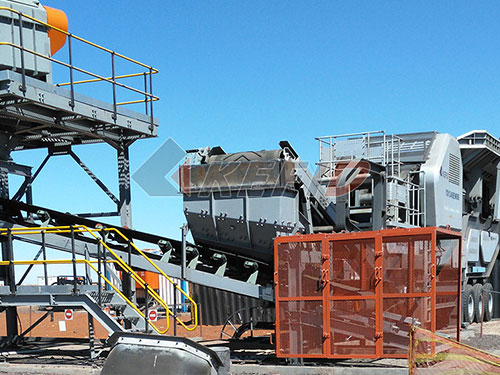
- Dust Suppression Systems: Water spray nozzles and baghouse filters must be operational. Excessive dust not only violates GB 16297-1996 (Emission Standards for Air Pollutants) but also accelerates bearing wear by contaminating lubricants.
- Noise Levels: Crushing equipment must not exceed 85 dB(A) at the operator’s station. Inspection includes checking the condition of acoustic enclosures and silencers.
- Emergency Stop Systems: All crushers and conveyors must have functional emergency stop pull cords and proximity switches. These are tested weekly.
- Lockout/Tagout (LOTO): During inspection, all energy sources (electrical, hydraulic, pneumatic) must be isolated. Chinese standard GB/T 33579-2017 outlines LOTO procedures. Non-compliance is a leading cause of fatal accidents in quarries.
8. Conclusion
The inspection of ballast crushing equipment in Chinese quarries is a multi-layered, technically demanding process that directly influences the safety and quality of railway infrastructure. It requires a combination of operator vigilance, engineering precision, and regulatory compliance. From the wear profile of a jaw plate to the vibration signature of a VSI rotor, every parameter must be measured, recorded, and acted upon. As China continues to expand its high-speed rail network and modernize its freight corridors, the role of rigorous equipment inspection becomes even more critical—not only to prevent costly downtime but to ensure that every ton of ballast laid beneath the rails meets the exacting standards of modern railway engineering.
For international equipment manufacturers and quarry operators entering the Chinese market, understanding these inspection protocols is essential for successful technology transfer and operational integration. The future of this sector lies in the adoption of IoT-enabled predictive maintenance, where real-time sensors on crusher bearings and screen vibrators feed data into AI-based diagnostic systems. However, even the most advanced technology cannot replace the fundamental discipline of systematic, documented, and safety-first inspection practices that remain the bedrock of China’s quarry industry.
