
Premium Quarry Ballast Crushing Equipment Importers: Market Dynamics, Sourcing Strategies, and Operational Considerations
Introduction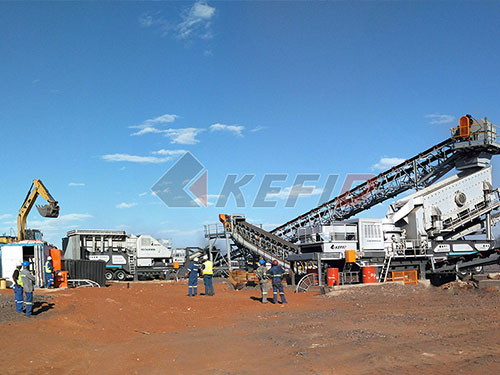
The global aggregates and quarrying industry forms the backbone of modern infrastructure development, supplying the crushed stone, ballast, and manufactured sand essential for railways, highways, concrete production, and large-scale civil works. Within this value chain, the importers of premium quarry ballast crushing equipment occupy a strategically critical position. These specialized intermediaries—ranging from independent equipment trading houses to authorized regional distributors and integrated project procurement firms—bridge the gap between original equipment manufacturers (OEMs) and quarry operators who demand high-reliability, high-throughput crushing solutions. This article examines the role, market dynamics, sourcing criteria, technical considerations, and future outlook for importers specializing in premium ballast crushing equipment, providing an objective analysis for industry stakeholders.
Defining the Segment: What Constitutes “Premium” Ballast Crushing Equipment
Ballast—the graded crushed stone placed beneath and around railway sleepers—imposes stringent requirements on particle shape, size distribution, durability, and resistance to abrasion and impact. Premium crushing equipment in this segment typically includes primary jaw or gyratory crushers, secondary and tertiary cone crushers (notably high-speed, high-reduction models), vertical shaft impactors (VSIs) for cubicity control, and increasingly, mobile and semi-mobile crushing plants configured for quarry-face operation. “Premium” in this context denotes equipment characterized by high availability rates, advanced automation and telemetry, wear-part longevity, superior end-product shape (critical for ballast specification compliance such as EN 13450 or AREMA standards), and robust after-sales support infrastructure. Importers dealing in this tier must therefore possess deep technical competence rather than merely transactional trading capability.
The Role and Value Proposition of Importers
Importers of premium crushing equipment deliver value across several dimensions. First, they provide market access: OEMs based in Europe, North America, and East Asia often lack the local presence required to serve quarry operators in emerging and mid-tier markets, making importers essential channels for sales, specification consultation, and commissioning. Second, importers absorb commercial and logistical complexity—managing international freight, customs clearance, certification compliance (CE, ISO, and local regulatory marks), and currency exposure. Third, and most importantly, premium importers offer application engineering: matching crusher configuration, chamber selection, and plant layout to specific rock types (granite, basalt, limestone, quartzite) and ballast gradation requirements. This consultative function distinguishes premium importers from commodity traders and directly influences quarry profitability through throughput, reduction ratio, and product yield optimization.
Market Dynamics and Demand Drivers
Demand for imported premium ballast crushing equipment is shaped by several interconnected forces. Railway infrastructure investment—particularly high-speed rail corridors, freight network expansion, and track renewal programs in Asia, Africa, the Middle East, and Latin America—creates direct demand for ballast production capacity. Simultaneously, tightening specifications on ballast quality (flakiness index, Los Angeles abrasion values, soundness) push operators toward advanced crushing technologies such as VSI and high-pressure grinding rolls that premium importers supply. Quarry consolidation is another factor: as small operations merge into larger, mechanized sites, procurement shifts toward higher-capacity imported plants with integrated automation. Conversely, market headwinds include long lead times, financing constraints in price-sensitive markets, localization pressures favoring domestic manufacturers, and the growing availability of competent Chinese and Indian equipment at lower price points—forcing premium importers to differentiate on lifecycle cost, service depth, and guaranteed performance rather than price alone.
Sourcing and Supplier Selection Criteria
For importers, supplier selection is a foundational strategic decision. Leading importers typically evaluate OEMs on technological leadership (crushing chamber design, hydraulic adjustment systems, automation platforms), manufacturing quality and traceability, global parts distribution capability, willingness to provide training and technical documentation, warranty and performance-guarantee terms, and exclusivity or territory arrangements. Diversification across multiple OEMs—for example, pairing a European cone crusher brand with an Asian mobile plant manufacturer—allows importers to address different customer budget tiers and application niches. Due diligence should also cover the OEM’s reference installations in comparable rock types, since ballast production performance is highly material-dependent. Contractual provisions on spare-parts pricing, lead times for critical components, and software/telemetry support are increasingly important as equipment becomes digitized.
Technical and Operational Considerations in Equipment Specification
Premium ballast crushing circuits are typically three- or four-stage configurations. Primary crushing (jaw or gyratory) handles run-of-quarry feed; secondary cone crushing performs intermediate reduction; tertiary cone or VSI crushing shapes the ballast to specification; and screening classifies product into railway-standard gradations. Importers must guide customers on chamber geometry (coarse versus fine), closed-side setting control, crusher throughput matching, and the trade-off between reduction ratio and product shape. Wear-part metallurgy (manganese grades, ceramic inserts) significantly affects cost-per-ton, and premium importers increasingly offer wear-management programs with performance monitoring. Automation—PLC-based control, remote diagnostics, and predictive maintenance—reduces downtime and is a key differentiator for imported premium equipment. Importers should also address ancillary considerations: dust suppression, noise compliance, electrical infrastructure compatibility, and operator training, all of which influence total cost of ownership.
Logistics, Compliance, and After-Sales Infrastructure
Importing heavy crushing equipment involves oversized freight, port handling, inland transport permits, and installation supervision. Premium importers invest in project logistics capabilities and maintain buffer stock of high-wear and high-failure components locally to meet availability commitments. Regulatory compliance—machine safety directives, emissions standards for diesel-powered mobile plants, and electrical certification—varies by jurisdiction and must be verified pre-shipment. After-sales infrastructure is the decisive competitive battleground: importers who establish regional service centers, certified technician teams, and guaranteed response times convert equipment sales into long-term service relationships. Financing facilitation—through vendor credit, leasing partnerships, or export credit agencies—further strengthens the importer’s position, particularly for capital-constrained quarry operators.
Risk Management and Commercial Strategy
Importers face currency volatility, geopolitical disruption to supply chains, OEM dependency risk, and credit exposure to quarry customers. Mitigation strategies include multi-currency contracting, diversified supplier portfolios, letter-of-credit and insurance instruments, and staged payment structures tied to commissioning milestones. Commercially, successful premium importers increasingly position themselves as solution providers—offering plant audits, productivity guarantees, and performance-based service contracts—rather than mere equipment sellers. Digital channels (equipment configurators, remote demos, telematics dashboards) complement traditional trade-show and referral-based lead generation.
Future Outlook
Several trends will shape the importer landscape through the coming decade. Electrification and hybrid drives for mobile crushing plants align with quarry decarbonization targets. Digital twins and AI-assisted maintenance will raise service expectations. Modular, rapidly-deployable plants suit railway projects with compressed timelines. Meanwhile, localization policies in several markets may require importers to establish assembly or service joint ventures. Importers who build technical depth, service density, and data-enabled support models will retain pricing power; those reliant on arbitrage alone will face margin compression.
Conclusion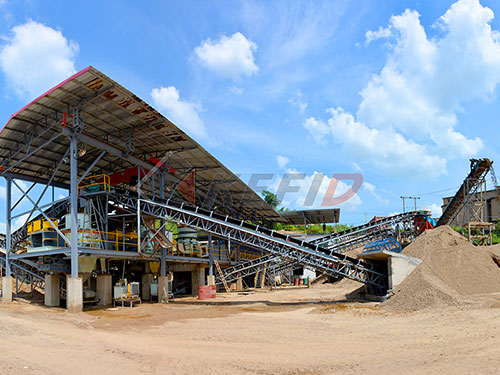
Premium quarry ballast crushing equipment importers perform an indispensable function in the aggregates and railway supply chain, combining market access, application engineering, logistics, and lifecycle support. Their success rests on rigorous supplier selection, deep technical understanding of ballast specifications and crushing circuit design, robust after-sales infrastructure, and disciplined risk management. As infrastructure demand grows and quality specifications tighten, the importer’s evolution from trader to integrated solutions partner will determine competitive standing in this specialized and capital-intensive segment.
If you have any questions about our products, please feel free to contact us. We take all inquiries and suggestions very seriously.