
OEM Stone Crusher Plant Procurement: A Comprehensive Guide to Strategic Sourcing, Technical Evaluation, and Operational Optimization
Introduction
The procurement of an Original Equipment Manufacturer (OEM) stone crusher plant is a capital-intensive, high-stakes decision that directly impacts the profitability, operational efficiency, and long-term sustainability of any aggregate production, mining, or construction enterprise. Unlike off-the-shelf equipment, an OEM stone crusher plant is engineered, designed, and manufactured by a single entity, ensuring integrated performance, standardized quality control, and comprehensive after-sales support. However, the procurement process is fraught with technical complexities, supply chain risks, and financial considerations that demand a structured, professional approach. This article provides a detailed, objective analysis of OEM stone crusher plant procurement, covering strategic planning, technical specifications, supplier evaluation, contract negotiation, logistics, commissioning, and lifecycle management. The goal is to equip procurement professionals, project managers, and business owners with the knowledge to make informed, cost-effective decisions while mitigating operational risks.
1. Strategic Pre-Procurement Planning
Before initiating any procurement activity, a thorough assessment of project requirements is essential. This phase sets the foundation for all subsequent decisions.
1.1. Defining Production Capacity and Material Characteristics
The primary driver of plant design is the required throughput, measured in tons per hour (TPH). However, capacity alone is insufficient. The physical and chemical properties of the raw material—such as hardness (Mohs scale), abrasiveness (Los Angeles abrasion value), moisture content, and feed size distribution—dictate the crusher type, power requirements, and wear part selection. For instance, a limestone quarry with low abrasion may be suited for a horizontal shaft impactor (HSI), while a granite quarry with high silica content demands a cone crusher or gyratory crusher. Procurement specifications must include detailed material analysis reports to ensure the OEM’s design aligns with actual site conditions.
1.2. Determining End-Product Specifications
The final product—whether it is 0-5 mm manufactured sand, 20-40 mm coarse aggregate, or railway ballast—determines the crushing stages and screening configuration. Multi-stage crushing (primary, secondary, tertiary) with intermediate screening is common for producing multiple fractions. The procurement team must specify the required gradation curves, flakiness index, and shape parameters (cubicity). OEMs often offer modular plants that can be reconfigured, but initial procurement should lock in the desired product mix to avoid costly retrofits.
1.3. Site and Infrastructure Constraints
The physical layout of the plant site influences the choice between stationary, skid-mounted, or mobile plants. Stationary plants are ideal for long-term operations with fixed feed sources, while mobile plants offer flexibility for multiple quarries. Key site factors include topography, available land area, proximity to power supply (grid vs. diesel generator), water availability for dust suppression, and road access for raw material and product transport. Procurement documents should include a site survey report to enable OEMs to propose optimized layouts.
2. Technical Evaluation of OEM Proposals
Once requirements are defined, the procurement team must evaluate technical proposals from multiple OEMs. This is not a simple price comparison; it requires deep technical scrutiny.
2.1. Crusher Selection and Sizing
The heart of any stone crusher plant is the crusher itself. OEMs typically offer a range of crushers: jaw crushers for primary reduction, cone crushers for secondary/tertiary crushing, impact crushers for shaping, and vertical shaft impactors (VSI) for sand production. The procurement team must verify that the OEM’s proposed crusher model has the correct feed opening, closed side setting (CSS) range, eccentric throw, and motor power to handle the specified material. Over-sizing leads to capital waste; under-sizing causes bottlenecks and premature wear. Requesting performance curves and simulation data (e.g., from software like Bruno or AggFlow) is a best practice.
2.2. Screening and Conveying System Design
Screens must be correctly sized to handle the circulating load and achieve separation efficiency. Vibrating screens (inclined or horizontal) should be matched to the plant’s capacity and material characteristics. Conveyor belts must be selected based on belt width, speed, and material density, with proper idler spacing and take-up systems. OEM proposals should include detailed conveyor layouts, transfer point designs, and dust sealing measures. The procurement team should also evaluate the quality of structural steelwork—thicker, galvanized frames offer longer service life in corrosive environments.
2.3. Automation and Control Systems
Modern OEM stone crusher plants incorporate advanced automation for load monitoring, crusher setting adjustment, and plant sequencing. Programmable Logic Controllers (PLCs) with Human-Machine Interfaces (HMIs) enable remote operation and data logging. Procurement specifications should mandate compatibility with existing enterprise systems (e.g., SCADA, ERP) and include features like automatic lubrication, vibration monitoring, and overload protection. The OEM’s control system should also provide real-time power consumption data for energy management.
2.4. Wear Parts and Maintenance Accessibility
Wear parts (liners, blow bars, screen media) are a significant operating cost. The procurement team must evaluate the OEM’s wear part design for longevity and ease of replacement. For example, manganese steel liners in cone crushers should have optimized cavity profiles to maximize wear life. Additionally, the plant’s design should facilitate routine maintenance—access platforms, hydraulic tools for liner changes, and centralized lubrication points. OEMs that offer wear part exchange programs or guaranteed wear life can reduce long-term costs.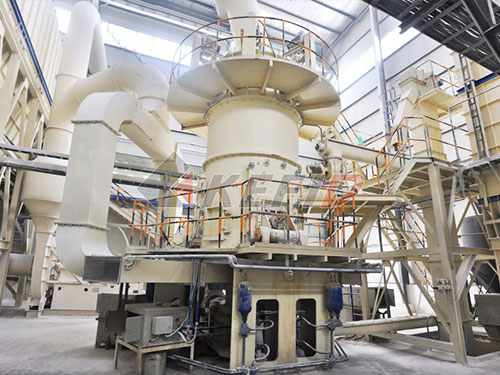
3. Supplier Selection and Due Diligence
Selecting the right OEM is as critical as selecting the right equipment. A rigorous due diligence process should include:
3.1. Financial Stability and Track Record
Request audited financial statements, bank references, and a list of completed projects of similar scale. A financially unstable OEM may fail to deliver on warranty obligations or spare parts support. Check for certifications such as ISO 9001 (quality management), ISO 14001 (environmental management), and OHSAS 18001 (occupational health and safety). These indicate a commitment to standardized processes.
3.2. Manufacturing Capability and Quality Control
Visit the OEM’s manufacturing facility if possible. Assess the quality of welding, machining, and assembly. Inquire about non-destructive testing (NDT) procedures for critical components like crusher shafts and frames. OEMs that use computer numerical control (CNC) machining and robotic welding typically produce more consistent, reliable equipment.
3.3. After-Sales Service and Spare Parts Availability
A stone crusher plant is a continuous operation; downtime is costly. The OEM must have a local service network or a dedicated support team with rapid response times. Evaluate the availability of critical spare parts (e.g., bearings, motors, crusher liners) and the lead time for non-stock items. Some OEMs offer remote diagnostics via IoT sensors, which can preempt failures. Service contracts should include scheduled maintenance visits and training for site personnel.
4. Commercial and Contractual Considerations
The procurement contract must protect the buyer’s interests while fostering a collaborative relationship with the OEM.
4.1. Pricing Structure and Payment Terms
OEM proposals typically include the ex-works price, but the total cost of ownership (TCO) includes freight, insurance, customs duties, installation, commissioning, and training. Request a detailed breakdown to avoid hidden costs. Payment terms should be milestone-based: a down payment (e.g., 20-30%) upon order confirmation, progress payments linked to manufacturing milestones (e.g., 30% on completion of major components, 30% on shipment), and a final payment (10-20%) upon successful commissioning and acceptance testing. Retention clauses (e.g., 5-10% held for 12 months) can incentivize warranty compliance.
4.2. Performance Guarantees and Liquidated Damages
The contract should include guaranteed performance parameters: throughput capacity, product gradation, power consumption, and noise/dust emissions. If the plant fails to meet these guarantees during commissioning, the OEM should be obligated to rectify the issue at no cost. Liquidated damages (LD) clauses—typically 0.5-1% of contract value per week of delay—should be included for late delivery or performance shortfalls. However, LD rates must be reasonable and not punitive to be enforceable.
4.3. Warranty and Intellectual Property
Standard warranties cover defects in materials and workmanship for 12-24 months from commissioning or 18-30 months from shipment, whichever comes first. The warranty should exclude normal wear parts but cover structural failures. Additionally, the buyer should secure rights to the plant’s design drawings, electrical schematics, and software source code (or escrow) to enable future modifications or third-party maintenance.
5. Logistics, Installation, and Commissioning
5.1. Shipping and Customs
Stone crusher plants are heavy, oversized cargo. The procurement team must coordinate with freight forwarders experienced in heavy lift shipping. For international procurement, Incoterms (e.g., FOB, CIF, DAP) must be clearly defined. Customs clearance requires accurate Harmonized System (HS) codes and documentation (commercial invoice, packing list, certificate of origin). Delays at customs can derail project timelines.
5.2. Foundation and Civil Works
The OEM should provide detailed foundation drawings, anchor bolt plans, and load specifications. The buyer is typically responsible for civil works (concrete foundations, drainage, electrical substation). It is advisable to engage a local civil contractor with experience in industrial plant construction. The procurement contract should include a timeline for civil works to align with equipment delivery.
5.3. Commissioning and Acceptance Testing
Commissioning should be supervised by OEM engineers. The acceptance test involves running the plant at full capacity for a defined period (e.g., 72 hours) while measuring throughput, product quality, and power consumption. The buyer should have independent inspectors on site to verify performance. Only after successful acceptance testing should the final payment be released.
6. Lifecycle Management and Continuous Improvement
Procurement does not end with commissioning. A well-managed plant requires ongoing collaboration with the OEM.
6.1. Spare Parts Management
Develop a critical spares inventory based on the OEM’s recommendations and historical failure data. For high-wear items like crusher liners, consider a consignment stock agreement where the OEM holds inventory at the buyer’s site. This reduces capital tied up in spares while ensuring availability.
6.2. Performance Monitoring and Upgrades
Modern OEMs offer digital platforms for remote monitoring of plant performance. Data on throughput, energy consumption, and wear rates can be used to optimize settings and predict maintenance. Procurement contracts should include options for future upgrades—such as adding a tertiary crusher or replacing screens—to extend plant life without a full replacement.
6.3. Training and Knowledge Transfer
The OEM should provide comprehensive training for operators, maintenance technicians, and supervisors. Training should cover safe operation, routine maintenance, troubleshooting, and emergency shutdown procedures. Video manuals and on-site refresher courses are valuable for reducing human error.
Conclusion
OEM stone crusher plant procurement is a multifaceted process that demands technical expertise, strategic foresight, and meticulous contract management. By systematically addressing pre-procurement planning, technical evaluation, supplier due diligence, commercial terms, logistics, and lifecycle support, buyers can secure a plant that delivers consistent performance, low operating costs, and high return on investment. The key is to view procurement not as a one-time transaction but as a long-term partnership with the OEM. In an industry where downtime translates directly to lost revenue, the value of a reliable, well-supported OEM plant far outweighs the initial price premium. Ultimately, successful procurement is measured not by the purchase price alone, but by the plant’s ability to produce quality aggregates efficiently, safely, and sustainably over its entire operational life.
If you have any questions about our products, please feel free to contact us. We take all inquiries and suggestions very seriously.