
Title: The Role and Selection Criteria of OEM Quarry Ballast Crushing Equipment Distributors in Modern Rail Infrastructure
Introduction
In the realm of heavy civil engineering and railway construction, the term “ballast” refers to the crushed stone or gravel layer that forms the track bed upon which railway sleepers (ties) are laid. This layer is not merely a decorative foundation; it serves critical functions including load distribution, drainage facilitation, thermal expansion absorption, and lateral track stability. The production of high-quality railway ballast demands specialized crushing machinery capable of reducing raw quarry rock into angular, uniformly graded particles with specific physical properties (e.g., Los Angeles abrasion resistance, flakiness index, and particle size distribution). Given the stringent technical specifications set by national railway authorities (e.g., AREMA in North America, UIC in Europe, and CRCC in China), the procurement of crushing equipment is a high-stakes decision. This is where the OEM (Original Equipment Manufacturer) Quarry Ballast Crushing Equipment Distributor becomes an indispensable intermediary. This article provides a comprehensive, professional, and objective analysis of the distributor’s role, the technical parameters of ballast crushing equipment, the critical selection criteria for distributors, and the evolving market dynamics.
Section 1: Defining the OEM Distributor in the Quarrying Context
An OEM distributor is an authorized entity that sells, services, and supports crushing equipment manufactured by a specific original equipment manufacturer. Unlike a general reseller, an OEM distributor operates under a formal contractual agreement, which typically includes territorial exclusivity, technical training, spare parts inventory obligations, and adherence to the manufacturer’s pricing and warranty policies. In the context of quarry ballast production, the distributor is not merely a “middleman.” Instead, they function as a technical consultant, a logistics coordinator, and a post-sales service provider.
The distinction between an OEM distributor and an independent dealer is crucial. An independent dealer may offer used or refurbished machinery from multiple brands, often without direct factory support. In contrast, an OEM distributor guarantees that the equipment is factory-new, covered by the manufacturer’s warranty, and compatible with proprietary control systems and wear parts. For quarry operators producing ballast for high-speed rail (HSR) projects, where downtime is measured in thousands of dollars per hour, the reliability and traceability offered by an OEM distributor are non-negotiable.
Section 2: Technical Overview of Ballast Crushing Equipment
To understand the distributor’s value proposition, one must first grasp the complexity of the machinery involved. Ballast crushing typically involves a multi-stage process:
Key performance indicators for ballast crushers include:
Modern crushers are equipped with automated setting adjustment systems (e.g., ASRi for cone crushers) and remote monitoring via IoT. An OEM distributor must be fluent in these technologies to advise on optimal settings for specific rock types (e.g., basalt, granite, quartzite) and to troubleshoot software-related issues.
Section 3: The Distributor’s Core Responsibilities
The role of an OEM distributor extends far beyond the initial sale. The following are the core responsibilities, each with significant operational and financial implications for the quarry operator:
3.1 Pre-Sales Technical Consultation and Site Assessment
A professional distributor conducts a comprehensive site survey, analyzing:
3.2 Supply Chain and Logistics Management
OEM distributors maintain regional warehouses with critical spare parts (e.g., main shafts, eccentric bushings, hydraulic pumps). For ballast operations, the lead time for a custom-machined manganese mantle can be 8-12 weeks from the factory. A distributor with a robust local inventory can reduce this to 24-48 hours. They also manage the importation process, including customs clearance, inland freight, and insurance, which is particularly complex for oversized components like crusher frames.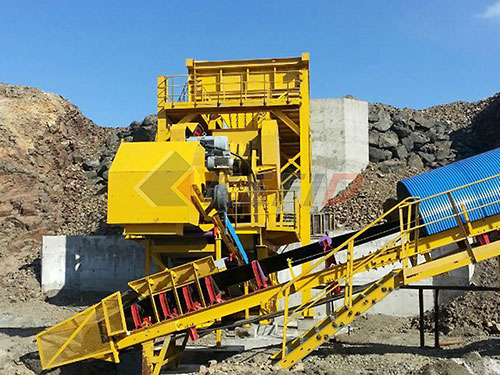
3.3 Installation, Commissioning, and Operator Training
A crusher is not a plug-and-play device. The distributor’s field service engineers oversee the mechanical alignment, hydraulic system charging, and electrical wiring. They then perform a “no-load” test and a “load” test with actual quarry feed. Crucially, they train the quarry’s operators on safe operating procedures, preventive maintenance schedules, and the use of the control system. Poor commissioning can lead to premature bearing failure or vibration issues, which are costly to rectify.
3.4 After-Sales Maintenance and Repair Services
This is the most critical differentiator. A reputable OEM distributor offers:
3.5 Warranty and Genuine Parts Assurance
OEM distributors are the sole authority to validate warranty claims. Using counterfeit or “will-fit” parts from third-party suppliers often voids the warranty and can lead to catastrophic failure. The distributor ensures that all parts supplied are genuine, traceable, and manufactured to the original tolerance specifications.
Section 4: Critical Selection Criteria for an OEM Distributor
Not all distributors are created equal. Quarry operators must evaluate potential partners using a rigorous, objective framework. The following criteria are paramount:
4.1 Authorized Status and Factory Relationship
The distributor must provide a current authorization certificate from the OEM. Verify the scope of authorization (e.g., does it cover the entire product line or only specific models?). Also, assess the distributor’s direct line of communication with the OEM’s engineering department. A distributor that merely places orders through a regional office may lack the technical depth needed for complex problem-solving.
4.2 Local Technical Competence and Experience
Evaluate the distributor’s track record in ballast-specific applications. Have they successfully commissioned equipment for railway projects in the region? Do they employ certified mechanical and electrical engineers, or only sales representatives? Ask for case studies and references from existing quarry clients. A distributor with 20 years of experience in hard-rock crushing is vastly more valuable than one with a general construction background.
4.3 Spare Parts Inventory Depth and Turnaround Time
Request a detailed list of the distributor’s stock levels for critical wear parts (e.g., jaw plates, cone mantles, concave rings, and side liners). Inquire about their emergency order process. A distributor that can guarantee a 48-hour delivery for a manganese liner is a strategic asset. Also, check if they have a “consignment stock” arrangement with the OEM, which allows them to hold high-value items without immediate payment.
4.4 Service Network and Response Capability
Map the distributor’s service engineers’ locations relative to your quarry site. What is their average response time for breakdowns? Do they have 24/7 hotline support? Are they equipped with remote diagnostic capabilities (e.g., connecting to the crusher’s PLC via a cellular modem)? The physical distance matters less than the speed and quality of the response.
4.5 Financial Stability and Long-Term Commitment
The crushing equipment market is cyclical. A distributor that is financially unstable may go bankrupt, leaving you with orphaned equipment. Review their audited financial statements, their credit rating, and their history with the OEM. A long-term commitment (e.g., a 5-year service agreement) is a positive signal.
4.6 Training and Knowledge Transfer Capabilities
Does the distributor offer structured training programs for your maintenance crew? This includes classroom theory, hands-on practice, and certification. The goal is to make your team self-sufficient for routine maintenance, reducing reliance on external support.
Section 5: Market Dynamics and Emerging Trends
The global market for quarry crushing equipment is undergoing significant transformation, and the distributor’s role is evolving accordingly.
5.1 The Shift Towards Electric and Hybrid Drives
Diesel-powered crushers are being phased out in favor of electric motors due to carbon emission regulations and lower operating costs. Distributors must now be proficient in high-voltage electrical systems, variable frequency drives (VFDs), and energy recovery systems. They must also advise on the installation of fixed electrical infrastructure versus mobile diesel-electric hybrid units.
5.2 Automation and Digitalization
Modern crushers are equipped with sensors that monitor bearing temperature, oil pressure, and vibration. Distributors are increasingly offering “digital health check” services, where data is analyzed remotely to predict failures before they occur. This requires the distributor to invest in data analytics software and cybersecurity protocols.
5.3 The Rise of Mobile and Semi-Mobile Plants
For short-term railway projects or quarries with multiple extraction points, mobile jaw and cone crushers are preferred. Distributors must be adept at designing transportable plants that can be relocated within days, not weeks. This involves hydraulic leveling systems, quick-release couplings, and modular conveyor systems.
5.4 Sustainability and Circular Economy
Quarry operators are under pressure to minimize waste. Distributors are now promoting crushers with higher reduction ratios to reduce the amount of oversize material sent to waste dumps. Additionally, they are facilitating the use of recycled concrete and asphalt as a partial substitute for virgin ballast in secondary lines, which requires specialized impact crushers.
5.5 Supply Chain Resilience
The COVID-19 pandemic and geopolitical tensions have exposed the fragility of global supply chains. Distributors are now diversifying their sourcing, maintaining higher safety stock levels, and establishing local manufacturing partnerships for non-critical components. Quarry operators should assess their distributor’s supply chain resilience as part of their risk management strategy.
Section 6: The Financial and Operational Impact of Choosing the Right Distributor
The choice of distributor has a direct, quantifiable impact on the quarry’s bottom line. Consider the following scenario:
The difference is stark. The OEM distributor, despite a higher upfront cost, delivers a significantly lower total cost of ownership (TCO). This is the core economic argument for engaging a professional, authorized distributor.
Section 7: Conclusion and Strategic Recommendations
The OEM Quarry Ballast Crushing Equipment Distributor is a strategic partner in the railway construction supply chain. Their expertise spans mechanical engineering, logistics, project management, and after-sales service. For quarry operators, the decision to engage an authorized distributor should not be based solely on the initial purchase price. Instead, it should be a holistic evaluation of technical capability, parts availability, service response, and long-term reliability.
Recommendations for Quarry Operators:
In conclusion, the role of the OEM distributor is not diminishing; it is becoming more specialized and more critical. As railway networks expand globally and ballast specifications become stricter, the distributor who can provide not just a machine, but a complete solution—from geological analysis to lifetime maintenance—will be the one who drives the industry forward. The quarry operator who recognizes this value will achieve higher productivity, lower operational risk, and superior financial returns.
If you have any questions about our products, please feel free to contact us. We take all inquiries and suggestions very seriously.