Title: The Strategic Role of OEM Gold Ore Crushing Equipment Dealers in Modern Mining Operations
Introduction: The Criticality of Primary Comminution
In the extractive metallurgy of gold, the crushing stage is not merely a preparatory step; it is the foundational determinant of downstream recovery efficiency. Gold, particularly in its free-milling or refractory forms, is often encapsulated within complex silicate matrices. The liberation of these micron-sized particles from the host rock requires a precise, energy-intensive comminution circuit. Within this circuit, the primary, secondary, and tertiary crushers bear the brunt of mechanical stress, abrasive wear, and impact fatigue. Consequently, the selection of crushing equipment—and, equally critical, the sourcing of that equipment—dictates the economic viability of the entire mining project.
This is where the OEM Gold Ore Crushing Equipment Dealer assumes a role far beyond that of a mere transactional intermediary. An Original Equipment Manufacturer (OEM) dealer is the authorized, factory-linked channel through which heavy machinery—such as jaw crushers, cone crushers, gyratory crushers, and high-pressure grinding rolls (HPGRs)—is procured, serviced, and optimized. For a gold mining operation, engaging a legitimate OEM dealer is not a luxury; it is a risk-management imperative. This article provides a comprehensive, professional analysis of the functions, selection criteria, and strategic advantages of partnering with an OEM dealer for gold ore crushing equipment.
Section 1: Defining the OEM Dealer vs. Aftermarket Suppliers
To appreciate the value proposition, one must first delineate the OEM dealer from independent aftermarket suppliers. An OEM dealer is contractually authorized by the manufacturer (e.g., Metso Outotec, Sandvik, FLSmidth, or Terex) to sell new equipment, genuine spare parts, and licensed service packages within a specific geographic territory. This authorization carries several non-negotiable obligations:
- Genuine Parts Integrity: The dealer supplies components manufactured to the exact metallurgical and dimensional specifications of the original design. In gold ore crushing, where manganese steel liners and alloy steel eccentric shafts are subjected to extreme cyclical loading, a 2-millimeter deviation in a mantle profile can reduce throughput by 15% and increase recirculating load exponentially.
- Factory-Trained Technicians: OEM dealers employ engineers who have undergone rigorous training at the manufacturer’s global facilities. They possess proprietary diagnostic software and torque specifications that are not available to general mechanics.
- Warranty Validity: Equipment warranties are voided if non-OEM parts are installed. An authorized dealer ensures that the crusher’s warranty remains intact, protecting the mine’s capital expenditure.
In contrast, aftermarket suppliers offer lower upfront costs but often compromise on metallurgy, heat treatment processes, and fit tolerance. For gold ore, which can have a compressive strength exceeding 300 MPa, such compromises lead to premature liner failure, increased downtime, and—critically—the risk of catastrophic structural failure.
Section 2: The Technical Complexity of Gold Ore Crushing
Gold ore is not a homogeneous feed. Its characteristics vary dramatically based on deposit type: placer, oxidized, or sulfide-rich refractory ore. An OEM dealer must possess the technical acumen to recommend equipment configurations that match the specific ore’s Bond Work Index (Wi) and abrasion index (Ai).
- Primary Crushing (Jaw & Gyratory): For run-of-mine (ROM) ore with top sizes of 1,200 mm, an OEM dealer will advise on the correct feed opening, throw, and closed-side setting (CSS). For high-clay, high-moisture ores common in tropical gold belts, the dealer may recommend a hydraulic toggle system to prevent packing.
- Secondary/Tertiary Crushing (Cone Crushers): Gold operations often employ standard and short-head cone crushers. The OEM dealer’s role here is to optimize the crushing chamber profile. For instance, a “coarse” chamber may be suitable for the secondary stage, but a “superfine” chamber is required for the tertiary stage to achieve a P80 of 10-12 mm, which is optimal for ball mill feed.
- HPGR Technology: In modern, high-tonnage gold plants, HPGRs are increasingly replacing tertiary cone crushers. An OEM dealer provides the critical interface for the hydraulic system calibration, ensuring that the operating pressure (typically 4-6 N/mm²) is sufficient to induce micro-cracking in the ore, thereby enhancing leach recovery by up to 5% without excessive energy consumption.
A competent OEM dealer does not merely sell a machine; they conduct a “process audit.” They analyze the ore’s particle size distribution (PSD), bulk density, and moisture content to calculate the required installed power and surge capacity. This engineering consultation is invaluable, as an undersized crusher becomes a bottleneck, while an oversized unit wastes capital and energy.
Section 3: The Economic Rationale for OEM Dealership
The initial purchase price of a gold ore crusher is substantial—ranging from $500,000 for a small jaw crusher to over $10 million for a large gyratory unit. However, the total cost of ownership (TCO) over a 10-year lifespan is the true metric. An OEM dealer contributes to TCO reduction through several mechanisms:
- Predictive Maintenance Programs: Authorized dealers offer Condition Monitoring contracts. Using vibration analysis, oil particle counting, and thermal imaging, they can predict bearing failure or gear wear weeks in advance. For a gold mine producing 5,000 tons per day, an unplanned crusher shutdown costs approximately $50,000 to $100,000 per hour in lost production and fixed overheads. Predictive maintenance eliminates these catastrophic events.
- Inventory Management (VMI): OEM dealers maintain strategic local stockpiles of high-wear items—mantles, concaves, cheek plates, and drive belts. Through Vendor Managed Inventory agreements, the dealer monitors the mine’s consumption rate and automatically replenishes stock. This reduces the mine’s working capital tied up in spare parts inventory by up to 30%.
- Performance Guarantees: Reputable OEM dealers will sign performance contracts that guarantee throughput (tph) and product size (P80). If the equipment fails to meet these metrics due to manufacturing defects, the dealer is contractually obligated to rectify the issue at their cost. This shifts the technical risk from the miner to the supplier.
Section 4: The Selection Criteria for a Qualified OEM Dealer
Not all authorized dealers are created equal. When evaluating a potential partner for gold ore crushing equipment, mining procurement managers must apply a rigorous due diligence framework:
- Proximity and Response Time: The dealer’s service center should be within a 4-hour drive or a 12-hour flight from the mine site. The availability of a 24/7 emergency hotline and a field service truck equipped with diagnostic laptops is non-negotiable.
- OEM Certification Status: Verify the dealer’s current authorization certificate directly with the manufacturer. Some dealers may have lost their status due to poor performance or unauthorized sourcing of parts.
- Engineering Capability: Does the dealer employ a licensed mechanical engineer and a metallurgist? They should be able to perform Finite Element Analysis (FEA) on wear parts and recommend design modifications for specific ore types.
- Track Record in Gold Sector: Request references from at least three gold mines of similar scale. Inquire about their Mean Time Between Failures (MTBF) and the dealer’s average response time to breakdown calls.
- Parts Availability: Ask for a detailed list of critical spare parts held in local inventory. A qualified dealer should stock at least 80% of the “A-category” parts (those with a high failure rate and long lead time, such as main shafts and eccentric bushings).
Section 5: The Service Lifecycle: From Commissioning to Overhaul
The dealer’s involvement does not end at the point of sale. A professional OEM dealer provides a structured service lifecycle:
- Phase 1 – Commissioning: The dealer’s engineers supervise the installation, alignment, and initial start-up. They calibrate the hydraulic pressure relief valves and ensure the lubrication system is free of contaminants. They also train the mine’s operators on proper feed distribution—critical to prevent uneven wear on the crushing chamber.
- Phase 2 – Operational Optimization: During the first 500 hours, the dealer conducts a “break-in” inspection. They check for abnormal heat signatures, bolt torque relaxation, and oil contamination. They adjust the CSS to achieve the target product size while minimizing power draw.
- Phase 3 – Scheduled Maintenance: The dealer provides a 1,000-hour, 5,000-hour, and 20,000-hour service schedule. This includes replacing wear liners, inspecting the main frame for stress cracks, and re-grinding the eccentric shaft journals.
- Phase 4 – Major Overhaul: After 40,000 to 60,000 hours, the crusher requires a full rebuild. The OEM dealer coordinates the return of the crusher to a certified rebuild center, where the main frame is stress-relieved, the bearings are replaced with factory-spec units, and the gear set is re-cut if necessary. This rebuild restores the crusher to 90-95% of its original efficiency at a cost of only 40-50% of a new machine.
Section 6: Navigating the Risks of Counterfeit Parts
One of the most significant dangers in the mining equipment market is the proliferation of counterfeit “OEM-compatible” parts. These parts are often manufactured in low-cost jurisdictions using inferior steel grades. In a gold ore crusher, a counterfeit main shaft can fatigue and snap under load, causing the mantle to fall into the crusher base, destroying the eccentric assembly and potentially injuring personnel. An authorized OEM dealer is the only guaranteed conduit for parts with traceable material certificates (EN 10204 3.1) and full heat-treatment documentation. The dealer’s reputation is tied to the authenticity of the parts they sell; they have no incentive to risk their contract by sourcing grey-market components.
Section 7: Future Trends and the Dealer’s Evolving Role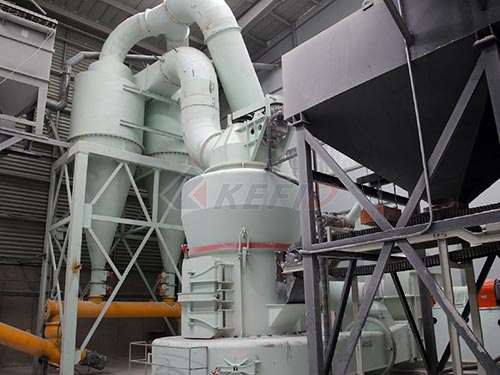
The gold mining industry is undergoing a digital transformation. OEM dealers are at the forefront of this shift, offering:
- Digital Twin Services: Dealers now create a virtual replica of the crusher, allowing for real-time simulation of wear patterns and operational adjustments.
- Remote Monitoring Centers: Using IoT sensors, the dealer’s remote operations center can monitor the crusher’s health 24/7, alerting the mine’s control room to anomalies in current draw or bearing temperature.
- Sustainability and Circular Economy: OEM dealers are increasingly offering “remanufactured” crushers—units that are fully disassembled, cleaned, and rebuilt with new OEM internals. This provides a lower-carbon, cost-effective alternative for smaller gold operations.
Conclusion: The Dealer as a Strategic Partner, Not a Vendor
In conclusion, the OEM Gold Ore Crushing Equipment Dealer is the linchpin of a gold mine’s comminution strategy. They provide the technical expertise to match machinery to ore characteristics, the supply chain integrity to ensure genuine parts, and the service network to maximize uptime. In an industry where a single hour of downtime can erase a week’s profit margin, the choice of dealer is a board-level decision. Mining companies that treat their OEM dealer as a transactional vendor will inevitably suffer from increased maintenance costs and reduced recovery rates. Conversely, those that forge a long-term, collaborative partnership with a certified dealer will achieve operational excellence, safety, and sustained profitability in the challenging and rewarding field of gold ore processing. The dealer is not merely selling steel and hydraulics; they are selling certainty in an inherently uncertain geological environment.
