
In the world of rail and heavy construction, ballast is the unsung hero—the crushed stone layer that provides drainage, stability, and load distribution for railway tracks and critical foundations. The quality of this ballast is paramount, directly influencing safety, longevity, and maintenance costs. At the heart of producing specification-compliant ballast lies the Quarry Ballast Crushing Equipment Factory Sample. This is not merely a piece of rock; it is a tangible, data-rich prototype that embodies the entire production chain’s capability. It serves as the crucial nexus between equipment design, quarry geology, and stringent engineering standards.
Railway ballast must meet rigorous physical and mechanical specifications (e.g., AREMA in North America, EN 13450 in Europe). These standards dictate parameters such as:
Producing aggregate within these tight tolerances requires a meticulously designed crushing circuit. This is where factory samples become indispensable.
A factory sample in this context is a representative batch of finished crushed aggregate produced during a Factory Acceptance Test (FAT) or a pre-delivery trial run of a complete crushing plant. It is generated from a known source material (often supplied by the client or from a reference quarry) processed through the proposed equipment configuration at the manufacturer’s facility.
The sample package typically includes:
A. Risk Mitigation for the Buyer (Quarry Operator/Rail Authority):
For a client investing millions in a new crushing plant, the factory sample is the ultimate de-risking tool. It moves promises from brochures into reality. Before equipment is disassembled for shipment, the client can verify that the plant can indeed produce ballast meeting their specific contractual specs from their geologic material. It answers the critical question: “Does this system work as intended with my rock?”
B. Validation of Equipment Design & Circuit Configuration:
Crushing engineers design flowsheets involving primary crushers (jaws or gyratories), secondary cones, tertiary cones for shaping, and vertical shaft impactors (VSIs) for cubical products. The factory sample validates this theoretical design. For instance, it proves whether a proposed cone crusher with specific chamber geometry and speed can sufficiently reduce flakiness to meet index requirements.
C. Process Optimization & Fine-Tuning:
The sample production run is a live laboratory. Engineers can adjust crusher closed-side settings (CSS), screen mesh sizes, conveyor speeds, and crusher cavity pressures in real-time to optimize yield within specification bands. This process creates an operational “recipe” that can be directly transferred to the quarry site.
D. Quality Assurance & Contractual Fulfillment:
The sample and its accompanying report serve as a baseline contractual document. They provide an objective benchmark against which future production at the quarry site will be measured during final commissioning.
E. Building Confidence in Supply Chain Integrity:
For large infrastructure projects funded by public authorities, demonstrating that sourced materials will be consistently high-quality is essential. Factory samples from approved equipment suppliers provide auditable proof of due diligence in selecting technology partners.
While pivotal for railway ballast this practice applies equally to other high specification aggregates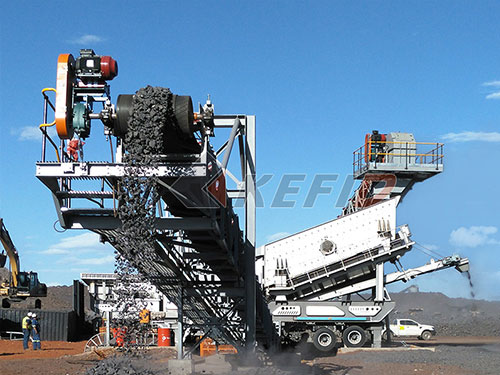
The Quarry Ballast Crushing Equipment Factory Sample transcends being mere marketing it embodies engineering verification empirical validation contractual safeguard represents proactive approach infrastructure quality Instead waiting until installation commissioning discover fatal flaw process allows correction redesign factory floor saving vast sums preventing project delays Ultimately links meticulous design manufacturing with brutal physical demands railbed ensuring millions tonnes ballast produced over plant lifetime possess integrity required support safe efficient transport networks Therefore specifying witnessing rigorous factory sampling program non negotiable best practice any entity serious about producing specification aggregates cornerstone reliable sustainable infrastructure
If you have any questions about our products, please feel free to contact us. We take all inquiries and suggestions very seriously.