
ODM Gyratory Crusher Sourcing: A Comprehensive Guide to Strategic Procurement and Global Supply Chain Optimization
Introduction
In the heavy industrial machinery sector, the gyratory crusher stands as a cornerstone of primary crushing operations, particularly in large-scale mining, quarrying, and aggregate processing. Unlike jaw crushers, gyratory crushers are designed for high-capacity, continuous-duty applications, capable of processing thousands of tons of material per hour. As global demand for minerals and construction materials continues to rise, the need for reliable, high-performance crushing equipment has never been more acute. For companies seeking to enter or expand within this market, the concept of ODM (Original Design Manufacturer) sourcing has emerged as a strategic alternative to traditional OEM (Original Equipment Manufacturer) procurement.
This article provides a detailed, objective analysis of ODM gyratory crusher sourcing. It explores the technical, commercial, and logistical considerations that procurement professionals, mining engineers, and business owners must evaluate when engaging with ODM partners. The discussion covers the definition and advantages of ODM sourcing, critical technical specifications, supplier evaluation criteria, risk management, and future trends in the global supply chain for gyratory crushers.
1. Understanding ODM Sourcing in the Context of Gyratory Crushers
ODM sourcing refers to a business arrangement where a manufacturer designs and produces a product according to the buyer’s specifications, performance requirements, or intellectual property. In the case of gyratory crushers, an ODM partner typically possesses the engineering capability to design the entire crusher system—including the main shaft, mantle, concave, eccentric assembly, hydraulic system, and drive train—while the buyer retains ownership of the design, brand, or specific performance parameters.
This model differs from OEM sourcing, where the buyer purchases a standardized product from an established brand, and from contract manufacturing, where the buyer provides a complete design and the manufacturer simply produces it. ODM sourcing offers a middle ground: the buyer leverages the manufacturer’s existing design expertise and production infrastructure but customizes the product to meet unique operational needs, such as specific feed sizes, throughput capacities, or material hardness requirements.
2. Why Choose ODM Sourcing for Gyratory Crushers?
The decision to source gyratory crushers through an ODM model is driven by several strategic advantages:
2.1 Cost Efficiency and Reduced Capital Expenditure
Developing a gyratory crusher from scratch requires significant investment in R&D, prototyping, and testing. ODM partners, particularly those in regions with mature industrial bases (e.g., China, India, and parts of Eastern Europe), have already amortized these costs across multiple projects. By sourcing through an ODM, buyers can access advanced designs at a fraction of the cost of developing their own or purchasing from premium OEMs.
2.2 Customization Without Engineering Overhead
Mining operations vary widely in terms of ore characteristics, site conditions, and regulatory requirements. An ODM partner can modify key parameters—such as the crushing chamber profile, eccentric throw, and mantle shape—to optimize performance for specific applications. This level of customization is often unavailable in off-the-shelf OEM products.
2.3 Faster Time to Market
ODM manufacturers typically have established supply chains for raw materials, castings, forgings, and hydraulic components. This allows for shorter lead times compared to building a new production line. For companies facing urgent project deadlines or equipment replacement needs, ODM sourcing can be a critical advantage.
2.4 Intellectual Property Control
Unlike OEM purchases, where the buyer has no claim to the design, ODM arrangements often allow the buyer to own or co-own the design. This is particularly valuable for companies that wish to build a proprietary brand or maintain a competitive edge through unique design features.
3. Critical Technical Specifications in ODM Gyratory Crusher Sourcing
When engaging with an ODM partner, buyers must clearly define technical requirements to ensure the final product meets operational expectations. The following parameters are essential:
3.1 Feed Opening and Capacity
The gyratory crusher’s feed opening must accommodate the largest expected rock size. Standard models range from 42 inches to 72 inches in feed opening, with capacities from 1,000 to over 10,000 tons per hour. The ODM partner must provide detailed calculations for throughput based on material density, moisture content, and desired reduction ratio.
3.2 Crushing Chamber Design
The chamber profile (e.g., straight, curved, or stepped) directly affects product gradation and wear life. Advanced ODM partners use computational fluid dynamics (CFD) and discrete element modeling (DEM) to simulate material flow and optimize chamber geometry. Buyers should request simulation reports and wear life projections.
3.3 Main Shaft and Eccentric Assembly
The main shaft is subjected to extreme cyclic loading. Material selection (typically high-strength alloy steel), heat treatment processes, and bearing design are critical. The eccentric assembly must provide precise motion control to achieve the desired crushing action. Buyers should specify allowable stress levels, fatigue life, and inspection protocols.
3.4 Hydraulic and Lubrication Systems
Modern gyratory crushers rely on hydraulic systems for setting adjustment, tramp release, and clearing. The ODM partner must demonstrate expertise in hydraulic circuit design, including pressure ratings, filtration, and fail-safe mechanisms. Lubrication systems must ensure continuous oil flow to bearings and gears, with temperature and pressure monitoring.
3.5 Wear Parts and Liners
Mantles and concaves are consumable components that significantly impact operating costs. ODM partners should offer multiple liner material options (e.g., manganese steel, chrome-moly alloys, or composite materials) and provide data on wear rates under specific operating conditions. Buyers should also discuss liner interchangeability and availability of aftermarket parts.
4. Evaluating ODM Suppliers: A Structured Approach
Selecting the right ODM partner is the most critical step in the sourcing process. A rigorous evaluation framework should include:
4.1 Technical Capability and Experience
4.2 Manufacturing Infrastructure
4.3 Quality Assurance and Testing
4.4 Supply Chain and Logistics
4.5 After-Sales Support and Warranty
5. Risk Management in ODM Sourcing
While ODM sourcing offers significant benefits, it also introduces risks that must be proactively managed:
5.1 Intellectual Property (IP) Protection
When sharing design specifications with an ODM partner, there is a risk of IP leakage or unauthorized replication. Mitigation strategies include:
5.2 Quality Consistency
Variations in raw material quality, manufacturing tolerances, or assembly procedures can lead to performance issues. Buyers should:
5.3 Geopolitical and Currency Risks
Sourcing from overseas ODM partners exposes buyers to trade tariffs, currency fluctuations, and political instability. Diversifying suppliers across multiple regions or negotiating long-term contracts with fixed pricing can mitigate these risks.
5.4 Lead Time and Capacity Constraints
High demand for mining equipment can strain ODM production capacity. Buyers should:
6. The Global Landscape of ODM Gyratory Crusher Manufacturing
The majority of ODM gyratory crusher production is concentrated in countries with strong heavy machinery industries. Key regions include:
6.1 China
Chinese manufacturers dominate the ODM market due to their cost advantages, large-scale foundries, and rapid prototyping capabilities. Companies such as CITIC Heavy Industries, Shenyang Heavy Machinery, and Zhejiang Shuangjin Machinery have extensive experience in producing gyratory crushers for both domestic and international clients. However, buyers must carefully evaluate quality control and IP protection practices.
6.2 India
Indian manufacturers, particularly in Gujarat and Maharashtra, are emerging as competitive ODM partners. They offer lower labor costs and a growing engineering talent pool. However, the scale of production is generally smaller than Chinese counterparts.
6.3 Eastern Europe
Countries like the Czech Republic, Poland, and Ukraine have a long history of mining equipment manufacturing. These suppliers often offer higher precision and adherence to European standards, but at a higher price point.
6.4 North America and Europe
While OEMs like Metso, Sandvik, and FLSmidth dominate the premium market, there are niche ODM suppliers in the US and EU that specialize in custom, high-specification crushers for demanding applications. These are typically chosen for projects requiring extreme reliability or compliance with stringent environmental regulations.
7. Future Trends in ODM Gyratory Crusher Sourcing
The industry is evolving rapidly, driven by technological advancements and shifting market demands:
7.1 Digitalization and Smart Crushers
ODM partners are increasingly integrating IoT sensors, predictive maintenance algorithms, and remote monitoring capabilities into their designs. Buyers should look for partners that offer digital twin simulations and real-time performance analytics.
7.2 Sustainability and Energy Efficiency
Regulatory pressure and corporate ESG goals are driving demand for crushers with lower energy consumption and reduced carbon footprints. ODM suppliers are developing more efficient drive systems, regenerative hydraulics, and recyclable wear parts.
7.3 Modular and Scalable Designs
To reduce installation time and site disruption, ODM manufacturers are offering modular crusher systems that can be assembled on-site with minimal civil works. This trend is particularly relevant for remote mining operations.
7.4 Localization and Regional Supply Chains
In response to trade tensions and supply chain disruptions, buyers are seeking ODM partners closer to their operational sites. This has led to the growth of regional manufacturing hubs in Africa, Southeast Asia, and South America.
Conclusion
ODM gyratory crusher sourcing represents a sophisticated procurement strategy that balances cost, customization, and control. For mining companies and equipment distributors, it offers a pathway to access world-class crushing technology without the prohibitive investment of in-house development. However, success depends on rigorous supplier evaluation, clear technical specifications, and robust risk management.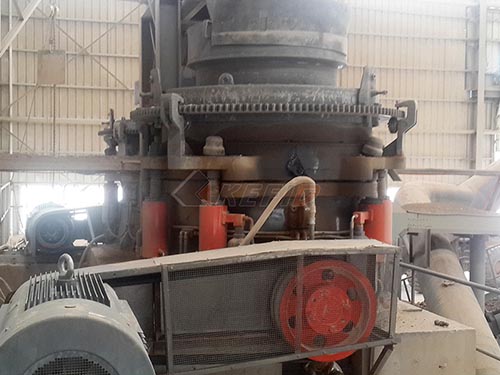
As the global mining industry continues to demand higher throughput, greater reliability, and lower environmental impact, ODM partnerships will play an increasingly vital role. By understanding the technical, commercial, and logistical nuances of this sourcing model, buyers can secure a competitive advantage in the challenging and capital-intensive world of mineral processing.
This article is intended for informational purposes and does not constitute professional engineering or legal advice. Buyers should consult with qualified experts before entering into any ODM sourcing agreement.
If you have any questions about our products, please feel free to contact us. We take all inquiries and suggestions very seriously.