Title: The Pinnacle of Precision: An In-Depth Analysis of Luxury Quarry Ballast Crushing Equipment Manufacturing
Introduction
In the global infrastructure and railway construction sectors, the term “ballast” refers to the coarse aggregate layer that supports railway tracks, providing drainage, stability, and load distribution. While ballast is often perceived as a utilitarian material, the production of high-grade ballast—particularly for luxury or high-speed rail projects—demands an extraordinary level of precision, durability, and aesthetic consistency. This is where the niche of “Luxury Quarry Ballast Crushing Equipment” emerges. Unlike standard crushing machinery, luxury-grade equipment is engineered to produce ballast with superior cubicity, minimal fines, and exacting gradation curves, often for prestigious projects such as high-speed rail networks, heritage railway restorations, or architecturally exposed concrete applications.
This article provides a comprehensive, objective examination of the manufacturers specializing in luxury quarry ballast crushing equipment. We will explore the technical specifications, material science, design philosophies, and market dynamics that define this high-end segment. The focus will remain on the equipment itself—its components, operational principles, and the value proposition it offers to discerning quarry operators.
1. Defining “Luxury” in Crushing Equipment
The term “luxury” in the context of quarry machinery is not about opulence or ornamentation. Instead, it denotes a convergence of several critical attributes:
- Ultra-Precision Gradation: Luxury equipment must consistently produce ballast within extremely tight particle size distribution (PSD) envelopes, often within ±2% of target values. This is critical for high-speed rail, where even minor deviations can affect track geometry and ride comfort.
- Superior Cubicity: The shape of ballast particles is paramount. Luxury crushers are designed to maximize the production of cubic, angular particles with a Flakiness Index (FI) below 10% and a Shape Index (SI) above 0.8. This ensures interlocking stability and resistance to settlement.
- Minimal Fines Generation: Standard crushers often produce excessive fines (particles < 4.75 mm), which can clog drainage and reduce ballast effectiveness. Luxury equipment employs advanced crushing chambers and speed control to minimize fines, often achieving less than 5% fines content.
- Wear Life and Reliability: High-end manufacturers use premium metallurgy (e.g., high-chrome iron, manganese steel with optimized work-hardening properties) and precision machining to extend wear part life by 30–50% compared to conventional equipment.
- Noise and Dust Suppression: Luxury equipment integrates advanced acoustic enclosures, water spray systems, and dust collection technologies to meet stringent environmental regulations, particularly in urban or ecologically sensitive quarries.
- Automation and Data Integration: State-of-the-art control systems, often with IoT connectivity, allow real-time monitoring of crusher settings, power draw, and wear rates. This enables predictive maintenance and remote optimization.
2. Core Equipment Types in Luxury Ballast Production
A luxury ballast crushing plant typically comprises a multi-stage process, each stage requiring specialized equipment. The following are the key machine categories:
2.1 Primary Jaw Crushers (High-Capacity, Low-Wear)
For luxury applications, primary jaw crushers are not merely brute-force machines. They are designed with deep, symmetrical crushing chambers and optimized toggle angles to produce a consistent feed for downstream stages. Manufacturers like Metso Outotec (Nordberg C Series) and Sandvik (Jaw Crushers) offer “premium” variants with:
- Hydraulic wedge adjustment for precise closed-side setting (CSS) control.
- Heavy-duty eccentric shafts with oversized bearings to handle high peak loads.
- Chamber geometry that promotes inter-particle crushing, reducing slabby product.
2.2 Secondary Cone Crushers (The Heart of Cubicity)
Cone crushers are the workhorses of ballast production. Luxury manufacturers focus on the “stroke” and “throw” characteristics. For example, the Sandvik CH890i or Metso MX4 series feature:
- Multi-cylinder hydraulic systems that allow independent adjustment of CSS and eccentric throw.
- Automated setting regulation (ASRi) that continuously optimizes the crushing force to maintain product shape.
- High-speed, high-stroke designs that produce a higher percentage of cubical particles compared to traditional cones.
- Wear parts with patented profiles (e.g., “S-shaped” liners) that maintain consistent product gradation even as liners wear.
2.3 Tertiary Vertical Shaft Impactors (VSI) for Final Shaping
For the ultimate in cubicity and surface texture, luxury plants often incorporate a VSI crusher in the final stage. Unlike cone crushers, which rely on compression, VSIs use a high-speed rotor to accelerate material against anvils or a rock-lined chamber. Premium VSI models (e.g., Barmac B7150SE or Terex Canica 2050) offer:
- Variable speed drives to adjust rotor tip speed (typically 40–80 m/s) for precise control over particle shape and fines generation.
- Closed rotor designs with tungsten carbide tips for extreme wear resistance.
- Autogenous crushing chambers where rock-on-rock action minimizes metallic contamination and produces a clean, fractured surface.
- Air cannons or hydraulic systems for clearing blockages without manual intervention.
2.4 Screening and Washing Systems
Luxury ballast requires not only crushing but also meticulous screening and washing. High-frequency screens (e.g., Derrick Stack Sizer) with polyurethane panels provide precise separation at fine cut points (e.g., 31.5 mm, 22.4 mm, 16 mm). For washing, log washers or hydrocyclones remove clay and dust, ensuring the ballast meets strict cleanliness standards (e.g., <0.5% clay content).
3. Material Science and Metallurgy
The longevity and performance of luxury crushing equipment hinge on material science. Manufacturers invest heavily in:
- Manganese Steel (Hadfield Steel): For jaw plates and cone liners, high-carbon (1.2–1.4% C) manganese steel with optimized work-hardening properties is used. Premium grades (e.g., “Xwin” or “Twin-Matrix”) incorporate ceramic inserts or chromium carbide overlays to extend life by 20–40%.
- High-Chrome Iron: For VSI rotors and anvils, high-chrome white iron (15–28% Cr) provides exceptional abrasion resistance. Some manufacturers use “composite” materials where ceramic particles are embedded in a metallic matrix.
- Heat Treatment: Luxury components undergo precise heat treatment cycles (quenching and tempering) to achieve a balance of hardness and toughness. This prevents premature cracking while maximizing wear resistance.
4. Automation and Digital Integration
Modern luxury ballast equipment is increasingly “smart.” Key features include:
- Crusher Control Systems (CCS): These systems monitor motor power, hydraulic pressure, and temperature in real time. They automatically adjust CSS to maintain target product size, compensating for liner wear.
- Predictive Maintenance Algorithms: Using vibration analysis and oil condition monitoring, the system can predict bearing failures or liner wear-out weeks in advance, reducing unplanned downtime.
- Remote Monitoring and Reporting: Cloud-based platforms (e.g., Metso’s “Metrics” or Sandvik’s “My Sandvik”) allow quarry managers to view production data, energy consumption, and wear part status from any device.
- Integration with Quarry Management Software: Luxury equipment can interface with ERP systems to optimize blending, inventory, and shipping schedules.
5. Leading Manufacturers and Their Flagship Models
While many companies produce crushing equipment, only a handful dominate the luxury ballast segment. The following are recognized for their engineering excellence:
- Metso Outotec (Finland): Their Nordberg HP Series (e.g., HP800) and MX Series (e.g., MX4) are benchmarks for cone crusher performance. The MX4, with its patented “Multi-Action” technology, allows continuous adjustment of CSS without stopping the crusher, ideal for maintaining tight ballast gradation.
- Sandvik (Sweden): The CH890i and CH895i cone crushers feature the “ASRi” system and are designed for high-capacity secondary and tertiary crushing. Their CV200 Series VSI crushers are renowned for producing the highest cubicity in the industry.
- Terex (USA/UK): The Terex Finlay C-1554 cone crusher and Terex Canica 2050 VSI are popular in North American and European luxury ballast plants. The Canica 2050’s “rock-on-rock” chamber is particularly effective for shaping.
- ThyssenKrupp (Germany): Their Kubria Cone Crushers (e.g., F/M 150) are used in high-end European rail projects. They offer a “smart” control system that optimizes energy efficiency and product quality.
- Weir Minerals (UK): The Enduron TP Series cone crushers are known for their robust construction and ability to handle high tonnages while maintaining precise gradation.
6. Economic and Operational Considerations
Investing in luxury ballast crushing equipment is a significant capital decision. A single premium cone crusher can cost $500,000 to $1.5 million, with a complete plant (primary, secondary, tertiary, screens, conveyors) ranging from $5 million to $20 million. However, the return on investment can be substantial:
- Premium Pricing: Luxury ballast commands a price premium of 20–50% over standard ballast. For high-speed rail projects, the premium can be even higher.
- Reduced Waste: The ability to produce a higher percentage of on-spec product (e.g., 95% vs. 80%) reduces waste and increases effective yield.
- Lower Operating Costs: Advanced wear parts and automation reduce downtime and labor costs. For example, a luxury cone crusher may require liner changes every 6–8 months instead of 3–4 months for standard equipment.
- Environmental Compliance: Integrated dust and noise suppression systems help quarries meet increasingly strict regulations, avoiding fines and shutdowns.
7. Challenges and Future Trends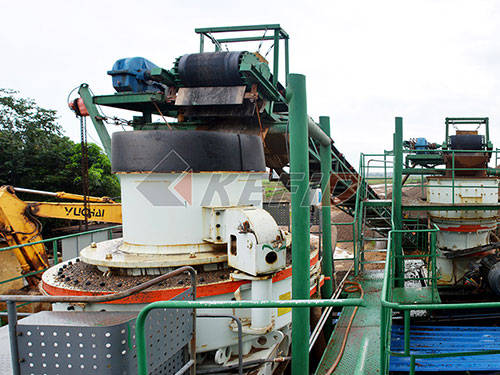
Despite its advantages, the luxury ballast equipment segment faces challenges:
- High Initial Investment: Smaller quarries may struggle to justify the cost.
- Complexity: Advanced automation requires skilled technicians for maintenance and troubleshooting.
- Supply Chain Constraints: Premium wear parts often have longer lead times.
Looking ahead, several trends are shaping the market:
- Electric and Hybrid Drives: To reduce carbon footprints, manufacturers are developing fully electric crushers with regenerative braking.
- AI and Machine Learning: Future systems will use AI to predict optimal crusher settings based on feed material characteristics and target product specifications.
- Modular and Mobile Luxury Plants: For temporary or remote projects, mobile luxury crushers (e.g., Sandvik UH450E) are gaining traction.
- Circular Economy: Manufacturers are exploring ways to recycle worn liners and produce new components from recycled materials.
Conclusion
Luxury quarry ballast crushing equipment represents the apex of engineering precision in the aggregate industry. It is not merely about crushing rock; it is about delivering a product that meets the most demanding standards of shape, size, cleanliness, and consistency. Manufacturers like Metso Outotec, Sandvik, Terex, ThyssenKrupp, and Weir Minerals have invested decades of research into metallurgy, automation, and chamber design to achieve this. For quarry operators targeting high-speed rail, heritage projects, or premium construction markets, investing in such equipment is not a luxury—it is a strategic necessity. As infrastructure demands grow and environmental regulations tighten, the role of these sophisticated machines will only become more critical, driving innovation and setting new benchmarks for quality in the crushing industry.
