
Luxury Gold Ore Crushing Equipment Manufacturing: Engineering Precision for High-Value Extraction
The global gold mining industry has undergone a profound transformation over the past two decades. As easily accessible surface deposits dwindle, mining operations are increasingly forced to process lower-grade ores, deeper underground resources, and more complex refractory materials. In this challenging environment, the role of crushing equipment has evolved from a simple size-reduction step to a critical determinant of overall plant efficiency, recovery rates, and operational cost. Within this landscape, a specialized niche has emerged: the manufacturing of luxury gold ore crushing equipment. This term does not refer to aesthetic opulence but rather to the highest tier of engineering precision, material quality, automation, and durability—machines designed for mines that demand zero compromise on throughput, reliability, and metallurgical performance.
This article provides a comprehensive, objective examination of the luxury gold ore crushing equipment manufacturing sector. It explores the defining characteristics of such equipment, the engineering principles behind its design, the key components and technologies involved, the major global manufacturers, and the economic rationale for investing in premium crushing solutions.
In industrial machinery, “luxury” is a misnomer unless redefined by performance metrics. For gold ore crushing, luxury equipment is characterized by:
These attributes are not optional; they are essential for large-scale, high-grade gold operations where even a 1% loss in recovery due to poor crushing can translate into millions of dollars in lost revenue.
Gold ore processing typically follows a comminution circuit: crushing → grinding → classification → leaching (CIL/CIP) or flotation. The crushing stage is the first and most energy-intensive step. Improper crushing leads to:
Luxury crushing equipment addresses these issues through design philosophies that prioritize interparticle crushing and choke feeding. Unlike conventional jaw or cone crushers that rely on direct compression, modern high-end crushers—such as high-pressure grinding rolls (HPGRs) and advanced cone crushers—use controlled compression and shear to liberate gold particles without over-comminuting the gangue.
HPGRs have become the gold standard for luxury gold ore crushing, particularly for hard, competent ores. These machines consist of two counter-rotating rolls, one fixed and one floating, that apply pressures of up to 250 MPa to the ore bed. The result is micro-fracturing of individual mineral grains, which significantly enhances downstream leaching kinetics.
Luxury features:
Manufacturers like Weir Minerals (Enduron® HPGR) and ThyssenKrupp (Polysius® HPGR) dominate this segment, offering units with throughputs exceeding 2,500 t/h.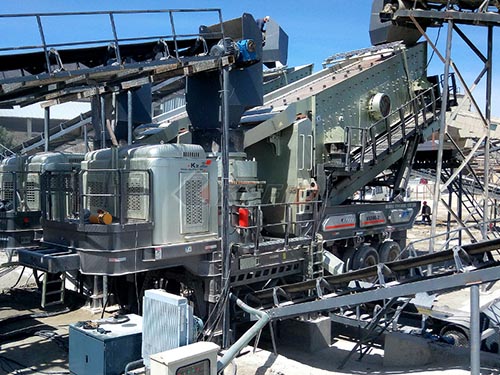
For secondary and tertiary crushing, luxury cone crushers have evolved far beyond traditional designs. Modern units feature:
Metso Outotec’s Nordberg® HP Series and Sandvik’s CH800i Series exemplify this category, with the latter offering AI-driven automation that adjusts crusher settings based on real-time power draw and feed size analysis.
For the largest open-pit gold mines, primary gyratory crushers are the entry point. Luxury versions feature:
FLSmidth’s Raptor® XL Series and ThyssenKrupp’s KB 63-130 are benchmarks in this space, capable of handling feed sizes up to 1.5 meters.
Luxury gold operations increasingly deploy mobile or semi-mobile crushing plants to reduce haulage costs. These units are not merely portable; they are fully integrated with:
Sandvik’s UJ440i and Metso Outotec’s Lokotrack® LT200HP are examples of mobile crushers that combine luxury-grade components with mobility.
The “luxury” label is most evident in the materials used. Standard crushers often employ manganese steel (12–14% Mn) for liners, which work-hardens under impact but wears quickly in abrasive ores. Luxury equipment uses:
Manufacturing processes are equally advanced. Precision casting, heat treatment under controlled atmospheres, and CNC machining of critical interfaces ensure tolerances within 0.1 mm. Welding is performed using robotic systems with real-time heat input monitoring to prevent distortion.
Luxury crushing equipment is inseparable from digital technology. Modern crushers are equipped with:
This level of automation not only improves recovery but also reduces the need for skilled operators—a critical advantage in remote mining locations.
The luxury gold ore crushing equipment market is dominated by a handful of multinational corporations with deep R&D budgets and global service networks:
| Manufacturer | Key Products | Notable Features |
|---|---|---|
| Metso Outotec | Nordberg HP Series, Lokotrack, MP Series | Superior automation, extensive aftermarket support |
| Sandvik Mining and Rock Technology | CH800i, CJ815, UJ440i | AI-driven automation, modular design |
| Weir Minerals | Enduron HPGR, Trio® cone crushers | High-pressure grinding expertise, wear-resistant materials |
| FLSmidth | Raptor XL, EV™ crushers | High-capacity gyratory, low maintenance |
| ThyssenKrupp | Polysius HPGR, KB gyratory | Heavy-duty construction, long service life |
| Astec Industries | KPI-JCI, Telsmith | Cost-effective luxury options for mid-tier mines |
These manufacturers invest heavily in pilot testing, ore characterization, and simulation software to tailor equipment to specific gold deposits.
The decision to purchase luxury crushing equipment is not taken lightly. A single HPGR unit can cost $5–15 million, and a primary gyratory crusher can exceed $20 million. However, the return on investment (ROI) is compelling:
For large-scale operations, these benefits typically pay back the premium within 2–3 years.
Despite their advantages, luxury crushers face challenges:
Future trends include:
Luxury gold ore crushing equipment manufacturing represents the pinnacle of engineering in the mining sector. It is not about excess but about excellence—machines designed to maximize gold recovery, minimize operating costs, and operate reliably in the world’s most demanding environments. As gold prices remain volatile and ore grades continue to decline, the demand for such equipment will only grow. For mining companies that can afford the upfront investment, luxury crushers are not a luxury at all—they are a strategic necessity. The manufacturers that continue to innovate in materials, automation, and digital integration will define the future of gold mining for decades to come.
If you have any questions about our products, please feel free to contact us. We take all inquiries and suggestions very seriously.