
Iron Ore Crushing Plant Processing Plant Sourcing: A Comprehensive Technical and Strategic Overview
Introduction
The global steel industry, and by extension the modern industrial economy, is fundamentally anchored to the extraction and beneficiation of iron ore. However, run-of-mine (ROM) iron ore is rarely suitable for direct metallurgical use. It must undergo a rigorous sequence of size reduction and concentration processes, which are executed within an integrated iron ore crushing plant and processing plant. The efficiency, reliability, and cost-effectiveness of these plants are not merely operational concerns; they are strategic determinants of a mining company’s profitability and market competitiveness.
Sourcing such a plant—whether for a greenfield project, an expansion, or a retrofit—is a complex, multi-disciplinary procurement exercise. It involves not just the purchase of machinery, but the alignment of engineering design, metallurgical testing, logistics, regulatory compliance, and long-term service agreements. This article provides a professional, objective, and detailed examination of the sourcing process for iron ore crushing and processing plants, covering key technical parameters, equipment selection, sourcing strategies, and critical risk factors.
1. The Process Architecture: From ROM to Concentrate
Before initiating any sourcing activity, a clear understanding of the process flowsheet is mandatory. The design of a crushing and processing plant is dictated by the ore’s physical and chemical characteristics, particularly its hardness (abrasion index, compressive strength), moisture content, and liberation size. The typical process architecture is divided into three primary stages:
Primary Crushing: The ROM ore, often with a top size of 1,200–1,500 mm, is reduced to a manageable size of 150–250 mm. This is almost exclusively performed by heavy-duty gyratory crushers or large jaw crushers. The selection between the two depends on throughput capacity and feed conditions; gyratory crushers are preferred for capacities exceeding 3,000 t/h, while jaw crushers offer lower capital cost for smaller operations.
Secondary and Tertiary Crushing: The ore is further reduced to a size suitable for grinding or direct beneficiation (typically 10–50 mm). This stage commonly employs cone crushers (for hard, abrasive ores) or high-pressure grinding rolls (HPGR) for more energy-efficient size reduction. The choice of closed-circuit crushing with screening is critical to control the feed size to the downstream processing stages.
Beneficiation and Processing: This is the core of the processing plant. For high-grade hematite ores, the process may be relatively simple—crushing, screening, and washing. For low-grade magnetite ores, the process involves further grinding (ball mills or SAG mills), magnetic separation (low-intensity magnetic separators), and sometimes flotation to remove silica and other gangue minerals. The final product is a concentrate with an iron grade typically above 62–65% Fe.
2. Key Technical Specifications and Design Parameters
When sourcing equipment, the buyer must define a set of technical specifications that serve as the basis for vendor quotations. These specifications are not arbitrary; they are derived from metallurgical test work (e.g., Bond Work Index, drop weight tests) and mass balance calculations. The critical parameters include:
3. Sourcing Strategies: OEM vs. EPC vs. Component-Level
The sourcing approach can be categorized into three distinct models, each with its own risk-reward profile:
3.1 Original Equipment Manufacturer (OEM) Direct Sourcing
This involves purchasing the entire plant or major equipment directly from a single manufacturer, such as Metso Outotec, Sandvik, FLSmidth, or ThyssenKrupp. The primary advantage is integrated engineering responsibility—the OEM guarantees that the equipment meets the specified performance. This is the preferred route for critical, high-value items like primary gyratory crushers and large SAG mills. However, it is also the most expensive option and may create a long-term dependency on the OEM for spare parts and proprietary software.
3.2 Engineering, Procurement, and Construction (EPC) Turnkey Contracts
In this model, a single contractor (e.g., Bechtel, Hatch, or a specialized Chinese EPC firm like CITIC or Sinosteel) is responsible for the entire plant design, procurement, construction, and commissioning. This is the most common approach for large-scale greenfield projects. The key advantage is single-point accountability; the EPC contractor absorbs the technical and schedule risk. The critical challenge is the specification of performance guarantees (e.g., throughput, recovery rate, and product grade) within the contract, as well as managing the contractor’s selection of sub-suppliers. The buyer must conduct rigorous due diligence on the EPC’s track record in iron ore specifically, as this differs significantly from copper or gold processing.
3.3 Component-Level Sourcing (Multi-Vendor)
This is a hybrid approach where the buyer’s in-house engineering team designs the plant and then sources individual components (crushers, screens, conveyors, pumps) from different vendors. This offers maximum flexibility and often lower capital expenditure (CAPEX), as the buyer can negotiate aggressively with each vendor. However, it places a significant burden on the buyer’s engineering and project management capabilities. Interface management—ensuring that the discharge of one crusher aligns with the feed of the next conveyor—becomes a critical internal responsibility. This model is suitable for expansions of existing plants where the buyer has deep operational knowledge.
4. The Sourcing Process: A Step-by-Step Professional Framework
A disciplined sourcing process is essential to avoid cost overruns and operational failures. The following framework is recommended:
Step 1: Definitive Feasibility Study (DFS) and Tender Package Preparation. The buyer must finalize the process design criteria, including the mass balance, water balance, and equipment list. The tender package should include a detailed technical specification, a scope of work, a schedule, and a commercial term sheet.
Step 2: Pre-Qualification of Vendors. Not all vendors are capable of delivering large-scale iron ore equipment. Pre-qualification should assess manufacturing capacity, prior iron ore references, financial stability, and after-sales service network. For example, a vendor with experience in soft limestone crushing may not be suitable for highly abrasive taconite.
Step 3: Technical Bid Evaluation (TBE). This is the most critical step. The evaluation should not be based solely on price. A weighted scoring matrix should be used, considering:
Step 4: Commercial Negotiation and Contracting. The contract must include clear liquidated damages for failure to meet performance guarantees. Payment terms should be tied to milestones (e.g., 10% down payment, 40% on delivery, 40% on commissioning, 10% retention for 12 months). Crucially, the contract must define the scope of “commissioning” and “performance testing” to avoid disputes.
Step 5: Factory Acceptance Testing (FAT) and Inspection. The buyer’s quality assurance team should conduct FAT at the vendor’s manufacturing facility. This includes checking tolerances, non-destructive testing (NDT) of welds, and verifying that the equipment matches the approved drawings. For large crushers, a trial assembly at the factory is often required to ensure fitment.
Step 6: Logistics and Site Delivery. Iron ore processing equipment is extremely heavy (e.g., a gyratory crusher main shaft can weigh over 100 tons). Sourcing must include a detailed logistics plan, considering the availability of heavy-lift vessels, port infrastructure, and road/rail transport to the mine site. For landlocked projects in remote regions (e.g., the Pilbara in Australia or the Simandou range in Guinea), this can be the single largest cost and schedule risk.
5. Critical Sourcing Risks and Mitigation Strategies
5.1 Metallurgical Variability Risk
The ore body is not homogeneous. A plant designed for a specific ore type may fail if the ore hardness or clay content increases. Mitigation: The sourcing contract should include a “design envelope” that allows for a range of ore characteristics. The vendor should be required to simulate the plant’s performance under worst-case ore conditions, not just the average.
5.2 Currency and Commodity Price Fluctuation
Iron ore equipment is often priced in USD or EUR, while the buyer’s revenue may be in a different currency. Additionally, steel prices directly affect equipment costs. Mitigation: Use fixed-price contracts with a short validity period (e.g., 90 days). Consider hedging currency exposure if the project timeline exceeds 18 months.
5.3 Spare Parts Obsolescence and Lead Time
Critical spares (e.g., crusher heads, eccentric bushings) can have lead times of 6–12 months. Mitigation: The sourcing contract should mandate a “critical spares package” to be delivered with the initial plant. The buyer should also negotiate a long-term service agreement (LTSA) with the OEM for guaranteed spare availability and priority repair services.
5.4 Intellectual Property and Technology Transfer
In some jurisdictions, particularly when sourcing from emerging economies, there is a risk of counterfeit or sub-standard components. Mitigation: Insist on original OEM parts with traceable serial numbers. For critical components, require the vendor to provide a certificate of origin and a warranty against defects in materials and workmanship.
6. The Role of Digitalization and Smart Sourcing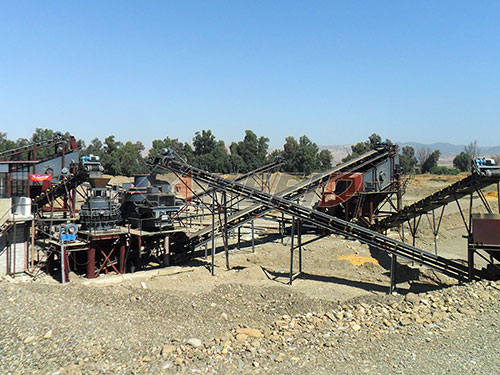
Modern sourcing is increasingly digital. The use of Building Information Modeling (BIM) for plant layout and clash detection is now standard. Furthermore, the integration of IoT sensors into crushers and screens allows for predictive maintenance, which should be a key consideration during sourcing. Buyers should specify that all equipment must be compatible with a centralized asset management system, providing real-time data on vibration, temperature, and wear rates. This not only improves operational efficiency but also allows for data-driven spare parts inventory management.
7. Conclusion
Sourcing an iron ore crushing and processing plant is a high-stakes engineering and commercial endeavor. It requires a deep understanding of metallurgy, mechanical engineering, logistics, and contract law. The most successful projects are those where the buyer adopts a rigorous, stage-gated sourcing process, prioritizes technical performance over initial CAPEX, and builds a collaborative, long-term relationship with a select group of qualified vendors. In an industry where downtime costs can exceed $100,000 per hour, the true cost of a sourcing decision is measured not in the purchase price, but in the plant’s operational reliability over its 20–30 year design life. Therefore, the objective of sourcing is not merely to buy equipment, but to secure a competitive advantage through superior process efficiency and asset longevity.
If you have any questions about our products, please feel free to contact us. We take all inquiries and suggestions very seriously.