
Iron Ore Crushing Plant Manufacturer Customization: Engineering Tailored Solutions for Mineral Processing Efficiency
Introduction
In the global mining and mineral processing industry, iron ore remains a foundational resource for steel production and infrastructure development. As ore deposits become increasingly complex and operational requirements more stringent, the demand for customized iron ore crushing plants has risen substantially. A one-size-fits-all approach is no longer sufficient to address variations in ore hardness, moisture content, feed size, throughput targets, and site-specific constraints. Consequently, iron ore crushing plant manufacturer customization has emerged as a critical discipline, enabling operators to achieve optimal productivity, cost efficiency, and compliance with environmental and safety standards.
This article examines the key dimensions of customization in iron ore crushing plant design and manufacturing, the technical factors that drive tailored solutions, and the strategic benefits of partnering with a manufacturer capable of delivering bespoke engineering.
The Rationale for Customization
Iron ore is not a homogeneous material. It varies widely in mineralogy, hardness (as measured by the Bond Work Index), abrasiveness, moisture content, and lump-to-fines ratio. Hematite, magnetite, goethite, and limonite ores each exhibit distinct crushing characteristics. For example, magnetite is typically harder and more abrasive than hematite, while goethite-rich ores may be more prone to sticking and clogging due to higher moisture levels.
Moreover, operational contexts differ significantly. A mine in Western Australia may prioritize high throughput and low maintenance in a remote, arid environment, whereas a processing facility in Brazil may need to manage high rainfall and sticky ore. Similarly, a small-scale operation may require a compact, mobile crushing solution, while a large-scale beneficiation plant demands a stationary, high-capacity system integrated with screening, grinding, and separation circuits.
These variables make customization not merely advantageous but often essential for achieving targeted particle size distribution, minimizing energy consumption, and ensuring reliable operation.
Key Areas of Customization
A competent iron ore crushing plant manufacturer approaches customization across several interconnected areas:
Process Design and Flowsheet Development
The foundation of any customized plant is a tailored process flowsheet. Manufacturers conduct detailed ore characterization, including crushability tests, abrasion index measurements, and size distribution analysis. Based on this data, they determine the optimal number of crushing stages—typically primary, secondary, and tertiary—and select the most suitable equipment types. For instance, a jaw crusher may serve as the primary unit for large, hard ore, while a cone crusher or impact crusher may be chosen for secondary and tertiary reduction, depending on the desired product shape and reduction ratio.
Equipment Selection and Sizing
Customization involves selecting equipment that matches the specific duty requirements. This includes calculating the required throughput, accounting for peak loads, and sizing crushers, screens, feeders, and conveyors accordingly. Manufacturers may offer variations in chamber geometry, liner profiles, and drive configurations to optimize performance for a given ore type. For abrasive ores, wear-resistant liners made from manganese steel or chrome carbide overlays can be specified to extend service life.
Structural and Layout Engineering
Site constraints often dictate plant layout. A customized design may involve modular structures for easy transport and assembly, or a compact footprint for underground or mobile applications. Structural engineers consider seismic zones, wind loads, and foundation conditions. For remote locations, pre-assembled modules can reduce on-site construction time and labor costs.
Automation and Control Systems
Modern crushing plants increasingly incorporate advanced automation. Customization here includes programmable logic controller (PLC) systems tailored to the operator’s preferred protocols, remote monitoring capabilities, and adaptive control algorithms that adjust crusher settings in real time based on feed conditions. This not only improves throughput but also reduces downtime and energy use.
Environmental and Safety Features
Customization also addresses dust suppression, noise reduction, and spillage control. Manufacturers may integrate water spray systems, enclosed transfer points, and dust collectors. Safety features such as emergency stop systems, guardrails, and access platforms are designed to meet local regulations and site-specific risk assessments.
The Customization Process
A typical customization journey with an iron ore crushing plant manufacturer follows a structured sequence:
Benefits of Customization
The advantages of a customized iron ore crushing plant are manifold:
Challenges and Considerations
Customization is not without challenges. It requires close collaboration between the client and manufacturer, transparent communication, and a willingness to invest in upfront engineering. Lead times may be longer than for off-the-shelf equipment, and costs can be higher initially. However, these drawbacks are typically outweighed by long-term operational benefits. Clients should also ensure that the manufacturer has a proven track record, in-house engineering capabilities, and robust quality assurance systems.
Conclusion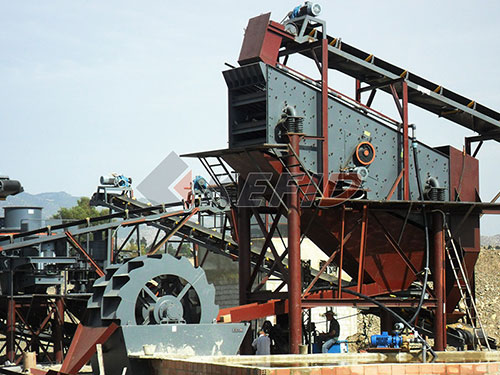
Iron ore crushing plant manufacturer customization represents a strategic approach to mineral processing that aligns engineering solutions with specific ore characteristics, site conditions, and business objectives. By leveraging advanced testing, flexible design, and integrated automation, manufacturers can deliver plants that maximize productivity, minimize costs, and operate sustainably. As the mining industry continues to face declining ore grades and rising operational pressures, the ability to customize crushing solutions will remain a key competitive differentiator. For operators seeking reliable, efficient, and future-ready iron ore processing, partnering with a manufacturer that prioritizes tailored engineering is not just an option—it is a necessity.
If you have any questions about our products, please feel free to contact us. We take all inquiries and suggestions very seriously.