Title: Iron Ore Crushing Plant Importers Testing: A Comprehensive Guide to Quality Assurance, Compliance, and Operational Efficiency
Introduction
The global iron ore market is a cornerstone of the steel industry, with billions of tons of ore extracted, processed, and shipped annually. For importers of iron ore crushing plants—whether for greenfield projects, expansions, or replacements—the testing phase is not merely a procedural formality but a critical determinant of long-term operational success. Iron ore crushing plants are capital-intensive investments, often costing tens of millions of dollars, and their performance directly impacts downstream processing, product quality, and profitability. This article provides a detailed, professional, and objective examination of the testing protocols, standards, and considerations that importers must navigate when commissioning and validating iron ore crushing plants. It covers pre-shipment inspection, on-site commissioning tests, performance guarantees, material characterization, and compliance with international standards.
1. The Strategic Importance of Testing for Importers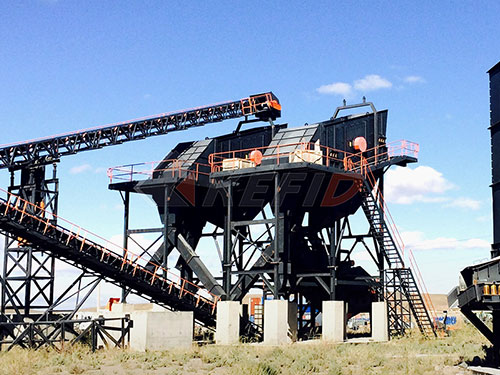
Importers of iron ore crushing plants face unique challenges. Unlike domestic buyers, they often lack direct oversight of manufacturing, rely on long-distance logistics, and must adapt equipment to local ore characteristics, environmental regulations, and grid conditions. Testing serves multiple strategic purposes:
- Verification of Contractual Specifications: Importers must ensure that the plant meets agreed-upon capacity, product size distribution, power consumption, and wear life.
- Risk Mitigation: Defective or underperforming equipment can lead to costly delays, contractual penalties, and reputational damage.
- Operational Optimization: Testing data informs adjustments to crusher settings, screen apertures, and conveyor speeds to maximize yield and minimize downtime.
- Regulatory Compliance: Many importing countries enforce strict environmental and safety standards, requiring emissions, noise, and dust control systems to be validated.
2. Pre-Shipment Testing: Factory Acceptance Tests (FAT)
Before a crushing plant is shipped, importers should mandate Factory Acceptance Tests (FAT) at the manufacturer’s facility. These tests are conducted under controlled conditions to verify that individual components and subsystems meet design specifications.
2.1. Mechanical and Electrical Integrity
- Crusher Rotor Balancing: High-speed crushers (e.g., cone crushers, impact crushers) require precise dynamic balancing to prevent vibration and bearing failure. FAT includes vibration analysis at rated speed.
- Motor and Drive System Testing: Motors are run under no-load and partial-load conditions to verify current draw, temperature rise, and insulation resistance. Variable frequency drives (VFDs) are tested for ramp-up times and harmonic distortion.
- Hydraulic and Lubrication Systems: Pressure tests, flow rate checks, and leak detection are performed on hydraulic cylinders, accumulators, and oil circulation systems.
2.2. Material Handling Components
- Conveyor Belt Tracking and Tension: Belts are run at full speed to ensure proper tracking and minimal edge wear.
- Screen Deck Performance: Vibrating screens are tested for amplitude, frequency, and material distribution using simulated feed.
2.3. Control System Validation
- PLC and SCADA Integration: Importers should witness simulation of start-up sequences, emergency stops, and alarm conditions.
- Remote Monitoring Capability: If the plant includes IoT sensors, FAT verifies data transmission and cloud connectivity.
3. On-Site Commissioning and Performance Testing
Upon arrival at the importer’s site, the plant undergoes a structured commissioning process. This phase is more complex than FAT because it involves real ore, local environmental conditions, and integration with existing infrastructure.
3.1. Dry Run and No-Load Testing
Before introducing ore, all equipment is operated without load for a minimum of 8–24 hours. Key checks include:
- Bearing temperatures (should stabilize below 70°C for most applications).
- Noise levels (typically <85 dB(A) at 1 meter).
- Electrical current balance across phases.
- Emergency stop functionality.
3.2. Load Testing with Representative Ore
The most critical phase is load testing using ore samples that represent the full range of feed material the plant will encounter. Importers must ensure that the ore used is not artificially easy to crush (e.g., pre-screened fines) but includes run-of-mine material with typical moisture, clay content, and hardness.
3.2.1. Capacity and Throughput Verification
- The plant is run at its nominal design capacity (e.g., 500 tph) for a sustained period (typically 4–8 hours).
- Actual throughput is measured using belt scales or weigh feeders.
- Importers should document any deviations, such as choke feeding conditions or conveyor overloads.
3.2.2. Product Size Distribution (PSD)
- Samples are taken from the crusher discharge at regular intervals and sieved to determine PSD.
- For iron ore, typical target P80 (80% passing size) is 10–50 mm for primary crushing, 6–25 mm for secondary, and <6 mm for tertiary.
- Importers must verify that the plant can achieve the specified PSD without excessive recirculation or over-crushing.
3.2.3. Power Consumption and Efficiency
- Specific energy consumption (kWh/t) is calculated by dividing total power draw by throughput.
- High energy consumption may indicate inefficient crushing, worn liners, or incorrect CSS (closed side setting).
- Importers should compare actual kWh/t with the manufacturer’s guarantee (e.g., 0.8–1.2 kWh/t for cone crushers).
3.2.4. Wear Rate Assessment
- Crusher liners, screen panels, and conveyor belts are inspected after a defined tonnage (e.g., 10,000 tons).
- Wear rates are extrapolated to estimate liner life. For example, if a mantle loses 5 mm after 10,000 tons, its total life may be 60,000–80,000 tons.
- Importers should negotiate warranty clauses for premature wear due to material abrasiveness.
4. Specialized Testing for Iron Ore Characteristics
Iron ore presents unique challenges that require tailored testing protocols.
4.1. Moisture and Clay Content
- High moisture (>8%) can cause clogging in screens and chutes. Importers should test the plant’s ability to handle wet ore by introducing material with moisture levels up to 12%.
- Clay-rich ores (e.g., lateritic iron ore) may require additional testing of crusher anti-bridging features and screen blinding.
4.2. Abrasiveness and Work Index
- The Bond Work Index (Wi) of iron ore typically ranges from 10–20 kWh/t. Importers should request a laboratory test of their specific ore to confirm that the crusher’s motor power and liner material are adequate.
- Abrasiveness (e.g., using the Bond Abrasion Index) determines liner replacement frequency. Importers may require ceramic or high-chrome liners if the index exceeds 0.5 g.
4.3. Magnetic Separation and Beneficiation Integration
- If the crushing plant feeds a magnetic separator or dense media separation (DMS) plant, testing must verify that the product size is compatible with downstream equipment.
- Over-crushing can generate excessive fines (<0.1 mm), which reduce recovery in magnetic separators.
5. Compliance with International Standards
Importers must ensure that the crushing plant meets relevant international and local standards. Key standards include:
- ISO 9001:2015 for quality management systems in manufacturing.
- ISO 14001:2015 for environmental management (dust, noise, water).
- ISO 45001:2018 for occupational health and safety (guarding, lockout/tagout).
- IEC 60204-1 for electrical safety of machinery.
- ASTM E11 for test sieve specifications.
- Local Standards: For example, in India, the Bureau of Indian Standards (BIS) may require specific testing for electrical components; in Brazil, NR-12 governs machinery safety.
Importers should request certificates of compliance and, if necessary, hire third-party inspection agencies (e.g., SGS, Bureau Veritas, TÜV) to conduct independent testing.
6. Documentation and Reporting
A comprehensive testing report should include:
- Test Plan and Protocols: Detailed description of methods, instruments, and acceptance criteria.
- Raw Data: Time-stamped logs of throughput, power, temperature, and vibration.
- PSD Curves: Graphical representation of product size distribution at various CSS settings.
- Wear Measurement Data: Photos and micrometer readings of liners before and after testing.
- Deviations and Non-Conformities: Any failures to meet guarantees, with root cause analysis.
- Recommendations: Adjustments to operating parameters, spare parts inventory, or maintenance schedules.
7. Common Pitfalls and How to Avoid Them
- Inadequate Ore Sampling: Using only one type of ore for testing can mask problems with variable feed. Solution: Test with at least three representative samples (high-grade, low-grade, and high-moisture).
- Ignoring Environmental Conditions: High altitude reduces motor cooling efficiency; high humidity affects electrical insulation. Solution: Adjust test conditions to mimic site reality.
- Rushing Commissioning: Skipping no-load tests to save time can lead to catastrophic failures. Solution: Adhere strictly to the commissioning schedule.
- Over-Reliance on Manufacturer Data: Importers should never accept FAT results as final. On-site conditions always differ. Solution: Conduct independent load tests.
8. Conclusion
Testing of iron ore crushing plants by importers is a multifaceted process that demands technical rigor, careful planning, and a deep understanding of both the equipment and the ore. From pre-shipment FAT to on-site performance validation, each step serves to protect the importer’s investment and ensure that the plant delivers the promised capacity, product quality, and reliability. By adhering to international standards, conducting thorough material characterization, and documenting every test result, importers can minimize operational risks and maximize the return on their capital expenditure. In an industry where margins are tight and downtime is costly, comprehensive testing is not an option—it is a necessity.
