
China Gold Ore Crushing Equipment Vendor: A Comprehensive Industry Analysis
Introduction
The global gold mining industry relies heavily on efficient and reliable crushing equipment to process ore, reduce particle size, and liberate valuable minerals for subsequent extraction. China has emerged as a dominant player in the manufacturing and supply of gold ore crushing equipment, offering a wide range of solutions from small-scale jaw crushers to large, high-capacity cone crushers and semi-autogenous grinding (SAG) mills. This article provides a detailed, professional, and objective analysis of the Chinese gold ore crushing equipment vendor landscape, covering market structure, key technologies, major vendors, quality standards, supply chain dynamics, and future trends. The goal is to offer a comprehensive resource for mining companies, procurement professionals, and industry analysts seeking to understand the capabilities and considerations when sourcing crushing equipment from China.
1. The Chinese Mining Equipment Market: Scale and Specialization
China’s mining equipment industry is vast, driven by decades of domestic mining activity and a robust manufacturing base. The country is not only the world’s largest producer of gold but also a leading exporter of mining machinery. The gold ore crushing equipment segment is particularly well-developed due to the abundance of gold deposits in regions such as Shandong, Henan, and Xinjiang, as well as the country’s significant involvement in gold mining projects across Africa, South America, and Central Asia.
Chinese vendors benefit from economies of scale, lower labor costs, and a vertically integrated supply chain for steel, castings, and electrical components. This allows them to offer competitive pricing compared to Western or Japanese counterparts. However, the market is highly fragmented, ranging from small workshops producing basic jaw crushers to large, publicly traded corporations that supply complete mineral processing plants.
2. Core Types of Gold Ore Crushing Equipment
Gold ore crushing typically involves a multi-stage process: primary crushing, secondary crushing, and sometimes tertiary or quaternary crushing, followed by grinding. Chinese vendors manufacture equipment for each stage:
Primary Crushers: Jaw crushers are the most common primary crushers for gold ore. Chinese vendors produce a wide variety, from simple PE series (e.g., PE-600×900) to more advanced CJ series (European-style) and modular jaw crushers. Key features include high reduction ratios, robust construction, and ease of maintenance. Major vendors offer capacities ranging from 1 ton per hour (tph) for small-scale operations to over 1,000 tph for large mines.
Secondary and Tertiary Crushers: Cone crushers dominate this stage. Chinese manufacturers have developed advanced hydraulic cone crushers (e.g., HP series, GP series, and single-cylinder hydraulic cone crushers) that offer high efficiency, good product shape, and automatic control. These are often used for crushing gold ore to a finer size (typically 10–50 mm) before grinding. Impact crushers (horizontal shaft impactors, HSI) are also used for softer gold ores or as secondary crushers in some circuits.
Grinding Mills: While not strictly “crushing,” grinding is the final size reduction stage. Chinese vendors supply ball mills, rod mills, and SAG mills. For gold ore, ball mills are ubiquitous, often in closed circuit with hydrocyclones. Chinese manufacturers have improved mill liners, discharge systems, and drive technologies to enhance wear life and energy efficiency.
Specialized Equipment: For high-pressure grinding rolls (HPGRs) and vertical shaft impactors (VSIs), Chinese vendors have made significant inroads. HPGRs are increasingly used for gold ore pre-concentration or as a tertiary crusher to reduce energy consumption in ball mills. VSIs are used for shaping and fine crushing.
3. Major Chinese Vendors and Their Positioning
The Chinese gold ore crushing equipment market is dominated by several key players, each with distinct strengths:
Metso Outotec (China) / Sandvik (China): These are the Chinese subsidiaries of global leaders. They manufacture locally under license or through joint ventures, offering premium products with global service networks. Their equipment is often preferred for large-scale, high-capacity mines requiring high reliability and advanced automation. However, prices are higher than purely domestic brands.
CITIC Heavy Industries (CITIC HIC): A state-owned enterprise and one of the world’s largest mining equipment manufacturers. CITIC HIC supplies complete gold processing plants, including large gyratory crushers, cone crushers, and SAG mills. Their equipment is used in some of the largest gold mines globally, including projects in Papua New Guinea and Africa. They are known for heavy-duty, custom-engineered solutions.
FLSmidth (China): Another global player with a strong Chinese manufacturing base. They focus on high-efficiency crushers and grinding mills, often integrated with their own flotation and leaching technologies.
Henan Hongxing Mining Machinery (HXJQ): A well-known domestic brand specializing in jaw crushers, cone crushers, and ball mills. HXJQ is popular among mid-sized gold mines in Africa and Southeast Asia due to competitive pricing and good after-sales support.
Shanghai Shibang Machinery (SBM): A leading manufacturer of crushers, grinding mills, and mobile crushing plants. SBM’s gold ore crushing solutions are widely used in small to medium-scale operations. They offer modular and mobile plants that are easy to transport and set up.
Zhengzhou Yifan Machinery (YIFAN): Known for mobile crushers and screening plants. YIFAN’s mobile jaw and cone crushers are popular for gold ore processing in remote or temporary mining sites.
Luoyang Dahua Heavy Industry (LDH): A specialist in large cone crushers and jaw crushers. LDH has a strong reputation for producing heavy-duty equipment for hard rock gold ore.
Small and Medium Enterprises (SMEs): Thousands of smaller workshops in Henan, Shandong, and Zhejiang provinces produce low-cost crushers for artisanal and small-scale gold mining (ASGM). These machines often lack advanced safety features, automation, and quality control but are extremely cheap and widely available.
4. Quality Standards and Certification
Quality varies significantly among Chinese vendors. Reputable vendors adhere to international standards:
Leading vendors also invest in research and development, using finite element analysis (FEA) for structural design, advanced casting techniques for wear parts, and PLC-based control systems. However, buyers must be cautious: some smaller vendors may use inferior steel, poor heat treatment, or substandard bearings, leading to premature failure. It is essential to conduct factory audits, request material certificates, and review performance test data.
5. Supply Chain and Logistics
China’s supply chain for gold ore crushing equipment is highly efficient. Key components such as motors, bearings, and hydraulic systems are sourced from domestic suppliers (e.g., Harbin Bearing, Wafangdian Bearing, and Siemens China). Steel plates and castings are readily available from local mills.
Logistics is a major advantage. Chinese vendors can ship equipment via container from major ports like Shanghai, Ningbo, or Qingdao to any global destination. For large crushers (e.g., gyratory crushers weighing over 100 tons), specialized flat-rack containers or break-bulk shipping is used. Lead times typically range from 30 to 90 days for standard models, and 120 to 180 days for custom-engineered solutions.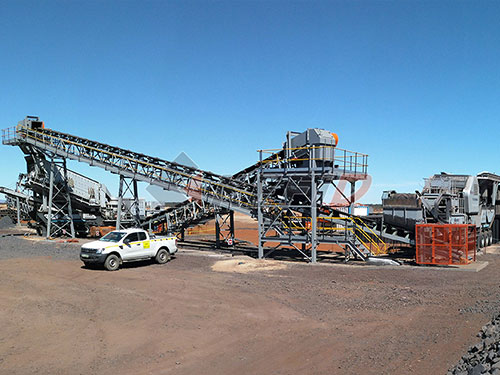
6. After-Sales Service and Spare Parts
After-sales service is a critical differentiator. Top-tier Chinese vendors offer:
However, smaller vendors may have limited service networks. Buyers should negotiate service contracts, ensure availability of critical wear parts (e.g., jaw plates, cone liners, mantles), and consider stocking spare parts locally.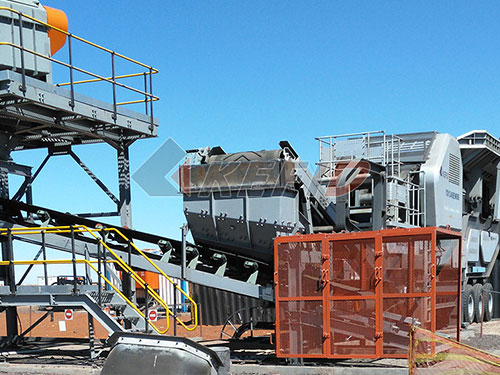
7. Cost Considerations and Total Cost of Ownership (TCO)
Chinese equipment is generally 30–50% cheaper than equivalent Western or Japanese models. However, TCO must account for:
For large, high-throughput mines, the reliability and efficiency of premium Chinese or global brands often justify the higher upfront cost. For smaller operations, low-cost Chinese crushers can be a viable option.
8. Technological Trends and Innovations
Chinese vendors are increasingly adopting advanced technologies:
9. Challenges and Risks
Despite strengths, there are risks:
10. Conclusion and Recommendations
China is a vital source of gold ore crushing equipment, offering a wide spectrum of products from low-cost basic machines to high-tech, large-scale systems. The choice of vendor should be based on a careful assessment of mine size, ore hardness, required throughput, budget, and after-sales support requirements.
For large, long-life mines, partnering with established vendors like CITIC HIC, Metso Outotec (China), or FLSmidth (China) is advisable. For mid-sized operations, brands like HXJQ, SBM, or YIFAN offer good value. For small-scale or artisanal mining, local Chinese SMEs can provide affordable solutions, but due diligence is essential.
Ultimately, successful procurement from Chinese vendors requires thorough technical evaluation, factory inspections, clear contractual terms, and a long-term relationship built on trust and mutual benefit. With careful planning, Chinese gold ore crushing equipment can deliver excellent performance, reliability, and cost-effectiveness for mining projects worldwide.
If you have any questions about our products, please feel free to contact us. We take all inquiries and suggestions very seriously.