
Bulk Coke Vibration Screen Sampling: Principles, Equipment, and Best Practices
Introduction
In the metallurgical, foundry, and energy industries, bulk coke serves as a critical raw material for blast furnaces, cupolas, and various combustion processes. The physical and chemical characteristics of coke—including particle size distribution, mechanical strength, moisture content, and ash composition—directly influence process efficiency, product quality, and operational safety. Accurate characterization of bulk coke therefore depends on representative sampling, and vibrating screens are among the most widely employed devices for size classification and sample preparation. This article provides a detailed, objective examination of bulk coke vibration screen sampling, covering its purpose, underlying principles, equipment configurations, procedural steps, sources of error, and industry best practices.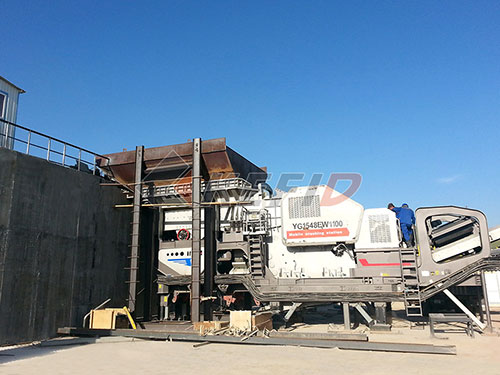
Purpose and Scope of Vibration Screen Sampling
Vibration screen sampling refers to the use of vibratory screening equipment to separate a bulk coke sample into defined size fractions, either as an end in itself (for size distribution analysis) or as a preparatory step before further testing. In coke quality assessment, screening serves several distinct purposes. First, it establishes the particle size distribution of a consignment, which affects permeability in the blast furnace and is therefore a key quality indicator. Second, it enables the removal of fines or oversize material prior to mechanical strength testing, such as the Micum or IRSID drum tests. Third, it supports the preparation of representative sub-samples for proximate analysis, calorific value determination, and reactivity testing. Finally, screening is used in custody transfer and contractual disputes, where precise and reproducible size data are required.
The scope of sampling must be clearly defined before any screening operation begins. Relevant parameters include the nominal top size of the coke, the intended cut points (for example, 10 mm, 25 mm, or 40 mm), the total mass of the lot, and the required precision of the result. International standards such as ISO 18283 (hard coal and coke—manual sampling) and ASTM D346 provide frameworks for establishing sampling plans, and these should be referenced when designing a vibration screen sampling protocol.
Fundamental Principles
Representative sampling rests on the principle that every particle in a lot must have an equal and independent probability of being selected. Vibration screening introduces a physical separation step, and care must be taken to ensure that this separation does not bias the sample. Three principles govern sound practice. The first is mass reduction in stages: a large bulk sample is progressively reduced in mass, with each reduction accompanied by thorough mixing, so that the final laboratory sample remains representative. The second is avoidance of segregation: coke, like most granular materials, tends to segregate by size during handling, with fines migrating downward and large lumps rising to the surface. Vibration screening must therefore be preceded by adequate homogenization, and the screen feed should be introduced uniformly across the full width of the deck. The third principle is complete recovery: all fractions produced by screening—oversize, intermediate, and undersize—must be collected, weighed, and reconciled, with mass balances closed to within an acceptable tolerance, typically one percent.
Equipment and Configurations
Vibration screens used in coke sampling fall into several categories. Circular motion vibrating screens, driven by an eccentric shaft or unbalanced motor, are common for coarse classification and offer high throughput. Linear motion screens, with twin vibratory motors producing a straight-line throwing action, provide efficient stratification and are well suited to inclined installations. Laboratory-scale vibratory sieve shakers, using a stack of woven-wire or perforated-plate sieves, are employed for the final size analysis of reduced samples, typically in the range of 1 mm to 100 mm. For large bulk samples, mobile or stationary screening stations may be integrated into the sampling system, with belt feeders ensuring a controlled, uniform feed rate.
Key equipment considerations include screen aperture accuracy, deck material and wear resistance, vibration amplitude and frequency, and the avoidance of screen blinding. Coke is abrasive and can be friable; excessive vibration energy may cause degradation of the sample, artificially increasing the fines content. Screen apertures should be verified periodically with calibrated gauges, and worn decks should be replaced promptly. Where wet coke is encountered, wet screening or pre-drying may be necessary to prevent agglomeration and blinding.
Procedural Steps
A typical vibration screen sampling procedure comprises the following stages. First, define the lot and determine the number and mass of primary increments in accordance with the applicable standard. Second, collect increments using appropriate sampling tools—manual shovels for small lots or mechanical samplers for conveyor streams—ensuring that full cross-sections of the stream are taken. Third, combine and homogenize the increments to form a gross sample. Fourth, reduce the gross sample by crushing and quartering or by riffle splitting, with each stage of reduction preceded by mixing. Fifth, conduct the vibration screening at the specified cut points, feeding the material at a controlled rate and allowing sufficient residence time for complete separation. Sixth, weigh each fraction and record the results. Seventh, reduce and store sub-samples for subsequent laboratory analysis, using airtight containers to preserve moisture.
Throughout the procedure, documentation is essential. Records should include the lot identification, sampling date and time, equipment used, screen apertures, masses of all fractions, and any deviations from the protocol. Chain-of-custody procedures should be followed where contractual or regulatory requirements apply.
Sources of Error and Quality Control
Several error sources can compromise the representativeness of vibration screen samples. Segregation during sampling and handling is perhaps the most significant; it can be mitigated by homogenization and by taking increments from the full stream cross-section. Incomplete separation on the screen, caused by overloading, insufficient screening time, or blinded apertures, leads to misclassification of particles and biased size distributions. Mechanical degradation of coke during screening introduces spurious fines. Moisture variation affects both mass and screening behavior, and moisture must therefore be determined on separate sub-samples. Human error in weighing, recording, and fraction handling is a persistent risk and is best addressed through training and independent verification.
Quality control measures include duplicate sampling and screening at a defined frequency, mass balance reconciliation for each screening operation, periodic calibration of balances and screen apertures, and participation in proficiency testing schemes. Statistical control charts of size fraction yields can reveal drift in equipment or procedure before it affects reported results.
Best Practices and Conclusion
Effective bulk coke vibration screen sampling combines sound sampling theory with disciplined operational practice. Best practices include the use of mechanical sampling where feasible to reduce human bias, the design of sampling systems around the principle of full-stream extraction, the maintenance of strict mass balance records, and the integration of screening into a documented quality management system aligned with ISO 18283 or equivalent standards. Operators should also recognize that screening is not merely a mechanical separation but a critical control point in the analytical chain: errors introduced here cannot be corrected downstream.
In conclusion, vibration screen sampling of bulk coke is a technically demanding but well-established discipline. When equipment is properly selected and maintained, procedures are rigorously followed, and quality control is embedded throughout the process, vibration screening provides reliable, reproducible size distribution data that underpin coke quality assessment, process optimization, and commercial transactions. As coke specifications tighten and analytical demands increase, continued attention to sampling precision and traceability will remain essential to the credibility of every measurement that follows.
If you have any questions about our products, please feel free to contact us. We take all inquiries and suggestions very seriously.