
Import Slag Crusher Plant Prices: A Comprehensive Market Analysis
Introduction
The global metallurgical and construction sectors generate substantial quantities of slag as a by-product of steelmaking, smelting, and other industrial processes. As environmental regulations tighten and the circular economy gains momentum, the processing and recycling of slag has evolved from a waste-disposal concern into a profitable industrial activity. Central to this transformation is the slag crusher plant—a specialized equipment system designed to crush, screen, and size slag for reuse in cement production, road construction, and aggregate applications. For importers, distributors, and end-users, understanding the pricing dynamics of imported slag crusher plants is essential for capital budgeting, supplier negotiation, and long-term operational planning. This article provides a detailed, objective analysis of import slag crusher plant prices, examining the factors that influence cost structures, the principal sourcing regions, typical price ranges, and the strategic considerations that inform procurement decisions.
The Function and Configuration of Slag Crusher Plants
A slag crusher plant is not a single machine but an integrated processing system. Depending on the application, a typical configuration may include a vibrating feeder, a primary jaw or impact crusher, a secondary cone or hammer crusher, a vibrating screen, belt conveyors, magnetic separators for metal recovery, and a control system. Plants may be stationary, semi-mobile, or fully mobile, and their throughput capacities range from tens of tons per hour in small-scale operations to several hundred tons per hour in large steelworks.
Because slag is an abrasive and often heterogeneous material—containing metallic iron, refractory fragments, and variable moisture content—the design of the crushing circuit significantly affects equipment durability and operating cost. This technical complexity is directly reflected in pricing: a plant specified for high-abrasion steel slag will command a higher price than a comparable-capacity plant designed for lighter, granulated blast furnace slag.
Key Determinants of Import Prices
Import prices for slag crusher plants are shaped by a combination of technical, logistical, and market factors. A clear understanding of these variables enables buyers to benchmark quotations and identify where cost savings are achievable.
Capacity and Configuration. Throughput capacity is the single most influential price driver. A 50-ton-per-hour plant may be priced at a fraction of a 300-ton-per-hour system, and the inclusion of secondary and tertiary crushing stages, magnetic separation, dust suppression, and automated control systems adds substantially to the total. Buyers should specify capacity in terms of actual slag conditions rather than nominal figures, as abrasive materials reduce effective throughput.
Manufacturing Origin and Brand. The country of manufacture strongly influences price. Chinese manufacturers dominate the mid-to-lower price segment, offering competitive pricing on standard configurations with increasingly reliable quality. European manufacturers (notably German, Italian, and Turkish suppliers) occupy the premium segment, where prices may be 40–100 percent higher, reflecting advanced engineering, wear-resistant materials, and comprehensive service networks. Indian and Southeast Asian suppliers occupy an intermediate position, particularly for regional buyers benefiting from shorter shipping distances.
Material and Component Quality. The grade of wear parts—manganese steel jaw plates, chromium alloy blow bars, and heavy-duty screen meshes—has a direct bearing on both initial price and lifecycle cost. Premium components can raise the plant price by 15–30 percent but may reduce downtime and replacement costs over the equipment’s service life.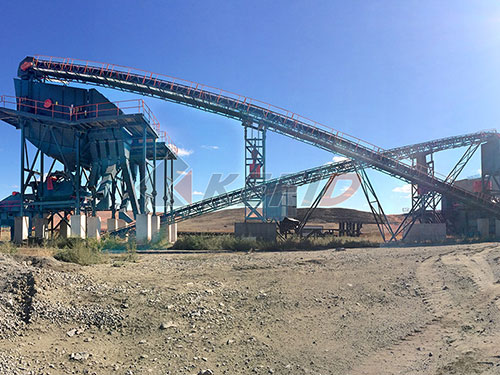
Logistics and Trade Terms. Slag crusher plants are bulky, heavy consignments that frequently require multiple containers or break-bulk shipping. Freight costs from East Asia to markets in Africa, South America, or the Middle East can add 5–15 percent to the landed cost. Import duties, value-added tax, port handling, and inland transportation further shape the final price. Buyers should insist on quotations under clearly defined Incoterms (FOB, CIF, or DAP) to compare offers on a like-for-like basis.
Certification and Compliance. Equipment destined for regulated markets must often comply with CE marking, ISO standards, or local electrical and safety codes. Compliance certification adds engineering and testing costs, typically 3–8 percent of the equipment price, but is indispensable for lawful operation and insurance coverage.
Indicative Price Ranges
While precise quotations depend on the specifications described above, indicative ranges provide a useful planning reference. Small-scale stationary plants with capacities of 20–50 tons per hour are generally available from Chinese suppliers in the range of USD 15,000 to 45,000 FOB. Mid-range plants of 80–150 tons per hour, incorporating two-stage crushing and magnetic separation, typically fall between USD 60,000 and 150,000. Large integrated systems exceeding 200 tons per hour, particularly those of European origin with advanced automation, may range from USD 250,000 to over USD 600,000. Mobile and semi-mobile units command a premium of 20–40 percent over comparable stationary configurations owing to chassis, hydraulic, and mobility engineering. These figures should be treated as planning benchmarks rather than firm quotations; buyers are advised to obtain at least three competitive offers based on identical technical specifications.
Regional Sourcing Patterns
China remains the largest source of imported slag crusher plants by volume, supported by a mature supply chain, extensive export experience, and competitive pricing. Henan, Shanghai, and Jiangsu host numerous manufacturers with export capabilities. Turkey has emerged as a significant supplier to markets in the Middle East, North Africa, and Central Asia, combining European-adjacent quality with competitive pricing. India serves South Asian and African buyers with cost-effective solutions, while Germany and Italy continue to lead in high-end, custom-engineered systems for demanding steel slag applications. Buyers in regulated markets increasingly weigh total cost of ownership—including spare parts availability, service response time, and energy efficiency—against initial purchase price.
Strategic Procurement Considerations
Prospective importers should approach slag crusher plant procurement as a lifecycle investment rather than a one-off transaction. First, verify supplier credentials through factory audits, export documentation, and references from comparable installations. Second, ensure the technical proposal explicitly addresses slag characteristics, including hardness, moisture, and metallic content, since under-specified equipment is a common cause of cost overruns. Third, negotiate spare parts packages and operator training as part of the contract; these items are considerably cheaper when bundled with the initial purchase. Fourth, confirm warranty terms, commissioning support, and after-sales service arrangements in writing. Finally, model the total landed cost—equipment, freight, duties, installation, and financing—rather than comparing headline prices alone.
Conclusion
Import slag crusher plant prices reflect a complex interplay of capacity, configuration, manufacturing origin, component quality, logistics, and regulatory compliance. Indicative ranges from approximately USD 15,000 for small stationary units to over USD 600,000 for large, high-specification systems provide a planning framework, but accurate budgeting requires detailed technical specification and competitive quotation. As slag recycling continues to expand in response to environmental regulation and resource recovery incentives, informed procurement—grounded in technical due diligence and total-cost analysis—will remain the surest path to value for importers worldwide.
If you have any questions about our products, please feel free to contact us. We take all inquiries and suggestions very seriously.