
Title: The Competitive Landscape of Impact Crusher Production: Balancing Quality, Innovation, and Price
Introduction
In the global mining, quarrying, and construction industries, the impact crusher stands as a pivotal piece of machinery. Unlike jaw crushers that primarily compress material, impact crushers utilize high-speed impact forces to break down rocks, ores, and recycled concrete. Their ability to produce a cubical, well-graded product with a high reduction ratio makes them indispensable for aggregate production and mineral processing. As demand for infrastructure development surges across emerging economies and mature markets alike, the role of the impact crusher producer becomes increasingly critical. However, the market is not merely defined by technical capability; it is equally driven by the imperative of a “competitive price.” This article provides a professional and objective analysis of the impact crusher producer landscape, examining the factors that influence pricing, the strategies employed by manufacturers to remain competitive, and the delicate balance between cost reduction and product reliability.
1. The Core Technology and Market Segmentation
To understand pricing, one must first understand the product. Impact crushers are broadly categorized into two main types: Horizontal Shaft Impactors (HSI) and Vertical Shaft Impactors (VSI). HSI crushers are typically used for primary and secondary crushing of softer to medium-hard materials like limestone and gypsum. VSI crushers, on the other hand, are often employed for tertiary and quaternary crushing, producing high-quality sand and cubical aggregates.
A producer’s competitive price is not a one-size-fits-all figure. It varies significantly based on: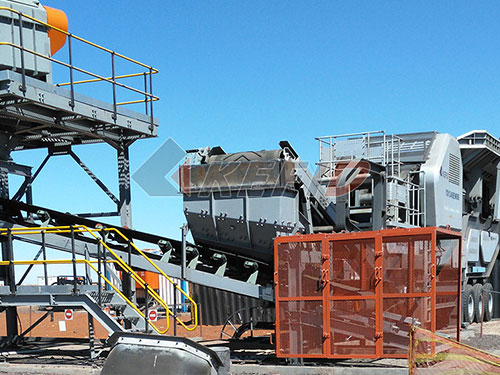
2. The Cost Structure of an Impact Crusher Producer
A producer’s ability to offer a competitive price is fundamentally tied to its cost structure. The major cost components include:
3. Strategies for Achieving Competitive Pricing
Producers employ several strategies to maintain a competitive edge without compromising on quality:
a. Economies of Scale
Large-scale manufacturers, such as Metso Outotec, Sandvik, and Terex, leverage massive production volumes to negotiate better raw material prices and spread fixed costs over a larger number of units. This allows them to offer competitive prices even with high overheads for R&D and global service networks.
b. Modular Design and Standardization
Many producers have shifted toward modular crusher designs. By standardizing components (e.g., bearings, shafts, hydraulic systems) across multiple models, they reduce inventory costs and simplify assembly. This efficiency is passed on to the buyer as a lower price.
c. Localized Production
To avoid high shipping costs and tariffs, several international brands have established joint ventures or wholly-owned factories in key markets like China, Brazil, and India. For example, a European brand producing impact crushers in a Chinese facility can offer a price competitive with local Chinese brands while maintaining a reputation for higher quality.
d. Vertical Integration
Some producers control the entire supply chain, from steel smelting to casting and final assembly. This vertical integration eliminates middleman margins and allows for tighter quality control. Chinese producers like SBM, Shanghai Shibang, and Zhengzhou Dingsheng are known for this approach, enabling them to offer aggressive pricing.
e. Aftermarket and Service Bundling
A lower initial purchase price can be offset by high maintenance costs. Savvy producers offer competitive pricing by bundling the crusher with a first set of wear parts, a service contract, or a warranty extension. This creates a lower total cost of ownership (TCO) for the customer, making the initial price appear more attractive.
4. The Price-Quality Trade-Off: A Critical Analysis
The phrase “competitive price” must be interpreted with caution. In the impact crusher market, there is a well-documented trade-off between upfront capital expenditure (CAPEX) and long-term operational expenditure (OPEX).
Low-Cost Producers (e.g., small Chinese factories): These manufacturers often offer prices 30-50% lower than premium brands. However, this is frequently achieved by using lower-grade steel, simplified rotor designs, and less rigorous quality control. The result can be higher wear rates, more frequent downtime, and shorter machine lifespan. For a contractor working on a short-term project, this may be acceptable. For a permanent quarry operation, it is often a false economy.
Mid-Range Producers (e.g., Indian and established Chinese brands): Companies like Puzzolana, Propel, and certain divisions of the Chinese conglomerates offer a balanced approach. They use better materials and have more robust quality assurance, yet their prices remain competitive due to lower labor costs and efficient manufacturing. This segment is currently the most dynamic, as it offers the best value for money for many mid-sized operators.
Premium Global Producers (e.g., Metso, Sandvik, Terex): These brands command the highest prices. Their competitive advantage lies not in low initial cost but in superior engineering, lower fuel consumption, higher uptime, and a global network of service technicians and spare parts. For large-scale, capital-intensive projects where downtime costs thousands of dollars per hour, the higher initial price is easily justified.
5. Regional Market Dynamics and Pricing
The concept of a “competitive price” is highly regional.
Asia-Pacific (China, India, Southeast Asia): This region is the epicenter of low-cost production. Chinese producers dominate the global market for mid-to-low-end impact crushers. The intense competition among thousands of manufacturers has driven prices to extremely low levels. However, a trend toward consolidation is emerging, with larger players investing in quality to compete internationally.
North America and Europe: Here, the market is dominated by premium brands and a strong demand for used or refurbished equipment. Competitive pricing often means offering a high level of customization, compliance with strict environmental regulations (e.g., noise and dust suppression), and robust after-sales support. Imported low-cost crushers face significant tariff barriers and skepticism regarding reliability.
Middle East and Africa: These markets are highly price-sensitive but also demand durability for harsh operating conditions. Chinese and Indian producers have made significant inroads by offering competitive prices combined with local service centers. The competitive price here is often defined by the ability to provide a complete solution—crusher, screen, conveyor, and installation—at a single, bundled price.
6. The Role of Technology in Price Competitiveness
Technology is a double-edged sword in pricing. On one hand, advanced features like hydraulic curtain adjustment, automatic overload protection, and remote diagnostics increase manufacturing costs. On the other hand, they reduce the need for manual intervention and downtime, which lowers the TCO.
Producers that can integrate cost-effective automation—such as using standard industrial sensors and open-source control platforms—can offer advanced features at a price point that undercuts traditional premium brands. This “smart frugality” is becoming a key competitive strategy.
Furthermore, the use of simulation software (e.g., Discrete Element Method, or DEM) during the design phase allows producers to optimize the crushing chamber geometry and rotor design. This reduces the weight of the machine without sacrificing strength, lowering material costs and, consequently, the final price.
7. Conclusion: Defining True Competitiveness
In the market for impact crushers, a “competitive price” is not simply the lowest number on a quotation. It is a measure of value—the optimal balance between initial cost, operational efficiency, durability, and after-sales support. A producer that can deliver a crusher with a low cost per ton of material processed, high reliability, and a responsive service network will always be competitive, regardless of whether its initial price is the lowest.
For buyers, the key is to look beyond the sticker price. A thorough analysis of the producer’s manufacturing capabilities, material specifications, and reputation for spare parts availability is essential. For producers, the path to offering a truly competitive price lies in continuous improvement: reducing waste in manufacturing, investing in R&D for wear life extension, and building efficient supply chains.
As the global demand for aggregates and minerals continues to grow, the impact crusher market will remain fiercely competitive. The winners will be those producers who can offer not just a machine, but a solution—one that delivers the lowest total cost of ownership while maintaining the highest standards of safety and performance. In this context, a competitive price is a reflection of operational excellence, not just a number on a spreadsheet.
If you have any questions about our products, please feel free to contact us. We take all inquiries and suggestions very seriously.