
Title: Impact Crushers: The Role of OEM Factories in Delivering Affordable, High-Performance Solutions
Introduction
In the modern aggregate, mining, and recycling industries, the impact crusher stands as a cornerstone of material reduction technology. Unlike compression-based crushers (such as jaw or cone crushers), impact crushers utilize high-velocity impact forces to break down materials, making them exceptionally effective for processing medium-hard to soft rocks, recycled concrete, and asphalt. The global demand for these machines has driven a competitive market where quality, reliability, and cost-efficiency are paramount. This is where the concept of the Original Equipment Manufacturer (OEM) factory becomes critical. An OEM factory is the entity that designs, engineers, and manufactures the crusher from the ground up. When the keyword “Impact Crushers OEM Factory Affordable” is examined, it encapsulates a specific market niche: the ability to procure genuine, factory-direct impact crushers at a price point that does not compromise on engineering integrity. This article provides a professional, objective, and detailed analysis of how OEM factories achieve affordability in the production of impact crushers, the technical considerations involved, and the value proposition for end-users.
Section 1: Understanding the Impact Crusher – A Technical Overview
To appreciate the role of an OEM factory, one must first understand the machine itself. An impact crusher operates on the principle of rapid acceleration and collision. Material is fed into a rotor, which spins at high speed (typically 500 to 1500 RPM). The rotor hammers or blow bars strike the material, propelling it against stationary impact plates (aprons) inside the crushing chamber. The material is shattered upon impact and further reduced as it ricochets between the aprons and the rotor. This process is known as “impact crushing.”
There are two primary types of impact crushers:
The key components of an impact crusher include the rotor, blow bars, apron liners, impact plates, housing, and drive system (motor and belts). The wear life of these components is a primary determinant of the machine’s total cost of ownership (TCO). An OEM factory controls the metallurgy and design of these parts, directly influencing both performance and affordability.
Section 2: The OEM Factory Advantage – Engineering and Quality Control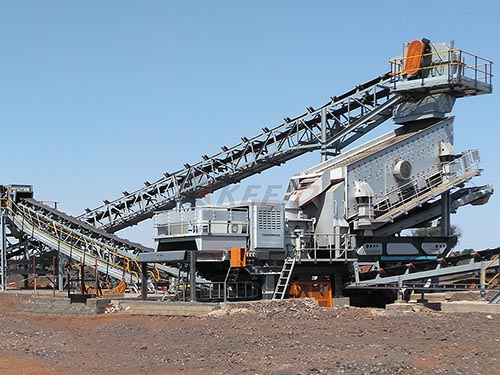
The term “OEM Factory” implies a direct line of responsibility from design to delivery. When a buyer sources an impact crusher from an OEM factory, they are not purchasing a generic, unbranded machine. They are acquiring a product built to specific engineering standards, with traceable materials and documented performance data.
2.1 Design and Engineering Precision
An OEM factory employs a team of mechanical engineers, metallurgists, and application specialists. They design the crusher using advanced Finite Element Analysis (FEA) and Computational Fluid Dynamics (CFD) to optimize the crushing chamber geometry, rotor dynamics, and material flow. This engineering rigor ensures that the machine operates at peak efficiency, reducing energy consumption per ton of material crushed. A well-designed machine inherently reduces operational costs, contributing to long-term affordability.
2.2 Metallurgical Control
The affordability of an impact crusher is not solely about the initial purchase price; it is heavily influenced by the cost of wear parts. OEM factories have proprietary metallurgical formulas for blow bars and liners. They can produce parts with specific hardness and impact resistance tailored to the material being crushed. For example, a factory might offer blow bars made from high-chrome iron for abrasive materials or manganese steel for high-impact applications. This control over material science means that OEM parts often last longer than generic aftermarket alternatives, reducing downtime and replacement frequency.
2.3 Quality Assurance and Testing
Reputable OEM factories implement rigorous quality control (QC) protocols. Every component, from the main shaft to the bearing housings, is inspected. The assembled crusher is often run on a test stand to verify vibration levels, temperature, and power draw before shipment. This reduces the risk of premature failure, a hidden cost that can quickly negate any initial savings from a cheaper, non-OEM machine.
Section 3: The Economics of Affordability – How OEM Factories Reduce Costs
The perception that “OEM” is synonymous with “expensive” is a common misconception. In reality, OEM factories can offer affordable impact crushers through several strategic advantages:
3.1 Economies of Scale
Large OEM factories produce thousands of crushers and thousands of tons of wear parts annually. This volume allows them to negotiate lower prices for raw materials (steel, castings, bearings, motors) from suppliers. These savings are passed down to the customer. A small, non-OEM fabricator cannot achieve the same purchasing power.
3.2 Vertical Integration
Many OEM factories control the entire supply chain. They may have their own foundries for casting blow bars and liners, their own machine shops for machining rotors, and their own assembly lines. By eliminating middlemen and markups from third-party suppliers, the factory can offer a complete, high-quality machine at a lower cost than a competitor who assembles parts from various vendors.
3.3 Standardization and Modular Design
Affordable OEM factories often employ modular design principles. They use common components (e.g., the same bearing housing, shaft diameter, or motor mount) across multiple crusher models. This reduces inventory costs and simplifies manufacturing. For the customer, this means that spare parts are readily available and often interchangeable, reducing the cost of ownership. A standardized design also allows for faster production cycles, which lowers the factory’s overhead per unit.
3.4 Direct Sales Models
Many OEM factories now operate direct-to-customer sales channels, bypassing regional distributors or dealers. This eliminates the distributor’s margin (often 10-20%), making the crusher significantly more affordable. The factory can also offer factory-direct support, including remote diagnostics and direct shipping of wear parts.
Section 4: Key Features of an Affordable OEM Impact Crusher
When evaluating an impact crusher from an OEM factory, affordability should not come at the expense of essential features. A truly affordable machine balances cost with functionality. Key features to look for include:
Section 5: The Total Cost of Ownership (TCO) Perspective
Affordability must be evaluated over the entire life of the machine, not just the purchase price. The TCO includes:
An OEM factory that offers an affordable initial price but uses low-quality bearings or substandard metallurgy will result in a high TCO. Conversely, a factory that invests in better design and materials may have a slightly higher upfront cost but a significantly lower TCO. The most affordable OEM factories are those that optimize the balance between initial cost and long-term reliability. They achieve this through lean manufacturing, smart design, and rigorous testing.
Section 6: Case Study – A Hypothetical OEM Factory Scenario
Consider a hypothetical OEM factory, “RockPro Industries,” located in a region with low labor costs and access to high-quality steel. RockPro produces a standard HSI impact crusher model, the RP-1315.
Section 7: Risks and Considerations When Sourcing from OEM Factories
While the advantages are significant, there are risks that buyers must objectively assess:
Section 8: Conclusion – The Future of Affordable OEM Impact Crushers
The market for impact crushers is evolving. The traditional model of buying from a local dealer with a high markup is being challenged by direct-from-factory sales. The phrase “Impact Crushers OEM Factory Affordable” is not an oxymoron; it is a reality driven by globalization, advanced manufacturing techniques, and digital commerce.
For the professional buyer, the key is to perform due diligence. An affordable OEM factory is one that combines engineering excellence with manufacturing efficiency. It is a factory that understands that true affordability is not just about the price tag, but about the value delivered over the machine’s entire operational life. By focusing on standardized designs, vertical integration, and direct sales, these factories are democratizing access to high-quality crushing technology.
As the construction and mining industries continue to demand higher efficiency and lower costs, the role of the OEM factory will only grow. The factories that succeed will be those that can offer a machine that is not only affordable to buy but also affordable to own and operate. For the end-user, the opportunity is clear: by carefully selecting a reputable OEM factory, they can acquire a world-class impact crusher that meets their production needs without breaking their budget. The future of crushing is efficient, direct, and increasingly affordable.
If you have any questions about our products, please feel free to contact us. We take all inquiries and suggestions very seriously.