
Stone Crusher Plant Importers Prices: A Comprehensive Market Analysis for Global Buyers
The global infrastructure and construction sector has witnessed unprecedented growth over the past two decades, driven by urbanization, population expansion, and large-scale government spending on roads, railways, dams, and commercial real estate. At the heart of this development lies the stone crushing industry—a critical upstream segment that transforms raw rock, granite, basalt, and limestone into aggregates of varying sizes for concrete, asphalt, and base layers. For importers in developing nations, emerging economies, and even mature markets, sourcing a complete stone crusher plant is a significant capital expenditure. Understanding the price dynamics, cost components, and market variables is essential for making informed procurement decisions. This article provides a detailed, professional, and objective examination of stone crusher plant importers’ prices, covering global price ranges, influencing factors, regional variations, hidden costs, and strategic purchasing advice.
1. Definition and Scope of a Stone Crusher Plant
Before delving into pricing, it is crucial to define what constitutes a “stone crusher plant” in the context of import trade. A complete plant typically includes: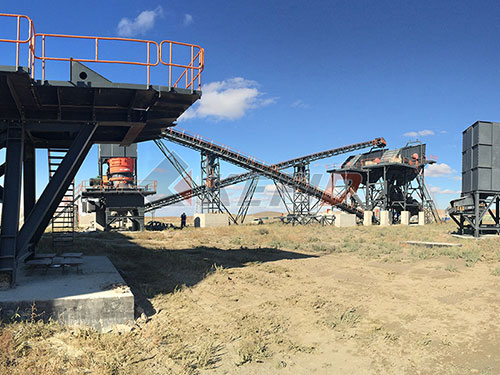
Importers may purchase either a stationary plant (fixed foundation) or a mobile/portable plant (wheeled or tracked). The price difference between these configurations is substantial, with mobile units costing 20–40% more than equivalent stationary systems due to added engineering, hydraulics, and chassis design.
2. Global Price Ranges for Imported Stone Crusher Plants
As of 2025, the international market for stone crusher plants is highly competitive, with major manufacturing hubs in China, India, Turkey, South Korea, and Europe (notably Germany and Italy). Based on trade data, export documentation, and supplier quotations, the following indicative price ranges apply for complete plants (excluding customs duties, freight, and installation):
These figures represent FOB (Free On Board) prices from the exporting country. Importers must add international freight, marine insurance, port handling, customs duties, and inland transportation to arrive at the landed cost.
3. Key Cost Determinants for Importers
Several technical and commercial factors directly influence the quoted price from suppliers. A professional importer must evaluate each element to avoid overpaying or purchasing under-specified equipment.
3.1. Brand and Country of Origin
Chinese manufacturers (e.g., SBM, Zenith, Liming Heavy Industry, and numerous smaller factories) offer the most competitive prices, often 30–50% lower than European equivalents. However, quality varies widely. Turkish brands (e.g., MEKA, FABO) occupy a middle ground, offering robust engineering at moderate prices. European brands (e.g., Metso Outotec, Sandvik, Kleemann) command premium prices—often 2 to 3 times higher than Chinese counterparts—but deliver superior durability, automation, and after-sales support. Importers in Africa, Southeast Asia, and Latin America predominantly choose Chinese or Turkish plants due to budget constraints, while buyers in Australia, the Middle East, and parts of Europe may prefer premium brands for long-term reliability.
3.2. Crushing Technology and Stages
A single-stage jaw crusher plant is cheaper than a two-stage (jaw + cone) or three-stage (jaw + cone + VSI) system. For hard, abrasive rocks (e.g., granite, basalt), a cone crusher is mandatory, increasing costs by 30–60% compared to an impact crusher used for softer limestone. Additionally, the inclusion of a vertical shaft impactor (VSI) for sand production or cubical aggregate shape adds $100,000–$500,000 to the total price.
3.3. Automation and Control Systems
Basic plants with manual controls are significantly cheaper. Modern plants with PLC-based automation, remote monitoring, load-sensing conveyors, and automatic lubrication systems can add 10–20% to the base price. Importers must weigh the upfront premium against long-term labor savings and reduced downtime.
3.4. Wear Parts and Spare Parts Packages
Suppliers often quote a “bare plant” price without wear liners, manganese jaws, or spare crusher parts. Importers should request a comprehensive spare parts package (e.g., 1–2 years of normal wear items) as part of the negotiation. This can add $20,000–$150,000 depending on plant size. Failure to include this in the initial price leads to unexpected post-import costs.
3.5. Steel Quality and Fabrication Standards
The thickness of the main frame, the quality of welding, and the use of high-grade steel (e.g., Q345B vs. ordinary mild steel) directly affect price. Cheaper plants may use thinner plates, leading to structural fatigue and premature failure. Professional importers should request material certificates and third-party inspection reports (e.g., SGS, Bureau Veritas) before payment.
4. Regional Price Variations and Market Dynamics
Importers’ prices are not uniform across the globe. Several regional factors create significant price dispersion:
4.1. China – The Price Leader
China remains the largest exporter of stone crusher plants, with prices ranging from $60,000 for a basic 30 tph plant to $1.5 million for a 300 tph turnkey system. The advantage is low labor costs, massive economies of scale, and a complete supply chain for motors, bearings, and electrical components. However, importers must be cautious about “grey market” suppliers who quote extremely low prices but deliver substandard equipment. Reputable Chinese manufacturers with ISO 9001 certification and CE marking typically charge 10–20% more than non-certified factories.
4.2. India – Emerging Alternative
Indian manufacturers (e.g., Propel, Puzzolana, and Singh Crushers) offer prices comparable to China, often 5–15% lower for small and medium plants. However, Indian plants may have longer lead times and less standardized export documentation. For importers in Africa and the Middle East, Indian suppliers offer freight advantages due to closer proximity.
4.3. Turkey – Quality at Moderate Cost
Turkish plants are known for robust design and compliance with European safety standards. Prices are typically 20–35% higher than Chinese equivalents but 30–40% lower than German or Swedish brands. Turkish suppliers are particularly strong in mobile crushers and concrete batching plant integration.
4.4. Europe and North America – Premium Segment
Importers in high-income countries or those requiring extreme reliability (e.g., mining operations) may purchase from Metso, Sandvik, or Terex. Prices for a 200 tph complete plant from these brands can exceed $2 million. The justification is higher uptime (95%+), better fuel efficiency, and lower maintenance costs over a 20-year lifespan.
5. Hidden Costs Beyond the Quoted Price
A professional importer must calculate the total cost of ownership (TCO), not just the FOB price. The following hidden costs frequently cause budget overruns:
6. Negotiation Strategies for Importers
To secure the best price, importers should adopt a structured procurement approach:
7. Case Study: Price Comparison for a 100 TPH Plant
To illustrate, consider a hypothetical importer in Bangladesh seeking a 100 tph stationary plant for hard granite. Quotations received in Q1 2025:
After adding freight ($18,000), insurance ($4,000), customs duty (5% in Bangladesh, ~$16,000), inland transport ($8,000), installation ($25,000), and civil works ($60,000), the total landed and installed costs are:
The Indian option appears cheapest, but if the importer factors in a 10% higher failure rate and 15% longer downtime, the Chinese or Turkish option may offer better TCO over 5 years.
8. Future Price Trends and Market Outlook
Several trends will affect importers’ prices in the coming years:
9. Conclusion and Professional Recommendations
Stone crusher plant importers’ prices are not a single number but a complex function of brand, capacity, technology, region, and hidden costs. A realistic budget for a medium-scale imported plant, including all landed and installation costs, should be between $400,000 and $1,200,000. Importers must avoid the trap of selecting the lowest FOB price without considering quality, spare parts availability, and after-sales support. The most professional approach is to:
By following these steps, importers can secure a stone crusher plant that offers optimal value, minimal downtime, and a strong return on investment over its operational life. The global market remains buyer-friendly, with ample competition among Chinese, Turkish, Indian, and European suppliers—but only informed buyers will truly benefit from the price differentials.
If you have any questions about our products, please feel free to contact us. We take all inquiries and suggestions very seriously.