
Title: The Vanguard of Comminution: An Analysis of Research and Development in Impact Crusher Manufacturing
Abstract
The aggregate, mining, and recycling industries are currently undergoing a paradigm shift driven by the need for higher efficiency, reduced operational costs, and stringent environmental compliance. At the heart of this transformation lies the impact crusher—a machine class defined by its high reduction ratio and superior product cubicity. This article provides a comprehensive analysis of the Research and Development (R&D) strategies employed by leading impact crusher manufacturers. It explores the metallurgical advancements in wear parts, the integration of smart technologies and Industry 4.0, the evolution of kinematic design, and the industry’s pivot toward sustainability and the circular economy.
Impact crushers, categorized primarily into Horizontal Shaft Impactors (HSI) and Vertical Shaft Impactors (VSI), are pivotal in the secondary and tertiary stages of size reduction. Unlike compressive crushers (jaw and cone), impact crushers utilize kinetic energy to shatter material, resulting in a highly cubical product shape and a high reduction ratio. As the global demand for manufactured sand (M-sand) and recycled aggregates surges, the R&D departments of impact crusher manufacturers are under immense pressure to innovate. The modern R&D landscape is no longer solely focused on mechanical robustness; it is a multidisciplinary field encompassing material science, fluid dynamics, automation, and environmental engineering.
The primary operational cost center for impact crusher operators is wear parts—specifically the blow bars in HSIs and the rotor tips and anvils in VSIs. Consequently, a significant portion of manufacturers’ R&D budgets is allocated to metallurgy.
Advanced Alloy Development
Manufacturers are moving beyond traditional high-chrome (Cr) irons. R&D is currently focused on developing hybrid matrix composites. These involve embedding ceramic particles (such as tungsten carbide or zirconia) within a tough metallic matrix. The objective is to achieve a balance between hardness (to resist abrasion) and toughness (to resist impact fatigue). Recent innovations include “bimetal” blow bars, where the wear surface is a high-chrome alloy, while the body is a ductile steel, allowing the bar to be flipped and reused, thereby extending the wear life by up to 30%.
Additive Manufacturing (3D Printing)
Leading manufacturers are experimenting with additive manufacturing for complex wear components. Laser cladding and 3D printing allow for the precise application of wear-resistant layers only where needed, reducing waste and cost. Furthermore, 3D printing enables the rapid prototyping of new rotor designs, significantly shortening the R&D cycle from design to field testing.
The rotor is the heart of the impact crusher. R&D in this area focuses on optimizing the transfer of energy from the motor to the rock.
Rotor Inertia and Geometry
Modern R&D utilizes Finite Element Analysis (FEA) and Discrete Element Method (DEM) modeling to optimize rotor mass and inertia. The goal is to maximize the crushing force while minimizing power consumption. Manufacturers are designing “high-inertia” rotors that maintain momentum during the crushing of large, hard rock, ensuring consistent throughput.
For VSIs, the design of the rotor and anvil (or rock-on-rock chamber) is critical. R&D is focused on “autogenous” crushing—using the rock to crush itself—to reduce wear costs. New rotor designs feature adjustable cascade ports, allowing operators to fine-tune the feed distribution and the amount of material bypassing the rotor, thereby optimizing the particle size distribution (PSD) and reducing power draw.
Hydraulic and Mechanical Adjustments
To improve operational efficiency, R&D has led to the integration of hydraulic opening mechanisms and hydraulic adjustment of the impact aprons (in HSIs). This allows for quick gap adjustments to control product size, reducing downtime. Advanced manufacturers are developing “self-tightening” wedge systems for blow bar replacement, aiming to reduce the time required for maintenance from hours to minutes.
The “digitalization” of crushing equipment is perhaps the most rapidly evolving area of R&D. Manufacturers are transforming impact crushers from mechanical behemoths into data-generating assets.
IoT and Telematics
Modern impact crushers are equipped with sensors monitoring vibration, temperature, pressure, and power consumption. R&D is focused on developing algorithms that interpret this data to predict wear and prevent catastrophic failure. For instance, vibration analysis can detect an imbalance in the rotor, while power draw analysis can indicate a blockage or a change in feed hardness.
Automated Control Systems
R&D is heavily invested in “closed-loop” control systems. These systems use sensors to detect the load on the crusher and automatically adjust the feed rate or the apron gap to maintain optimal chamber filling. This ensures the crusher operates at maximum efficiency without overloading. Additionally, remote monitoring allows manufacturers to provide predictive maintenance services, a growing revenue stream in the industry.
Environmental regulations and the drive for sustainability are reshaping R&D priorities. Manufacturers are tasked with designing equipment that minimizes dust, noise, and energy consumption.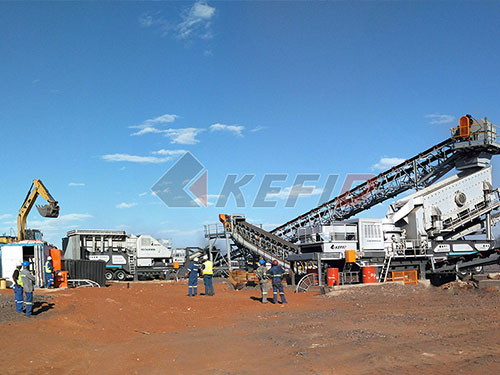
Dust Suppression and Noise Reduction
R&D teams are redesigning crushing chambers to optimize airflow and reduce dust generation. Integration of water spray systems and advanced filtration is becoming standard. Furthermore, acoustic engineering is being applied to reduce noise emissions, making urban recycling applications more viable.
Recycling and Construction & Demolition (C&D) Waste
Impact crushers are the preferred choice for C&D waste recycling due to their ability to handle rebar-contaminated concrete. R&D is focused on developing crushers that can better separate steel from concrete and produce high-quality recycled aggregates. This includes the development of specialized impact aprons and grinding paths that liberate the steel without damaging the crusher.
Energy Efficiency
With the rising cost of electricity and the push for carbon neutrality, R&D is focused on electric drive systems. The shift from diesel-hydraulic to electric-drive systems (e-drive) offers significant energy savings and lower maintenance. Manufacturers are also developing “energy recovery” systems, where the kinetic energy of the rotor is used to power auxiliary systems.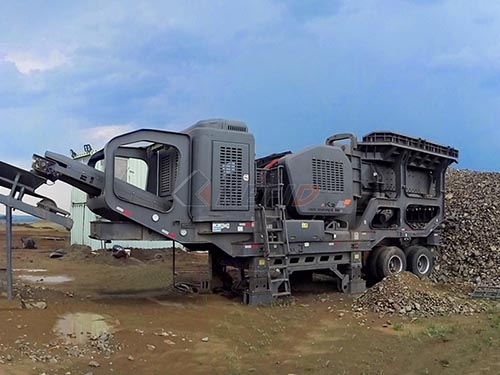
The market is demanding flexibility. R&D is shifting toward modular designs where the crusher body, rotor, and drive system can be swapped or upgraded independently. This allows a quarry to start with a basic model and upgrade to a higher-capacity rotor or a different apron configuration as their business grows, without replacing the entire machine.
Looking ahead, the R&D trajectory points toward the fully autonomous crusher. This involves integrating AI-driven vision systems that can analyze the feed material (size, shape, and hardness) in real-time and adjust the crusher settings instantaneously. Research into “self-healing” materials for wear parts and the use of hydrogen fuel cells for mobile impact crushers are also on the horizon.
The R&D landscape of impact crusher manufacturers is a dynamic intersection of heavy engineering and high-tech innovation. From the molecular structure of blow bars to the cloud-based algorithms monitoring machine health, manufacturers are investing heavily to meet the industry’s demands. The focus has shifted from merely building robust machines to creating intelligent, sustainable, and highly efficient processing systems. As the industry moves toward 2030, the companies that lead in R&D will be those that successfully balance metallurgical durability with digital intelligence and environmental stewardship, ensuring that the impact crusher remains the cornerstone of material processing for decades to come.
If you have any questions about our products, please feel free to contact us. We take all inquiries and suggestions very seriously.