
Gold Ore Crushing Equipment Maker Cost: A Comprehensive Analysis of Factors, Pricing, and Market Dynamics
The gold mining industry is a cornerstone of global economic activity, with gold ore processing representing a critical value chain from extraction to refinement. At the heart of this process lies the crushing stage, where raw ore is reduced to manageable particle sizes for subsequent grinding, leaching, or gravity separation. The cost of equipment from gold ore crushing equipment makers is a multifaceted subject influenced by engineering complexity, material science, market demand, and operational efficiency. This article provides an in-depth, professional analysis of the cost structure associated with gold ore crushing equipment manufacturers, examining key determinants, price ranges for different machine types, regional variations, and strategic considerations for buyers.
1. Overview of Gold Ore Crushing Equipment
Gold ore crushing equipment encompasses a range of machinery designed to break down large rocks into smaller fragments. Common types include jaw crushers (primary crushing), cone crushers (secondary/tertiary crushing), impact crushers (for softer ores), gyratory crushers (high-capacity primary), and hammer mills or roll crushers (for fine reduction). Each type serves a specific purpose in the comminution circuit, and their costs vary significantly based on design complexity, throughput capacity, power requirements, and durability.
Manufacturers range from global giants like Metso Outotec (Finland), Sandvik (Sweden), and FLSmidth (Denmark) to regional players in China (e.g., Shanghai Shibang Machinery Co., Ltd., Henan Hongxing Mining Machinery Co., Ltd.), India (e.g., Thyssenkrupp Industries India Pvt. Ltd.), and South Africa. The “maker cost” refers not only to the purchase price but also to total cost of ownership (TCO), including installation, maintenance energy consumption wear parts replacement.
2. Key Factors Influencing Equipment Maker Cost
The cost of gold ore crushing equipment is not arbitrary; it is determined by several technical and market-driven variables:
a) Machine Type and Complexity
b) Throughput Capacity
Capacity directly correlates with physical size motor power structural reinforcement A 200 tph jaw crusher may cost $150k while a 600 tph unit can exceed $400k Similarly cone crusher capacity doubling typically increases price by 60–80%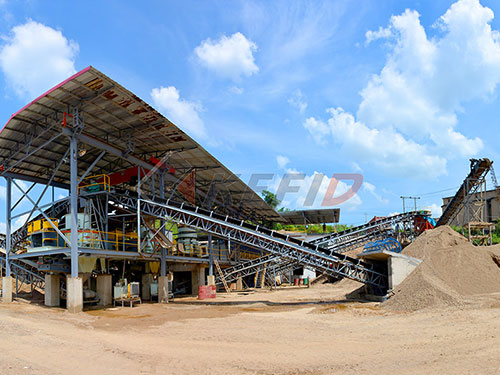
c) Material Quality & Wear Life
Premium manufacturers use high-chrome alloys manganese steel heat-treated shafts which increase initial cost but reduce downtime For example OEM replacement parts may be 30–50% more expensive than aftermarket but offer longer service life
d) Automation & Control Systems
Modern crushers integrate PLC-based systems remote monitoring load sensing These add $20k–$100k depending on sophistication Smart crushers reduce labor costs improve efficiency justifying higher upfront investment
e) Regional Manufacturing & Labor Costs
Chinese manufacturers offer lower base prices due to cheaper labor raw materials Example: A Chinese-made jaw crusher may cost $80k vs European equivalent at $150k However quality consistency shipping time after-sales support differ significantly
f) Customization & Site-Specific Engineering
Hard rock ores require reinforced frames special alloy liners Wet sticky ores need anti-clogging designs Custom engineering adds 10–25% premium
3. Price Ranges by Equipment Category
Based on industry data from leading suppliers typical ex-works prices as of 2024 are:
| Equipment Type | Capacity Range | Price Range USD | Typical Manufacturer |
|---|---|---|---|
| Small Jaw Crusher | <100 tph | $8k – $60k | Zhengzhou Yifan |
| Medium Jaw Crusher | 100-500 tph | $60k – $250k | Metso C Series |
| Large Jaw Crusher | >500 tph | $250k – $800k+ | Sandvik CJ Series |
| Cone Crusher Standard | <300 tph | $30k – $200k | Symons type |
| Cone Crusher Hydraulic HP Series | <800 tph | $150k – $1M+ | Metso HP/Nordberg |
| Gyratory Primary Crusher | >2000 tph | $500k – $2M+ | FLSmidth Fuller-Traylor |
| Impact Crusher Horizontal Shaft HSI <600tph> HSI <600tph> HSI <600tph> HSI <600tph> HSI <600tph> HSI <600tph> HSI <600tph> HSI <600tph> HSI <600tph> HSI <600tph> HSI <600tph> HSI <600tph> HSI <600tph> HSI <600tph> HSI </=20>$20-$150K</=20>$20-$150K</=20>$20-$150K</=20>$20-$150K</=20>$20-$150K</=20>$20-$150K</=20>$20-$150K</=20>$20-$150K</=20>$20-$150K</=40$40 -$400 K |
Vertical Shaft Impactor VSI Up tp 400 TPH 40 K -300 K
Note: Prices exclude freight customs duties installation training taxes which can add 15 -35 %
4 .Total Cost Of Ownership TCO
Initial purchase price often misleads buyers .TCO includes : 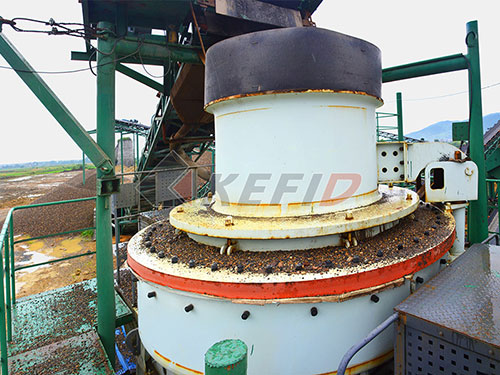
Energy Consumption :Crushing consumes significant electricity .A 300 kW motor running 16 hours daily at 0 .10 / kWh costs ~$175 ,000 annually over 5 years = ~$875 ,000 —often exceeding machine cost .High-efficiency motors variable frequency drives VFDs reduce this .
Wear Parts Replacement :Liners blow bars mantles concave rings require periodic replacement .For abrasive gold ores wear costs can reach 0 .05 -0 .15 per ton crushed Over 1 million tons annual production this equals 50 k -150 k per year
Maintenance Labor Downtime :Skilled technicians preventive maintenance schedules impact productivity Losses from unplanned downtime easily exceed repair costs
Installation Foundation Civil Works :Heavy foundations conveyors chutes electrical panels add 50 k -200 k depending on site conditions
Thus a low-cost Chinese machine may have higher TCO than premium brand if it consumes more power wears faster lacks local support
5 Regional Market Variations
North America Europe :High labor environmental regulations favor automated durable machines Prices are premium but service networks strong Used equipment market active reducing entry costs
China India Southeast Asia :Intense competition drives down base prices However quality varies widely Reputable brands like SBM Liming offer good value while small workshops produce unreliable units Buyers must inspect factory certifications ISO CE etc
Africa Latin America :Logistics import duties infrastructure challenges increase total delivered cost For example shipping a cone crusher from China to Ghana adds ~25 % freight insurance Local agents often mark up further Artisanal miners prefer low-cost hammer mills or small jaw crushers under 10 k
6 Strategic Considerations For Buyers
When evaluating maker costs consider :
7 Future Trends Affecting Costs
Digitalization IoT-enabled predictive maintenance reduces downtime but increases upfront software licensing fees
Sustainability Electrification hybrid diesel-electric systems lower emissions yet raise capital expenditure
Material science New ceramic composites extended wear life potentially lowering long-term TCO despite higher initial price
Market consolidation Mergers among top manufacturers may reduce competition stabilize pricing but limit choices for niche applications
Conclusion The cost of gold ore crushing equipment makers is not a single number but a spectrum shaped by technical specifications regional economics operational context While entry-level machines can be acquired for under 10 ,000 industrial-scale operations require investments ranging from hundreds thousands to millions dollars Prudent buyers must look beyond sticker price evaluate total lifecycle expenses including energy wear maintenance logistics Ultimately partnering with reputable manufacturer that offers robust design local support flexible financing yields best return on investment ensuring profitable gold recovery operation
If you have any questions about our products, please feel free to contact us. We take all inquiries and suggestions very seriously.