A Comprehensive Guide to Obtaining a High Quality Slag Crusher Plant Quotation: Key Factors, Cost Drivers, and Evaluation Criteria
In the modern industrial landscape, the efficient processing of by-products is not merely an environmental obligation but a significant economic opportunity. Slag, a by-product of steelmaking, smelting, and other metallurgical processes, is a prime example. Once considered waste, it is now a valuable resource for construction, cement production, and road building. The cornerstone of this valorization is the slag crusher plant. However, investing in such a plant is a substantial capital decision. The process begins with obtaining a high quality slag crusher plant quotation. This document is far more than a simple price list; it is a technical and commercial blueprint that defines the project’s feasibility, operational efficiency, and long-term profitability.
This article provides an objective, in-depth analysis of what constitutes a high-quality quotation, the critical factors that influence pricing, the types of plants available, and the essential steps for evaluating proposals from global suppliers.
1. Understanding the Slag Crushing Process and Plant Types
Before evaluating a quotation, one must understand the fundamental requirements of slag processing. Slag is notoriously abrasive, hard, and often contains metallic iron. A standard crushing plant for aggregates is often unsuitable. A dedicated slag crusher plant must handle:
- Primary Crushing: Reducing large slag boulders (often 500-1000mm) to a manageable size (100-200mm). Jaw crushers are the standard choice here due to their high compressive strength and reliability.
- Secondary Crushing: Further reduction to 20-40mm. Cone crushers or impact crushers are used. For slag, a specialized hydraulic cone crusher or a vertical shaft impact (VSI) crusher is often preferred to handle the material’s abrasiveness.
- Magnetic Separation: This is a non-negotiable step. Overhead magnetic separators and drum magnets are integrated to extract metallic iron (scrap) from the crushed slag. This recovered metal is a valuable revenue stream.
- Screening: Vibrating screens separate the crushed material into different fractions (e.g., 0-5mm, 5-20mm, 20-40mm) for various end-uses.
- Tertiary Crushing (Optional): For producing finer materials like slag sand or powder, a ball mill or a high-pressure grinding roll (HPGR) may be included.
Plant Configurations: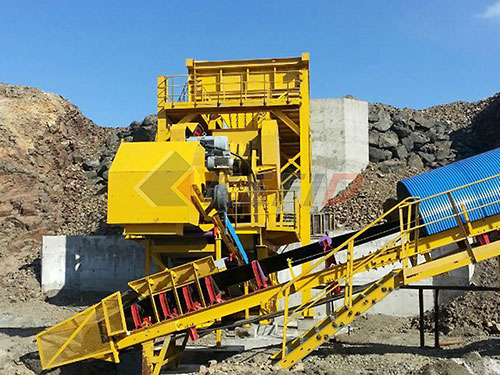
- Stationary Plants: High capacity, fixed location, ideal for large steel mills or centralized processing hubs. They offer the lowest cost per ton but require significant civil works.
- Mobile Plants: Mounted on tracks or wheels. Ideal for temporary sites, multiple locations, or smaller operations. They offer flexibility and lower installation costs but have a higher cost per ton.
- Semi-Mobile Plants: A compromise, with major components on skids for easier relocation but requiring some site preparation.
A high-quality quotation will clearly specify the plant type, the flow sheet, and the capacity (in tons per hour, TPH).
2. Core Components of a High Quality Slag Crusher Plant Quotation
A professional quotation is a comprehensive document. It should not be a single line item. The following elements are essential for a high-quality submission:
A. Technical Specifications and Flow Sheet:
- Detailed Equipment List: Every crusher, screen, conveyor, magnetic separator, and feeder must be listed with its model, power rating (kW), capacity, and key dimensions.
- Process Flow Diagram (PFD): A clear, annotated diagram showing the material flow from feed hopper to final product stockpiles. This is the plant’s blueprint.
- Electrical and Control System: Description of the control panel (PLC-based, remote monitoring capability), motor starters, cable specifications, and power consumption estimates.
- Steel Structure and Civil Works: Details on the support structures, chutes, hoppers, and foundation requirements. A good quotation will include a preliminary foundation drawing.
B. Commercial Terms:
- Price Breakdown: The total price should be itemized. For example:
- Equipment cost (FOB or CIF)
- Engineering and design fees
- Spare parts package (first-year recommended spares)
- Installation and commissioning supervision fees
- Training costs
- Payment Terms: Standard terms (e.g., 30% advance, 60% before shipment, 10% after commissioning) should be clearly stated.
- Delivery Time (Lead Time): A realistic timeline from order to shipment, including manufacturing, testing, and packing.
- Validity of Quotation: The period for which the quoted prices are valid (typically 30-60 days).
C. After-Sales Service and Warranty:
- Warranty Period: Typically 12-18 months from commissioning or 24 months from shipment, whichever is earlier.
- Service Commitment: Availability of service engineers, response time for breakdowns, and remote diagnostic support.
- Spare Parts Availability: A list of critical wear parts (jaw plates, mantle, concave, screen mesh, belts) and their guaranteed availability.
D. Performance Guarantees:
- Capacity Guarantee: The plant’s ability to process a specified tonnage of slag (with a defined feed size and moisture content) per hour.
- Product Gradation Guarantee: The percentage of output material that falls within specified size ranges (e.g., 90% passing 20mm).
- Power Consumption Guarantee: The specific energy consumption (kWh per ton of processed slag).
- Metal Recovery Guarantee: The efficiency of the magnetic separation system in recovering metallic iron.
3. Key Cost Drivers and Factors Influencing the Quotation
The price of a slag crusher plant can vary dramatically, from a few hundred thousand dollars for a small mobile unit to several million dollars for a large, stationary, fully automated system. The primary cost drivers include:
- Capacity (TPH): This is the single largest factor. A 50 TPH plant is significantly cheaper than a 200 TPH plant, but not linearly. Larger plants benefit from economies of scale in manufacturing but require more powerful, expensive components.
- Feed Material Characteristics: The hardness, abrasiveness (measured by the Bond Work Index or Los Angeles Abrasion value), and moisture content of the slag directly impact the choice of crusher type and wear part material. High-silica slag requires more robust (and expensive) crushers and more frequent liner changes.
- Level of Automation: A basic plant with manual controls is cheaper than a fully automated plant with a central PLC, SCADA system, and remote monitoring. Automation reduces labor costs and improves consistency but increases upfront investment.
- Quality of Components: A quotation using European or American brand motors, bearings, and electrical components will be higher than one using Chinese or Indian brands. However, the former often offers better reliability and longer service life.
- Magnetic Separation System: The number, type (overhead, drum, cross-belt), and magnetic strength of separators significantly affect the price. High-gradient magnetic separators (HGMS) for fine metal recovery are very expensive.
- Environmental Compliance: Dust suppression systems (water sprays, bag filters), noise reduction enclosures, and wastewater treatment systems add cost but are often mandatory for regulatory approval.
- Logistics and Shipping: The quotation’s Incoterm (e.g., FOB, CIF, DDP) greatly affects the final price. Shipping heavy, oversized equipment to a remote location can be a substantial cost.
- Customization: A standard, off-the-shelf design is cheaper than a custom-engineered solution for a specific site layout or material.
4. How to Evaluate and Compare Quotations Objectively
Receiving multiple quotations is standard practice. However, comparing them solely on the total price is a common and costly mistake. A structured evaluation framework is necessary.
Step 1: Normalize the Scope.
Ensure all quotations are for the same capacity, same final product specifications, and same level of automation. If one quotation includes a dust collector and another does not, adjust the prices accordingly.
Step 2: Calculate Total Cost of Ownership (TCO).
The purchase price is just the beginning. Estimate:
- Operating Costs: Power consumption (kWh/ton), labor costs, and consumables (lubricants, coolants).
- Maintenance Costs: Frequency and cost of replacing wear parts (jaw plates, cone liners, screen mesh). A cheaper crusher may have a 30% shorter liner life.
- Downtime Costs: A plant with a reputation for frequent breakdowns will have higher lost production costs. Review the supplier’s track record and warranty terms.
Step 3: Assess Supplier Credibility.
- Track Record: How many slag plants has the supplier installed? Request references and, if possible, visit an operating plant.
- Technical Support: Is the supplier’s engineering team responsive? Do they offer local service centers or agents?
- Financial Stability: A supplier with a strong balance sheet is more likely to honor warranties and provide long-term spare parts support.
Step 4: Analyze the Performance Guarantees.
A quotation with strong, measurable guarantees (e.g., “Plant will process 150 TPH of blast furnace slag with a maximum moisture of 5%”) is more valuable than one with vague promises. The guarantees should be backed by a penalty clause for non-performance.
Step 5: Evaluate the Spare Parts Package.
A comprehensive first-year spare parts list is a sign of a thoughtful supplier. It should include critical wear parts and common electrical components. Check the pricing of these spares; some suppliers make their profit on after-sales parts.
5. Conclusion: The Quotation as a Strategic Document
A high quality slag crusher plant quotation is not a mere price sheet; it is a strategic document that defines the technical, commercial, and operational framework of a major capital investment. It must be transparent, detailed, and backed by solid performance guarantees. The lowest initial price is rarely the most cost-effective solution over the plant’s 10-15 year lifespan.
Investors and project managers should approach the quotation process with a clear understanding of their material, desired output, and operational constraints. They must demand detailed technical specifications, evaluate the total cost of ownership, and rigorously assess the supplier’s credibility. By doing so, they can transform a simple price inquiry into a foundation for a profitable, efficient, and sustainable slag processing operation. The right quotation leads to the right plant, and the right plant turns industrial waste into a valuable, marketable commodity.
