Title: Gold Ore Crushing Equipment Vendors: Factory Price Dynamics, Selection Criteria, and Market Insights
Introduction
The extraction of gold from ore is a capital-intensive and technically demanding process. At the heart of this process lies the comminution circuit—the crushing and grinding stages that liberate gold particles from the surrounding rock matrix. The selection of gold ore crushing equipment is not merely a procurement decision; it is a strategic choice that directly impacts recovery rates, operational costs, and project viability. For mining operators, engineering firms, and procurement managers, the phrase “Gold Ore Crushing Equipment Vendors Factory Price” encapsulates a critical intersection of quality, cost, and supply chain efficiency. This article provides a comprehensive, objective analysis of the global market for gold ore crushers, focusing on factory-direct pricing models, leading vendors, equipment types, and the factors that determine total cost of ownership (TCO). The discussion is grounded in engineering principles, market data, and operational realities, avoiding promotional language while delivering actionable insights.
1. The Nature of Gold Ore and Its Impact on Crushing Equipment Design
Gold ore is not a homogeneous material. Its physical and chemical properties vary widely depending on the deposit type: placer (alluvial), hard rock (lode), or refractory (sulfide-hosted). Each type imposes distinct demands on crushing equipment.
- Hard Rock (Lode) Gold: This is the most common source for modern mining. Ore is typically competent, abrasive, and often contains quartz veins. Crushers must handle high compressive strengths (up to 300 MPa) and severe wear. Jaw crushers and cone crushers are standard for primary and secondary stages, but the liner materials (e.g., manganese steel, chrome-moly alloys) must be selected for abrasion resistance.
- Refractory Gold: Sulfide minerals (pyrite, arsenopyrite) encapsulate gold particles, requiring ultra-fine grinding or pre-treatment (roasting, pressure oxidation). While crushing is similar to hard rock, the downstream grinding mills (e.g., ball mills, SAG mills) must be integrated with the crushing circuit to achieve the necessary particle size distribution (P80 < 75 µm).
- Alluvial/Placer Gold: Here, crushing is minimal. The focus is on screening, washing, and gravity concentration. However, some deposits contain cemented gravels that require low-impact crushers or sizers.
The diversity of ore types means that “one-size-fits-all” crushing solutions are rarely optimal. Vendors offering factory-direct prices must also provide engineering support to match equipment specifications to the ore body.
2. Types of Gold Ore Crushing Equipment and Their Factory Price Ranges
Factory prices for crushing equipment are influenced by raw material costs (steel, castings), manufacturing complexity, automation level, and geographic origin. Below is a breakdown of major equipment categories with indicative price ranges (USD, ex-factory, as of 2025 market conditions).
2.1 Primary Crushers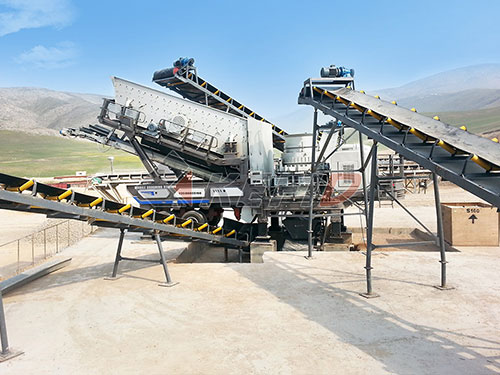
- Jaw Crushers: The workhorse of primary crushing. For gold ore, single-toggle jaw crushers are preferred for their high throughput and reliability. Factory prices for a 30” x 42” jaw crusher (150–200 tph capacity) range from $80,000 to $150,000. Larger units (48” x 60”) can exceed $300,000. Chinese vendors (e.g., Sandvik, Metso OEMs in China) offer lower prices ($60,000–$100,000) but with shorter liner life.
- Gyratory Crushers: Used in large-scale operations (>5,000 tpd). Factory prices start at $500,000 for a 42” unit and can reach $2 million for a 60” model. These are typically sourced from established Western brands (Metso, FLSmidth) or licensed Chinese manufacturers.
2.2 Secondary and Tertiary Crushers
- Cone Crushers: Essential for producing a consistent product size for grinding. Standard cone crushers (e.g., Symons 4.25 ft) are priced at $100,000–$200,000 ex-factory. High-performance multi-cylinder hydraulic cone crushers (e.g., Sandvik CH series) range from $250,000 to $600,000. Chinese factory prices for equivalent models are 30–40% lower but may have less sophisticated automation.
- Impact Crushers (HSI/VSI): Used for softer, less abrasive ores or for shaping. Horizontal Shaft Impactors (HSI) for gold ore are less common due to wear costs. Vertical Shaft Impactors (VSI) are used in fine crushing for heap leach operations. Factory prices: $50,000–$180,000.
2.3 Specialized Equipment
- High-Pressure Grinding Rolls (HPGR): Increasingly used in gold circuits for energy-efficient comminution. Factory prices are high: $1 million to $5 million per unit, depending on roll size and pressure rating.
- Sizers and Roll Crushers: For sticky or clay-rich gold ores. Prices range from $80,000 to $250,000.
3. The “Factory Price” Concept: What It Includes and What It Does Not
The term “factory price” (often abbreviated as FOB factory or EXW) is a critical commercial term. It means the price of the equipment at the vendor’s manufacturing plant, excluding transportation, insurance, customs duties, and installation. For international buyers, the landed cost can be 20–50% higher than the factory price.
What factory price typically covers:
- The crusher unit (main frame, eccentric, mantle, bowl liner, etc.)
- Basic electrical control panel (if standard)
- Standard lubrication system
- One set of wear parts (sometimes optional)
- Manufacturer’s standard warranty (usually 12–24 months)
What it does not cover:
- Freight (ocean, inland trucking)
- Import duties and taxes
- Site preparation, foundation, and civil works
- Erection, commissioning, and training
- Custom modifications (e.g., special voltage motors, corrosion-resistant coatings)
- Extended warranties or performance guarantees
Buyers must request a detailed quotation that breaks down these components. Vendors offering exceptionally low factory prices may be omitting critical items such as motors, V-belts, or guards, leading to unexpected costs.
4. Global Vendor Landscape: Factory Price vs. Total Value
The market for gold ore crushing equipment is dominated by a mix of multinational corporations and regional manufacturers. Each category offers different trade-offs between factory price and long-term value.
4.1 Tier 1 Global Vendors (Metso, Sandvik, FLSmidth, ThyssenKrupp)
- Factory Price: High (premium of 20–40% over Chinese equivalents).
- Value Proposition: Superior engineering, advanced automation (e.g., ASRi, IC series), global service networks, and proven reliability in extreme conditions. Their equipment often achieves higher availability (>95%) and lower operating costs per ton.
- Best For: Large-scale mines (>10,000 tpd), refractory ore processing, and operations requiring strict performance guarantees.
4.2 Tier 2 Chinese Vendors (Shenyang Sanland, Zhejiang MP, Shanghai Shibang, Henan Hongxing)
- Factory Price: Low to moderate. A Chinese-made cone crusher equivalent to a Metso HP300 may be priced at $120,000–$180,000 versus $300,000+ for the original.
- Value Proposition: Cost-effective for small to medium mines, especially in developing regions (Africa, Southeast Asia, South America). Many Chinese vendors now offer ISO 9001 certification and improved quality control. However, spare parts availability and after-sales support can be inconsistent.
- Risks: Shorter liner life, less precise metallurgy, and potential for longer downtime during repairs.
4.3 Regional and Specialized Vendors (India, Turkey, South Africa)
- India (e.g., Puzzolana, Terex Finlay): Factory prices are competitive, often 10–20% below Chinese vendors for similar specifications. Good for secondary and tertiary crushers.
- Turkey (e.g., MEKA, FABO): Strong in mobile and semi-mobile crushing plants. Factory prices are moderate, with good build quality.
- South Africa (e.g., Osborn, Pilot Crushtec): Specialized in hard rock applications. Prices are higher but tailored to African mining conditions.
5. Factors That Influence Factory Price Beyond the Catalog
Buyers should understand that factory prices are negotiable and depend on several variables:
- Order Volume: Bulk orders (multiple crushers or complete plants) can command 10–20% discounts.
- Payment Terms: Letters of credit (L/C) or advance payments reduce vendor risk and may lower prices. Net 30 or 60 terms often add a premium.
- Delivery Lead Time: Standard lead times are 8–16 weeks. Rush orders (4–6 weeks) incur a 5–15% surcharge.
- Customization: Non-standard voltage (e.g., 50 Hz vs. 60 Hz), special materials (e.g., ceramic inserts for wear zones), or integrated automation (PLC/SCADA) increase costs.
- Currency Fluctuations: Factory prices quoted in USD may be adjusted if the vendor’s local currency (e.g., Chinese Yuan, Indian Rupee) fluctuates significantly.
6. Total Cost of Ownership (TCO) Analysis: Why the Lowest Factory Price Is Not Always the Best
A prudent buyer evaluates TCO over the equipment’s expected life (typically 10–20 years). Key TCO components include:
- Initial Capital Cost: Factory price + logistics + installation.
- Wear Parts Cost: Liners, mantles, jaw dies, and cheek plates. For gold ore, wear rates are high. A cheaper crusher may require liner replacement 30% more frequently.
- Energy Consumption: Crusher efficiency (kWh per ton) varies. A premium cone crusher with optimized chamber design can reduce energy costs by 10–15%.
- Maintenance and Downtime: Labor costs, spare parts availability, and mean time between failures (MTBF). A lower-priced crusher with poor local support can cause costly production losses.
- Resale Value: Tier 1 brands retain higher resale value (30–40% after 5 years) compared to lesser-known brands (10–20%).
Example TCO Comparison (Hypothetical):
- Option A: Chinese cone crusher, factory price $150,000. Annual wear parts: $40,000. Energy: $30,000/year. Downtime: 10 days/year.
- Option B: Tier 1 cone crusher, factory price $300,000. Annual wear parts: $25,000. Energy: $25,000/year. Downtime: 3 days/year.
- 10-Year TCO: Option A = $150k + $400k (wear) + $300k (energy) + lost production (10 days x $10k/day = $100k) = $950,000. Option B = $300k + $250k + $250k + $30k = $830,000. The premium crusher is cheaper over the long term.
7. Procurement Best Practices for Factory-Direct Purchasing
To secure the best factory price without compromising quality, buyers should:
- Conduct a Site-Specific Ore Test: Send ore samples to multiple vendors for crushing tests. This provides data on wear rates, power draw, and product gradation.
- Request a “Package Price”: Ask for a quote that includes crusher, motor, base frame, guards, and one set of wear parts. Compare on a like-for-like basis.
- Verify Vendor Credentials: Check for ISO 9001, CE, or ASME certifications. Visit the factory if possible, or hire a third-party inspection agency.
- Negotiate Spare Parts Commitments: Secure a price list for critical wear parts at the time of purchase. Some vendors offer a “lifecycle” package.
- Consider Used or Refurbished Equipment: Factory-direct refurbished crushers from reputable vendors can offer 40–60% savings with a warranty.
- Evaluate Logistics: For remote mine sites, the cost of shipping a 40-ton crusher can be $20,000–$50,000. Factor this into the factory price comparison.
8. Market Trends and Future Outlook
- Automation and IoT: Factory prices are rising for crushers equipped with remote monitoring, predictive maintenance, and automated setting adjustment. These features reduce labor costs and improve recovery.
- Sustainability: Vendors are developing energy-efficient crushers (e.g., hybrid electric drives) to meet ESG goals. Factory prices for “green” models are 10–15% higher but offer lower carbon taxes.
- Localization: To reduce factory prices, many global vendors now manufacture in low-cost countries (e.g., Metso in India, Sandvik in China). This blurs the line between Tier 1 and Tier 2 pricing.
- Modular and Mobile Plants: Factory prices for mobile jaw crushers (e.g., Sandvik QJ341) range from $400,000 to $800,000. These are gaining popularity for small-scale gold operations and heap leach projects.
Conclusion
The search for “Gold Ore Crushing Equipment Vendors Factory Price” is a journey that requires balancing upfront capital expenditure with long-term operational efficiency. While factory-direct pricing from Chinese or regional vendors can significantly reduce initial investment, it must be weighed against wear costs, energy consumption, and reliability. For large-scale, high-grade gold operations, Tier 1 equipment often delivers a lower TCO despite a higher factory price. For smaller mines or those in developing regions, cost-effective solutions from reputable Chinese or Indian manufacturers can be viable, provided that due diligence is performed on quality and after-sales support.
Ultimately, the best factory price is not the lowest number on a quotation sheet, but the one that aligns with the specific ore characteristics, production targets, and risk tolerance of the mining operation. A disciplined procurement process—grounded in engineering analysis, vendor verification, and TCO modeling—will yield the most profitable outcome. As the gold mining industry continues to face pressure from rising costs and declining ore grades, the choice of crushing equipment remains a decisive factor in project success.
