Gold Ore Crushing Equipment Importers Catalog: A Comprehensive Guide for Global Procurement
Introduction
The global gold mining industry relies heavily on efficient and reliable crushing equipment to process raw ore into manageable sizes for subsequent extraction processes. For importers, distributors, and procurement specialists, having access to a well-structured catalog of gold ore crushing equipment is essential for sourcing the right machinery, negotiating favorable terms, and ensuring operational continuity. This article serves as a detailed reference for importers seeking to navigate the complex landscape of gold ore crushing equipment, covering equipment types, key specifications, leading suppliers, import considerations, and best practices for catalog management.
1. The Role of Crushing in Gold Ore Processing
Gold ore crushing is the first mechanical stage in the comminution process. It reduces large run-of-mine (ROM) ore to a size suitable for grinding and liberation of gold particles. The primary objectives of crushing are:
- Size reduction: Breaking ore from up to 1,000 mm down to 10–300 mm, depending on the circuit.
- Liberation: Exposing gold-bearing minerals for downstream processes such as gravity separation, flotation, or cyanidation.
- Throughput optimization: Ensuring the crushing circuit matches the mine’s production capacity.
Importers must understand that equipment selection depends on ore hardness (Bond work index), abrasiveness, moisture content, and required product size. A catalog should therefore categorize equipment by duty, capacity, and application.
2. Primary Crushing Equipment
Primary crushers handle the largest feed sizes and are typically located at the mine pit or near the ROM pad.
2.1 Jaw Crushers
- Description: Compression crushers with a fixed and moving jaw plate.
- Feed size: Up to 1,500 mm.
- Capacity: 50–1,500 t/h.
- Key specifications for importers: Feed opening (e.g., 1,200 x 900 mm), closed side setting (CSS), motor power (75–400 kW), wear liner material (Mn18Cr2 or Mn22).
- Leading brands: Metso Outotec (Nordberg C Series), Sandvik (CJ Series), Terex Jaques, FLSmidth.
- Catalog notes: Include wear part numbers, recommended spare parts kits, and installation footprint.
2.2 Gyratory Crushers
- Description: Continuous compression crushers with a conical head inside a concave hopper.
- Feed size: Up to 1,800 mm.
- Capacity: 500–10,000 t/h.
- Key specifications: Mantle diameter, eccentric throw, spider arm configuration, hydraulic setting adjustment.
- Leading brands: Metso Outotec (Superior MKIII), FLSmidth (Fuller-Traylor), ThyssenKrupp.
- Import considerations: High capital cost, modular shipping, on-site assembly required.
3. Secondary and Tertiary Crushing Equipment
These crushers further reduce ore from primary crushed product (typically 100–300 mm) to 10–50 mm.
3.1 Cone Crushers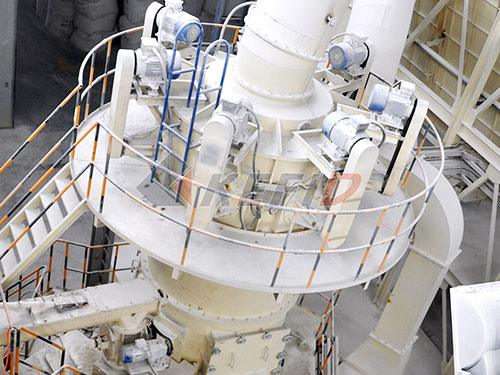
- Description: Compression crushers using a gyrating mantle within a concave bowl.
- Types: Standard (secondary), short-head (tertiary).
- Capacity: 50–1,200 t/h.
- Key specifications: Head diameter (e.g., 1,300 mm), CSS range, eccentric speed, chamber type (coarse, medium, fine).
- Leading brands: Metso Outotec (HP, GP, MP Series), Sandvik (CH, CS Series), Terex Cedarapids.
- Catalog tips: Include liner profiles, hydraulic tramp release, and automation packages.
3.2 Impact Crushers
- Description: Use impact force rather than compression; suitable for less abrasive ores.
- Types: Horizontal shaft impactors (HSI), vertical shaft impactors (VSI).
- Capacity: 20–800 t/h.
- Key specifications: Rotor diameter, blow bar material (chrome iron), feed size, reduction ratio.
- Leading brands: Metso Outotec (Nordberg NP Series), Sandvik (QI, CV Series), Hazemag.
- Import note: Impact crushers are less common for hard gold ores but useful for soft, friable ores.
4. Auxiliary Equipment in the Crushing Circuit
A complete catalog must include supporting equipment:
- Feeders: Apron, vibrating grizzly, belt feeders. Brands: Metso, Sandvik, FLSmidth.
- Screens: Vibrating screens for scalping and sizing. Brands: Metso, Sandvik, Derrick.
- Conveyors: Belt conveyors with idlers, pulleys, and drives.
- Dust suppression systems: Water sprays, baghouses, fog cannons.
- Metal detectors and tramp removal: Magnetic separators, metal detectors.
- Control systems: PLC-based automation, remote monitoring.
5. Key Specifications for Importers
When building a catalog, importers should standardize the following data fields for each equipment item:
| Field |
Description |
| Model number |
Manufacturer’s designation |
| Duty |
Primary, secondary, tertiary |
| Feed opening / head diameter |
mm or inches |
| Maximum feed size |
mm |
| Product size range |
mm |
| Capacity |
t/h (at given CSS) |
| Motor power |
kW |
| Voltage / frequency |
V / Hz |
| Weight |
kg |
| Dimensions (L x W x H) |
mm |
| Wear parts |
Part numbers, material |
| Lubrication system |
Type, capacity |
| Automation |
Included or optional |
| Certification |
CE, ISO, GOST |
| Warranty |
Months or hours |
6. Leading Global Suppliers and Import Sources
Importers typically source from:
- Europe: Metso Outotec (Finland), Sandvik (Sweden), FLSmidth (Denmark), ThyssenKrupp (Germany).
- China: CITIC Heavy Industries, Shanghai Zenith, Henan Liming, Shibang Industry & Technology.
- North America: Terex (USA), McLanahan (USA), Kolberg-Pioneer (USA).
- Japan: Komatsu, Kurimoto.
- India: McNally Sayaji, Elecon.
A catalog should list authorized distributors, lead times, and Incoterms (FOB, CIF, EXW).
7. Import Considerations
- Tariffs and duties: Check HS codes (e.g., 8474.20 for crushing machinery).
- Certifications: CE for Europe, EPA for USA, CSA for Canada.
- Shipping: Heavy equipment often requires break-bulk or flat-rack containers.
- Spare parts: Ensure availability of wear liners, bearings, seals.
- After-sales support: Training, commissioning, maintenance contracts.
- Financing: Letters of credit, export credit agencies.
8. Catalog Management Best Practices
- Digital catalog: Use searchable PDF or online database with filters.
- Version control: Track model updates and discontinued items.
- Supplier verification: Audit suppliers for ISO 9001, references.
- Cost analysis: Include total cost of ownership (TCO), not just purchase price.
- Localization: Translate specifications into importer’s language.
- Compliance: Ensure equipment meets local safety and environmental regulations.
9. Case Study: Importing a Jaw Crusher for a Gold Mine in Ghana
A mid-sized gold mine in Ghana required a primary jaw crusher for 200 t/h of hard ore (Bond work index 18 kWh/t). The importer sourced a Metso Nordberg C120 from Finland. Key steps:
- Ore testing to confirm crusher size.
- Request for quotation (RFQ) to three suppliers.
- Technical evaluation: feed opening, CSS, motor power.
- Commercial negotiation: FOB Helsinki, 12-week lead time.
- Shipping: Flat-rack container to Tema Port.
- Customs clearance: HS 8474.20, duty 5%.
- Installation and commissioning: Metso technician on-site.
- Spare parts: Initial stock of jaw plates, bearings.
Result: Throughput 220 t/h, 95% availability in first year.
10. Future Trends in Gold Ore Crushing Equipment
- Automation and IoT: Remote monitoring, predictive maintenance.
- Energy efficiency: High-pressure grinding rolls (HPGR) as alternative.
- Modular plants: Pre-assembled units for rapid deployment.
- Electric drives: Replacing diesel for lower emissions.
- Digital twins: Simulation for optimization.
Conclusion
A comprehensive Gold Ore Crushing Equipment Importers Catalog is more than a list of machines; it is a strategic tool for procurement, operations, and maintenance. Importers must focus on technical specifications, supplier reliability, regulatory compliance, and lifecycle costs. By structuring catalogs with standardized data fields and considering import logistics, businesses can secure the right crushing equipment to maximize gold recovery and profitability. As the mining industry evolves, catalogs must adapt to include automation, sustainability, and digital integration, ensuring importers remain competitive in the global market.
Appendix: Sample Catalog Entry
| Item |
Specification |
| Equipment |
Primary Jaw Crusher |
| Model |
Metso Nordberg C120 |
| Feed opening |
1,200 x 870 mm |
| Max feed size |
800 mm |
| CSS range |
70–200 mm |
| Capacity |
200–500 t/h |
| Motor |
160 kW, 50 Hz |
| Weight |
26,000 kg |
| Wear parts |
Jaw plates Mn18Cr2 |
| Certification |
CE, ISO 9001 |
| Lead time |
12 weeks |
| Incoterm |
FOB Helsinki |
This catalog structure enables importers to compare offers, plan logistics, and ensure operational readiness.
