Iron Ore Crushing Plant Dealers Catalog: A Comprehensive Guide to Selection, Equipment, and Market Landscape
Introduction
The global iron ore mining industry relies heavily on efficient processing infrastructure to convert raw, extracted ore into marketable products suitable for steelmaking. Central to this process is the iron ore crushing plant, a complex system of equipment designed to reduce run-of-mine (ROM) ore from large boulders to fine particles. For mining companies, contractors, and project developers, selecting the right dealer for an iron ore crushing plant is a critical capital investment decision. A dealer catalog—whether a physical document or a digital database—serves as the primary reference for equipment specifications, supplier capabilities, and after-sales support. This article provides a detailed, objective analysis of iron ore crushing plant dealers, their catalogs, key equipment categories, selection criteria, and regional market dynamics.
1. The Role of a Crushing Plant Dealer
A dealer in this context is not merely a reseller. Unlike automotive dealerships, industrial crushing plant dealers are typically authorized representatives of original equipment manufacturers (OEMs) or specialized system integrators. They provide: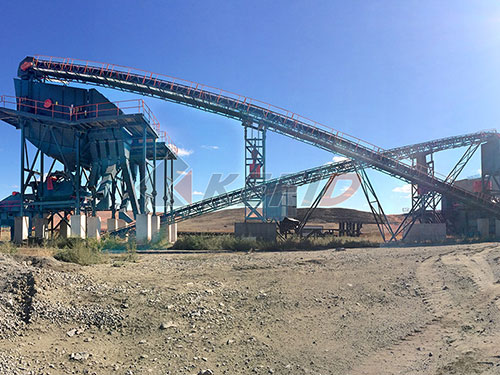
- Equipment supply: Jaw crushers, cone crushers, gyratory crushers, impact crushers, vibrating feeders, screens, and conveyors.
- Engineering and customization: Plant layout design based on ore hardness, moisture content, and throughput requirements.
- Commissioning and training: On-site installation, operator training, and performance optimization.
- Spare parts and service: Long-term maintenance contracts, wear part replacement, and emergency repairs.
A dealer catalog, therefore, is more than a product list. It is a technical and commercial document that outlines model numbers, capacity ranges, power requirements, dimensions, and optional features. It also includes dealer contact information, regional coverage, and warranty terms.
2. Key Equipment Categories in an Iron Ore Crushing Plant
Iron ore crushing typically follows a multi-stage process: primary, secondary, and tertiary crushing, followed by screening and sometimes grinding. The dealer catalog must clearly specify equipment for each stage.
2.1 Primary Crushing Equipment
- Gyratory Crushers: Preferred for high-capacity, hard rock applications. Catalog specifications include feed opening (e.g., 1,200–1,800 mm), throughput (500–10,000 t/h), and installed power (300–1,200 kW). Dealers often list wear liner materials (manganese steel, chrome-molybdenum alloys).
- Jaw Crushers: Used for smaller operations or mobile plants. Catalog details include feed size (up to 1,500 mm), closed side setting (CSS) range, and production capacity (50–1,500 t/h).
2.2 Secondary and Tertiary Crushing Equipment
- Cone Crushers: Essential for producing finer, cubical product. Catalogs list chamber types (standard, short head), eccentric throw, and capacity (100–1,000 t/h). Dealers may offer hydraulic adjustment and automated control systems.
- Impact Crushers (HSI and VSI): Less common for abrasive iron ore but used in specific cases. Catalogs specify rotor diameter, blow bar material, and reduction ratio.
2.3 Auxiliary Equipment
- Vibrating Feeders: Grizzly feeders for scalping before primary crushing.
- Screens: Banana screens, linear motion screens, and dewatering screens.
- Conveyors: Belt width, speed, and capacity ratings.
- Dust Suppression Systems: Critical for environmental compliance.
A comprehensive dealer catalog will cross-reference these components, showing compatible configurations and recommended flowsheets.
3. What to Look for in a Dealer Catalog
A high-quality iron ore crushing plant dealers catalog should contain the following sections: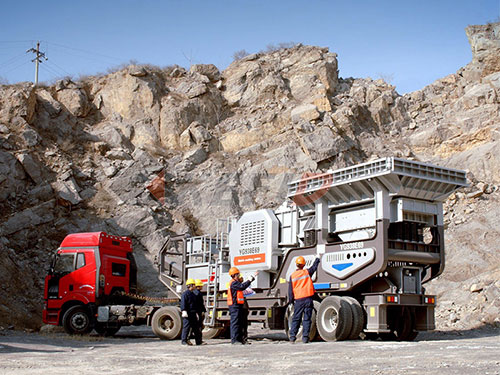
- Company Profile: Years in business, OEM partnerships, certifications (ISO 9001, CE), and regional offices.
- Product Index: Alphabetical or category-based listing with model numbers.
- Technical Data Sheets: For each machine—dimensions, weight, motor power, capacity range, and required foundation.
- Application Notes: Which ore types (hematite, magnetite, goethite) are suitable for each crusher.
- Case Studies: References to similar iron ore projects, including throughput and location.
- Spare Parts List: Common wear parts with part numbers and lead times.
- Service Network: Map of service centers, contact details, and response times.
- Commercial Terms: Warranty period, payment conditions, and delivery timelines.
Without these elements, a catalog is merely a brochure and not a decision-making tool.
4. Leading Dealers and OEMs in the Global Market
The iron ore crushing plant market is dominated by a mix of global OEMs and regional dealers. Key players include:
- Metso Outotec: Offers the Nordberg® and Superior™ lines. Their dealer catalog includes gyratory, cone, and jaw crushers, plus complete plant solutions.
- Sandvik: Known for the CH800i series cone crushers and CJ series jaw crushers. Dealers provide automated control systems.
- Terex MPS: Supplies modular and mobile crushing plants, often used in smaller iron ore operations.
- FLSmidth: Focuses on high-capacity gyratory and cone crushers, with strong presence in Australia and South America.
- Thyssenkrupp: Provides primary gyratory crushers and complete mineral processing plants.
- Chinese OEMs (e.g., Zenith, Liming, SBM): Offer cost-effective alternatives, with dealer networks expanding in Africa and Southeast Asia.
Regional dealers—such as Minprovise in Australia, Korfez in Turkey, or Bramco in South Africa—often carry multiple OEM lines and provide localized service. Their catalogs reflect regional ore characteristics and logistical constraints.
5. Selection Criteria for Dealers and Catalogs
When evaluating a dealer catalog, buyers should apply the following criteria:
- Technical Fit: Does the equipment match the ore’s Bond Work Index, abrasiveness, and moisture content?
- Capacity Scalability: Can the plant be expanded from, say, 500 t/h to 1,200 t/h without replacing major components?
- Energy Efficiency: Look for variable frequency drives, optimized crushing chambers, and automation.
- After-Sales Support: Spare parts availability within 48 hours is ideal. Catalogs should list local stock levels.
- Total Cost of Ownership: Include installation, foundation, power supply, and wear part costs over 5–10 years.
- References: Contact past clients listed in the catalog. Verify actual performance versus catalog claims.
- Compliance: Ensure equipment meets local safety and environmental regulations.
6. Digital Catalogs and Online Platforms
Modern dealer catalogs are increasingly digital. Benefits include:
- Searchable PDFs: Quickly find models by capacity or power.
- Interactive Configurators: Input ore properties and receive recommended equipment.
- 3D Models and Animations: Visualize plant layout.
- Real-Time Inventory: Check spare parts availability.
- Augmented Reality (AR): Overlay equipment dimensions on site photos.
However, digital catalogs can become outdated. Buyers should always request a dated, signed catalog or access a password-protected dealer portal.
7. Regional Market Variations
- Australia: High-capacity gyratory and cone crushers dominate. Dealers emphasize remote monitoring and automated control due to labor shortages.
- Brazil: Focus on mobile and semi-mobile plants for compact iron ore bodies. Catalogs include Portuguese-language technical support.
- India: Growing demand for jaw and cone crushers in Odisha and Jharkhand. Dealers offer financing options.
- Africa: Chinese and Indian dealers are gaining share due to lower capital costs. Catalogs often include diesel-powered options for off-grid sites.
- North America: Emphasis on modular plants and environmental compliance. Dealers provide detailed emission and noise data.
8. Common Pitfalls in Using Dealer Catalogs
- Over-reliance on catalog capacity: Actual throughput depends on feed size distribution and ore hardness.
- Ignoring auxiliary equipment: A crusher cannot operate without proper feeders, screens, and conveyors.
- Underestimating wear costs: Catalogs may list standard liners, but abrasive iron ore requires premium alloys.
- Assuming global support: A dealer with a catalog for a region may not have local stock.
- Missing warranty exclusions: Read fine print about improper operation or non-OEM parts.
9. The Future of Iron Ore Crushing Plant Dealers Catalogs
Several trends are shaping catalogs:
- Electrification and Hybrid Power: Catalogs now include electric-drive options with regenerative braking.
- Digital Twins: Dealers provide simulation models for plant optimization.
- Predictive Maintenance: Sensors and IoT platforms integrated into crushers.
- Modular and Mobile Designs: Faster deployment for small-to-medium deposits.
- Sustainability Metrics: Catalogs list energy consumption per ton and CO₂ footprint.
Dealers who update their catalogs annually with these features will remain competitive.
Conclusion
An iron ore crushing plant dealers catalog is far more than a price list. It is a technical roadmap for selecting equipment that will operate for decades in demanding conditions. Buyers must critically evaluate catalogs based on technical specifications, after-sales support, regional availability, and total cost of ownership. By understanding the key equipment categories, selection criteria, and market variations, mining companies can make informed decisions that maximize productivity and minimize downtime. As the industry moves toward digitalization and sustainability, the best dealer catalogs will evolve into interactive, data-rich platforms that support every stage of a crushing plant’s lifecycle—from initial feasibility study to final decommissioning. For any project developer, a thorough review of multiple dealer catalogs, combined with site-specific testing and reference checks, remains the most reliable path to a successful iron ore crushing operation.
