
Custom Quarry Ballast Crushing Equipment Design Service: Engineering Precision for Rail and Infrastructure Demands
Introduction
In the global infrastructure and railway sectors, ballast—the coarse aggregate layer beneath railway tracks—plays a critical role in load distribution, drainage, and track stability. The production of high-quality ballast requires specialized crushing equipment capable of delivering consistent particle shape, size distribution, and mechanical strength. However, standard off-the-shelf crushing plants often fall short of meeting the unique geological, operational, and regulatory requirements of individual quarries. This is where Custom Quarry Ballast Crushing Equipment Design Service becomes indispensable. This article provides a comprehensive, objective, and professional examination of the design service, its technical foundations, engineering considerations, and value proposition for quarry operators and infrastructure developers.
1. Understanding Ballast Specifications and Their Impact on Equipment Design
Ballast is not merely crushed rock; it is a precisely engineered material. International standards such as AREMA (American Railway Engineering and Maintenance-of-Way Association), BS EN 13450 (European standard for railway ballast), and Indian Railway specifications impose stringent requirements on gradation, flakiness index, Los Angeles abrasion value, and particle shape. A custom design service begins with a deep analysis of these specifications.
2. The Custom Design Process: From Geological Assessment to Commissioning
A professional custom design service follows a systematic, data-driven methodology:
2.1. Site and Material Characterization
The first step is a comprehensive analysis of the quarry’s raw material. This includes:
2.2. Process Flow Design
Based on material characteristics and target ballast specifications, engineers design a customized process flow. This includes: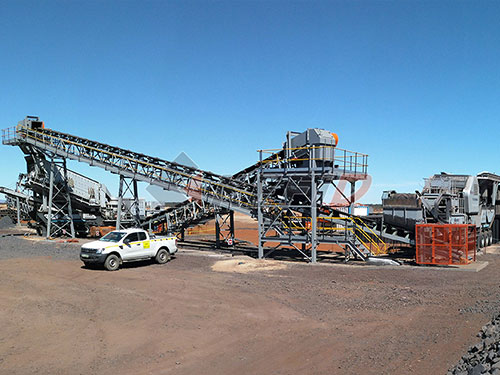
2.3. Equipment Sizing and Selection
Custom design avoids over- or under-sizing. Engineers use simulation software (e.g., Bruno, AggFlow) to model throughput, power consumption, and product output. Key parameters include:
2.4. Structural and Electrical Engineering
The physical layout of the crushing plant must account for site topography, access roads, and environmental constraints. Custom design includes:
2.5. Prototyping, Simulation, and Testing
Before fabrication, digital twins and 3D models are used to simulate material flow, identify potential jamming points, and optimize maintenance access. Pilot-scale testing with actual quarry material may be conducted to validate crusher settings.
2.6. Fabrication, Installation, and Commissioning
Custom equipment is manufactured to exact specifications, often with modular components for easier transport and assembly. On-site installation is supervised by design engineers, followed by commissioning trials to verify capacity, product quality, and safety compliance.
3. Technical Advantages of Custom Design Over Standard Solutions
3.1. Optimized for Specific Rock Types
Standard crushers are designed for average conditions. A custom design adjusts chamber profiles, eccentric throw, and speed to match the rock’s fracture mechanics. For example, a quarry processing highly abrasive quartzite may require a cone crusher with a steep chamber angle and ceramic-tipped liners, while a limestone quarry might benefit from a horizontal shaft impactor with adjustable rotor speed.
3.2. Enhanced Product Quality
Custom equipment can achieve a higher percentage of ballast-grade material (typically 85–95% vs. 70–80% for standard plants). This reduces waste, lowers re-crushing costs, and improves revenue per ton.
3.3. Energy Efficiency
By matching crusher power to material hardness and throughput, custom designs reduce specific energy consumption (kWh/ton). Advanced automation also enables load-shedding during low-demand periods.
3.4. Reduced Maintenance and Downtime
Custom design incorporates easy-access maintenance points, centralized lubrication systems, and wear-part monitoring sensors. This can reduce unscheduled downtime by up to 30% compared to generic plants.
3.5. Compliance with Local and International Standards
Custom equipment can be engineered to meet specific regulatory requirements, such as CE marking, OSHA safety standards, or local environmental permits for dust and noise.
4. Key Components in a Custom Ballast Crushing System
A typical custom-designed ballast plant includes the following specialized components:
5. Economic and Operational Considerations
5.1. Capital Investment vs. Lifecycle Cost
Custom equipment typically has a higher upfront cost than standard plants. However, the total cost of ownership (TCO) is often lower due to:
5.2. Scalability and Future Expansion
Custom designs can incorporate modularity, allowing for future capacity increases or the addition of new product lines (e.g., concrete aggregates) without a complete redesign.
5.3. Training and Support
Reputable design services provide operator training, maintenance manuals, and remote diagnostic support. This is critical for quarries in remote locations or with limited technical staff.
6. Case Study: Custom Design for a High-Capacity Granite Quarry
To illustrate the value of custom design, consider a hypothetical quarry in a region with high rail infrastructure demand. The quarry produces 500 tons per hour of ballast from hard granite (compressive strength 250 MPa, Los Angeles abrasion value 14%). A standard plant might achieve 75% ballast yield with high wear costs. A custom-designed plant, using a primary jaw crusher with a 1.2 m feed opening, a secondary cone crusher with a fine chamber, and a tertiary VSI with a closed rotor, achieves 92% ballast yield. The specific energy consumption drops from 1.8 kWh/ton to 1.4 kWh/ton. Annual savings in energy and wear parts exceed $200,000, justifying the initial custom design investment within two years.
7. Selecting a Custom Design Service Provider
When choosing a partner for custom ballast crushing equipment design, quarry operators should evaluate:
8. Future Trends in Custom Ballast Crushing Design
The industry is moving toward:
Conclusion
Custom Quarry Ballast Crushing Equipment Design Service is not a luxury but a strategic necessity for quarries aiming to produce high-quality ballast efficiently and profitably. By tailoring every component—from crusher chamber geometry to screen aperture and automation logic—to the specific material and operational context, custom design delivers superior product quality, lower operating costs, and enhanced compliance with stringent railway standards. As infrastructure demands grow and natural resources become more variable, the role of specialized engineering services will only become more critical. For quarry operators, investing in a custom-designed ballast crushing system is an investment in long-term competitiveness, reliability, and sustainability.
If you have any questions about our products, please feel free to contact us. We take all inquiries and suggestions very seriously.