White Label Iron Ore Crushing Plant R&D: Engineering, Modularization, and the Path to Market Agility
Introduction: The Strategic Imperative of White Label Solutions in Mineral Processing
The global iron ore market is undergoing a paradigm shift. With high-grade hematite reserves depleting, miners are increasingly turning to lower-grade banded iron formations (BIF), magnetite taconites, and weathered ores that require complex beneficiation. Simultaneously, project developers face compressed timelines, volatile commodity prices, and stringent environmental permitting. In this context, the concept of a white label iron ore crushing plant—a standardized, pre-engineered, and brand-agnostic processing system that can be rebranded and deployed by OEMs, EPC contractors, or mining operators—has emerged as a disruptive R&D strategy. This article provides a professional, objective analysis of the research and development (R&D) drivers, technical architecture, modular design principles, and commercial implications of white label crushing plants specifically tailored for iron ore.
1. Defining the White Label Crushing Plant: Scope and Boundaries
A white label iron ore crushing plant is not a generic rock crusher. It is a fully integrated, skid-mounted or modular system comprising primary jaw or gyratory crushers, secondary cone crushers, tertiary high-pressure grinding rolls (HPGR) or vertical shaft impactors (VSI), screening stations, conveyor transfer points, dust suppression systems, and a centralized PLC-based control architecture. The “white label” aspect means that the hardware, software, and process flow are developed by an R&D entity (often a specialized engineering firm) but sold under the buyer’s brand name. The buyer—whether a mining major, a regional equipment distributor, or an EPC house—can integrate their own instrumentation, safety interlocks, and aftermarket service contracts.
Crucially, white label R&D focuses on universality within a defined ore envelope. Unlike custom-engineered plants that are optimized for a single mine’s specific ore characteristics, a white label plant is designed to handle a range of iron ore feed types: from friable hematite (Fe 58-62%) to hard, abrasive magnetite (Fe 30-40% with high silica). This requires a robust mechanical design with wide adjustment ranges, rather than peak efficiency at a single point.
2. Core R&D Drivers: Why White Label, Why Now?
The R&D push toward white label systems is driven by four quantifiable factors:
- Capital Expenditure (CAPEX) Reduction: Custom engineering typically accounts for 15-25% of total plant cost. White label R&D amortizes engineering across multiple deployments, reducing this to 5-8%. For a 10 Mtpa (million tonnes per annum) plant, this translates to savings of $20-50 million.
- Schedule Compression: A custom plant requires 18-24 months from detailed design to commissioning. A white label modular plant, with pre-fabricated modules and standardized piping and electrical schematics, can be erected and commissioned in 9-12 months. This is critical for miners aiming to capitalize on short-term iron ore price spikes.
- Supply Chain Resilience: By standardizing components (crusher liners, screen media, bearings), white label R&D enables bulk procurement and strategic inventory stocking. This mitigates the risk of long-lead-time items (e.g., gyratory main shafts) that can halt production for months.
- Technology Transfer and Localization: In emerging mining jurisdictions (e.g., West Africa, India, Central Asia), governments demand local content. A white label plant allows a local EPC to brand the plant as their own, while the R&D owner provides technical support, training, and proprietary process know-how. This accelerates technology adoption without requiring the local partner to reinvent the wheel.
3. R&D Focus Areas: Mechanical, Metallurgical, and Digital
The R&D effort for a white label iron ore crushing plant is multi-disciplinary. The following are the critical technical domains:
3.1. Mechanical Design for Abrasion and Impact
Iron ore is among the most abrasive feed materials. R&D must address: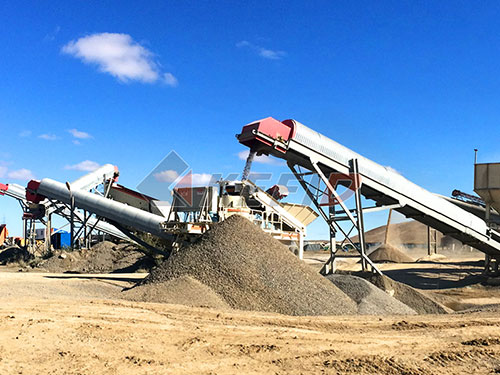
- Crusher Chamber Geometry: For secondary and tertiary stages, the white label plant must offer interchangeable concave and mantle profiles. R&D uses discrete element method (DEM) simulations to optimize the crushing chamber for both high reduction ratio (for friable ore) and high throughput (for hard ore). The design must allow for rapid liner changes—ideally via a hydraulic rotation system—to minimize downtime.
- Wear Material Metallurgy: The R&D team must develop or specify composite wear liners (e.g., high-chrome white iron with ceramic inserts) that provide a 20-30% longer service life compared to standard manganese steel, especially in the tertiary HPGR stage where abrasive wear is extreme.
- Structural Fatigue: Modular frames are subjected to cyclic loading. R&D employs finite element analysis (FEA) to predict fatigue life at weld joints and bolted connections. The goal is a design life of 50,000 hours with a safety factor of 1.5 against yield.
3.2. Process Flexibility: The “Wide Envelope” Approach
Unlike a custom plant, a white label plant cannot rely on a single ore test report. R&D must develop a process flow that is self-correcting. Key innovations include:
- Variable Speed Drives (VSDs) on Crushers and Screens: By varying the crusher speed (e.g., from 300 to 500 rpm on a cone crusher), the plant can shift from producing a coarse product (for downstream AG milling) to a finer product (for direct pellet feed). This is achieved without mechanical changes.
- Bypass and Recirculation Circuits: The R&D design must include a surge bin with a variable-speed feeder, a two-deck banana screen with quick-change polyurethane panels, and a recirculation conveyor that routes oversize material back to the tertiary crusher. The control logic must automatically adjust the recirculation rate based on real-time power draw and screen load.
- Moisture and Clay Handling: Iron ore often contains 5-10% moisture and clay fines. R&D focuses on designing chutes with non-stick linings (e.g., UHMWPE), self-cleaning conveyor pulleys, and a dedicated fines scalping screen before the primary crusher to prevent clogging.
3.3. Digital Twin and Predictive Maintenance
A white label plant’s competitive advantage lies in its embedded intelligence. R&D invests heavily in:
- Digital Twin Development: A complete 3D model of the plant is created, linked to live sensor data (vibration, temperature, power draw, oil pressure). This allows the operator to simulate changes in ore feed size distribution and observe the impact on product P80 (80% passing size) without risking physical equipment.
- Machine Learning for Liner Wear Prediction: By correlating crusher power draw, CSS (closed side setting), and historical liner wear data, the R&D team develops algorithms that predict remaining liner life with ±5% accuracy. This enables proactive maintenance scheduling, reducing unplanned downtime by up to 40%.
- Remote Diagnostics: The white label system includes a secure cloud gateway. The R&D owner can remotely access the PLC and SCADA system to diagnose faults, update control logic, and optimize settings for a specific ore batch—all without being on site. This is a key selling point for the white label buyer.
4. Modularization and Standardization: The Engineering Backbone
The physical architecture of a white label plant is based on ISO containerized modules. R&D defines three core modules:
- Module A (Primary Crushing): A heavy-duty apron feeder, a single-toggle jaw crusher (e.g., 1,200 x 900 mm), and a discharge conveyor. The module is designed for rapid relocation using a multi-axle trailer.
- Module B (Secondary/Tertiary Crushing): A double-deck scalping screen, a cone crusher (e.g., 7-ft Symons type or modern hydraulic), and a HPGR unit. This module is the most complex, requiring precise alignment of the crusher base with the screen discharge.
- Module C (Screening and Product Handling): A banana screen with three decks, product conveyors, and a metal detector. This module also houses the dust collection system (baghouse or wet scrubber).
The R&D challenge is to ensure that these modules can be interconnected with standardized flanged ducting, quick-release conveyor couplings, and a single multi-pin electrical connector. This reduces site installation time from weeks to days. Furthermore, the modules must be designed to withstand transport loads (e.g., 20g shock during shipping) without structural deformation.
5. Safety and Environmental Compliance in R&D
White label plants must be compliant with global safety standards (e.g., ISO 12100, MSHA in the US, or EU Machinery Directive). R&D integrates:
- Interlocked Guarding: All moving parts (flywheels, drive pulleys, crusher openings) are enclosed with interlocked access doors that trip the main breaker when opened.
- Dust Suppression: A combination of water spray nozzles (with automatic flow control based on dust sensor readings) and a dry fog system at transfer points. The R&D target is to keep respirable dust below 0.5 mg/m³.
- Noise Reduction: Crusher housings are lined with acoustic panels. The R&D goal is to maintain noise levels below 85 dB(A) at a 1-meter distance from the plant boundary.
6. Commercial and Operational Challenges of White Label Adoption
Despite the benefits, white label R&D faces significant hurdles:
- Brand Dilution and Liability: If the white label buyer fails to operate the plant correctly, the R&D owner’s reputation suffers. Therefore, R&D contracts must include strict performance warranties, mandatory operator training, and remote monitoring rights.
- Ore Variability Beyond the Envelope: No white label plant can handle every ore type. If a buyer feeds ultra-abrasive itabirite with a Bond abrasion index above 0.8, the wear rates will be unacceptable. R&D must clearly define the “acceptable feed envelope” in the technical datasheet, including limits on silica content, abrasion index, and moisture.
- Intellectual Property (IP) Protection: The R&D owner must protect the control algorithms and process know-how. This is achieved through patent filings on the modular connection system and the predictive wear algorithm, as well as through trade secret agreements with the white label buyer.
7. Future R&D Trajectories: Toward Autonomous and Green Plants
The next generation of white label iron ore crushing plants will focus on:
- Full Autonomy: Using AI-based vision systems to analyze ore size distribution on the conveyor and automatically adjust crusher CSS and feeder speed. This eliminates the need for a dedicated operator.
- Energy Recovery: R&D is exploring the use of regenerative drives on conveyors to recover kinetic energy during downhill transport, reducing net energy consumption by 15%.
- Hydrogen-Ready Power Systems: As mines transition to green hydrogen, the white label plant’s electrical architecture will be designed to accept variable-frequency power from hydrogen fuel cells without requiring major retrofits.
Conclusion: A Pragmatic Engineering Solution for a Volatile Market
The white label iron ore crushing plant is not a compromise; it is a deliberate engineering strategy that prioritizes adaptability, speed, and cost efficiency over bespoke optimization. For R&D organizations, the challenge is to balance the need for a broad operational envelope with the mechanical robustness required for abrasive iron ore. The successful white label plant is one that is boringly reliable, digitally transparent, and mechanically forgiving. As the mining industry continues to demand faster project delivery and lower capital intensity, the white label model—backed by rigorous R&D in modular design, wear materials, and predictive control—will become a standard offering, not an exception. The future belongs to those who can standardize complexity, and white label R&D is precisely that: the disciplined art of making the complex appear simple, deployable, and profitable.
